
Start Forex Trading on Your Phone: Kenyan Beginner's Guide
📱 Want to start forex trading on your mobile? This guide walks Kenyan beginners through picking platforms, account setup, risk tips, and smart trading moves.💰
Edited By
Emma Thornton
Starting forex trading with just $1 might sound too good to be true, but with the right approach, Kenyan traders can take advantage of this opportunity to enter global markets even with limited capital. The forex market is highly liquid and accessible, yet it carries risks that need careful management, especially when trading with small amounts.
Thanks to modern brokers who offer micro and nano accounts, you no longer need thousands of dollars to start trading. These accounts allow you to open positions as small as $1, which suits new traders testing the waters. However, this low entry point demands an understanding of market dynamics and strict risk control.

Kenyan traders should pick brokers regulated by credible bodies such as the Capital Markets Authority (CMA) in Kenya or international authorities to avoid scams. Given Kenya's strong reliance on mobile money services, brokers accepting M-Pesa deposits offer an easier funding route, avoiding the hassle of bank transfers.
Starting small means every cent counts. Avoid risking more than 1-2% of your trading capital on a single trade to safeguard your funds.
When you open a $1 forex trading account, you need to focus on strategies that suit such tight capital constraints. Scalping or day trading with tight stop losses can be effective, but you should understand how spreads and commissions eat into small accounts. Choosing currency pairs with low spreads, like USD/KES or EUR/USD, helps keep costs down.
Here are some practical tips to manage your $1 forex start:
Pick a broker supporting M-Pesa: Quick, secure deposits and withdrawals make trading smoother.
Use demo accounts first: Practise on virtual funds to sharpen your skills without risking real money.
Keep leverage low: While brokers offer high leverage, excessive use can wipe out a $1 account fast.
Educate yourself continuously: Kenyan traders can tap into free resources, webinars, and forums tailored for local market conditions.
Starting with $1 requires discipline and patience, but it’s a viable path to grow your skills and capital gradually without heavy upfront risks. The key is managing your exposure carefully and avoiding common pitfalls that new traders face.
Forex trading stands out as one of the most accessible financial activities, especially for Kenyan traders looking to start small. Knowing how it works and the potential it holds is the first step if you want to turn even a $1 deposit into a learning opportunity or better, a small trading profit. This section unpacks what trading forex really means, how it functions with tiny capital, and what currency pairs and market times you need to watch.
At its core, forex trading means buying and selling currencies. Traders aim to benefit from the price changes between one currency and another. For example, you might buy the US dollar against the Kenyan shilling expecting that the dollar will strengthen, then sell it later for a profit. Beyond simply exchanging money, forex is influenced by global economic events, interest rates, and political news. That’s why staying informed helps you anticipate market moves. Unlike the stock market, forex trades happen over the counter worldwide, meaning you never trade at a central exchange but through brokers.
Trading with as little as $1 might sound unrealistic to some, but modern forex brokers offer micro and nano accounts that accommodate this. These accounts let you trade very small volumes, meaning your risk is limited to your deposit. For instance, micro lots represent just 1,000 units of currency compared to the standard 100,000 units, making it easier to manage your trades without burning your account quickly. However, small capital means you have to be extra careful with leverage and avoid overtrading. Even with a small stake, you get exposure to the global forex market, learning the ropes without risking large sums.
For a new trader, focusing on a few popular currency pairs makes sense. Majors such as USD/KES (US dollar/Kenyan shilling), EUR/USD (Euro/US dollar), and GBP/USD (British pound/US dollar) offer good liquidity and tighter spreads, which reduces trading costs. Pairs involving local currencies like the Kenyan shilling might have lower volume but can be appealing due to their familiarity and relation to local news.
Forex trading runs 24 hours five days a week, starting from Sunday evening to Friday evening Nairobi time, moving through four main market sessions: Sydney, Tokyo, London, and New York. Kenyan traders often find the London and New York sessions most active and better suited for trading due to higher volatility. Knowing when markets open and close helps you plan your trades and catch key market moves.
Forex trading with small capital requires understanding both the mechanics and the rhythm of the markets. By focusing on the most active currency pairs and timing your trades to match market hours, you set yourself up better to learn and potentially grow your account even with modest beginnings.
This foundation prepares you to choose the right broker and develop strategies that fit your budget, which we will explore next.
Selecting the right forex broker is a vital step, especially when starting with just $1. Not all brokers accept such minimal deposits or offer conditions favourable for small investors. The broker you choose can affect your trading costs, platform reliability, access to local payment methods, and overall experience. Thus, knowing what to look for helps you avoid common pitfalls and set a strong foundation.
First, check whether the broker is regulated by reputable authorities such as the Capital Markets Authority (CMA) in Kenya or internationally recognised bodies like the Financial Conduct Authority (FCA) or the Cyprus Securities and Exchange Commission (CySEC). Regulation offers a layer of protection for your funds.
Next, look at the minimum deposit requirements; some brokers accept as low as $1, while others require hundreds. Low spreads and reasonable commissions matter most when trading with small capital because high costs can wipe out your modest profits. Fast execution speeds and an easy-to-use platform also make trading smoother, reducing frustrating delays and technical issues.
Customer support is another key element. A broker offering prompt, accessible help in English and possibly Swahili can save you from unnecessary headaches.
For traders starting with a small fund, micro or nano accounts are the way to go. These accounts allow trading in smaller lot sizes — for example, a micro lot is 1,000 units of currency, and a nano lot is even smaller, sometimes down to 100 units. This flexibility lets you open trades without risking a large chunk of your deposit.
Some brokers popular amongst Kenyan traders offering such accounts include XM, Tickmill, and HotForex. These platforms allow deposits starting from $1 to $5 and support trading on multiple currency pairs with leverage suitable for cautious beginners.
Access to local-friendly payment channels is a huge advantage. Most Kenyan traders prefer working with brokers that accept M-Pesa deposits and withdrawals. It’s fast, secure, and widely trusted. Some brokers even support Lipa Na M-Pesa, making funding your account as simple as paying for airtime.
Other options include bank transfers with Kenyan banks such as KCB or Equity Bank, and international methods like Skrill or Neteller. Avoid brokers that demand complicated wire transfers or high withdrawal fees as they can delay access to your money.
Choosing a broker who understands the Kenyan market and supports familiar payment methods can save you time and reduce trading costs, especially when working with limited capital.
Always compare the features, and test out the demo versions offered by brokers to see which platforms feel right before committing funds. This cautious approach helps you build confidence while protecting your small investment.
Trading forex with just $1 demands careful planning and a clear understanding of risks. Since the starting capital is small, you must be realistic about what you can achieve. This section highlights the key strategies to manage your expectations, apply solid risk controls, and avoid common mistakes that new traders often make.
Starting with $1 sets strict limits on how much profit you can realistically make in a short time. Instead of aiming for large returns quickly, focus on learning the market’s behaviour and practising disciplined trading. For example, if you aim for a 5% gain on your capital, that’s just 5 cents. While it sounds small, small profits compounded consistently can grow your account over time. Trying to double your $1 in a day is not only unlikely but also risky.
With this in mind, set clear targets—like mastering a particular currency pair or understanding market signals—before chasing big profits. Patience is everything in forex, especially with limited funds.
Protecting your capital should be your priority when trading with $1. Use very tight stop-loss orders to limit losses to fractions of your capital. For instance, if you risk 10 cents on a trade, losing it won't wipe out your account completely.
Position sizing is crucial; avoid opening trades that use your entire deposit. Instead, scale down trade sizes using micro or nano lots offered by most brokers. Say one micro lot equals $1,000 worth of currency; with $1 capital, you’d trade an even smaller size, sometimes called a nano lot (100 units). This helps control exposure.
Never trade on margin without understanding the risks, as leverage can amplify losses quickly, especially with minimal capital.
One common mistake is letting emotions dictate trading decisions. For example, chasing losses by increasing trade sizes to recover quickly often leads to rapid depletion of your small capital. Stick to your plan, even if you face losing streaks.
Another pitfall is ignoring spreads and commissions. With such a tiny deposit, transaction costs can easily eat into your profits. Choose brokers with tight spreads and low fees tailored for micro accounts.
Also, avoid overtrading. It’s tempting to make many trades hoping one will pay off, but with $1, each trade carries risk. Focus on quality setups and keep your trading journal to track performance.
Successful small-cap trading depends heavily on discipline and realistic goals.
By managing your expectations, applying strong risk controls, and learning to dodge common traps, your $1 investment becomes a training ground to build skills before increasing your trading funds.
For anyone starting forex trading with just $1, the right tools and resources can make all the difference. These assist you in learning the ropes without risking cash unnecessarily and build confidence before trading for real. In Kenya, many new traders find that mixing digital platforms with community knowledge helps avoid common mistakes early on.
Demo accounts are absolutely vital for beginners. They let you try trading with virtual money, often using the same platforms and real-time data as live trading. This lets you explore orders, practise placing trades, and test strategies without the fear of losing your shillings. For example, brokers like XM and HotForex offer demo accounts tailored to small investors — meaning you can start practising without depositing a single cent.
Spending time on a demo account also familiarises you with the broker’s trading platform, which is crucial before risking your real money. It’s not just playing; it’s developing muscle memory and discipline that count in the heat of live markets.
Understanding the basics of technical and fundamental analysis is key. Technical analysis involves reading price charts and identifying trends or patterns. Kenyan traders might start by watching simple indicators like moving averages or the Relative Strength Index (RSI) to time entries and exits.
On the flipside, fundamental analysis looks at economic news and events affecting currency values — things like interest rate announcements from central banks such as the Central Bank of Kenya (CBK) or US Federal Reserve decisions. Learning how these impact forex pairs like USD/KES helps make better-informed trades.
You don’t need complex tools at first. Free charting services, economic calendars, and news portals provide enough data to build a solid grasp of market drivers.
Many Kenyan traders find value in joining local or online communities and educational platforms. Groups on social media and forums provide peer support, experience sharing, and timely advice tailored to Kenya’s forex environment.
Platforms like BabyPips offer structured learning from beginner to advanced levels, while Kenyan-specific trading courses and seminars occasionally run by local experts help bridge the gap between theory and practice. Getting involved in chat groups or local forex clubs can expose new traders to practical tips on handling common Kenyan challenges, such as managing deposits through M-Pesa or choosing brokers that operate smoothly within local regulations.
Using demo accounts combined with a basic understanding of analysis and tapping into local resources will set you on steady footing. It’s about building skills deliberately before pouring in your hard-earned cash.
With these tools at hand, even starting with just $1 becomes a meaningful step towards becoming a disciplined forex trader in Kenya’s growing market.
Starting your first trade marks a critical step from learning to doing. Even with just a $1 deposit, understanding how to set up your account, fund it properly, and execute trades wisely is essential. Moreover, growing your account sustainably requires patience, discipline, and smart scaling strategies.
Opening a forex trading account usually involves submitting your identification documents and verifying your email and phone number, a process mostly straightforward on most brokers’ platforms. For Kenyan traders, choosing brokers that accept M-Pesa as a funding option is often the most convenient and secure way to deposit funds. Some brokers also support bank transfers and card payments, but M-Pesa tends to have faster processing times with lower charges.
For example, a beginner might fund their account with KSh 120 (about $1) via M-Pesa directly to their broker's Paybill or Till number, depending on what the broker supports. Always double-check the account details and the minimum deposit requirements to avoid unnecessary delays or errors.
With only $1, it’s crucial to pick currency pairs with low spreads and low volatility to reduce costs and risks. Many brokers offer micro or nano-lot trading, which allows buying fractions of standard lots. For instance, instead of trading a full lot of 100,000 units of currency, you can trade as low as 1,000 units.
When placing your first trade, use tight stop-loss orders to protect your small capital. Enter limit and stop orders instead of market orders where possible, so you control your exact entry and exit price. Starting small means every cent counts — even small losses can wipe out $1 quickly.
Remember, the first trade is as much about learning the platform and market behaviour as it is about earning. Treat it like training, not a guaranteed profit.
Once you get comfortable with the basics of executing trades, focus on growing your capital steadily. Try not to rush scaling up just because of one or two wins. Consistency wins in forex — regular small profits compounded over time add up.
Here are practical tips for scaling your account:
Reinvest profits: Instead of withdrawing gains immediately, adding profits back into your trading capital gradually increases your trade sizes.
Maintain disciplined risk management: Keep risking a very small percentage (1-2%) of your account on each trade.
Keep a trading journal: Record every trade's setup, outcome, and lessons to spot improving patterns and mistakes.
Withdraw periodically: Take small partial withdrawals once you achieve steady profits to reward yourself but keep enough in your account to grow.
In Kenya's growing forex market, patience and discipline often separate successful traders from those who quit early. Focus on improving skills while managing your capital wisely, and your $1 can be a valuable starting point for a bigger trading journey.
📱 Want to start forex trading on your mobile? This guide walks Kenyan beginners through picking platforms, account setup, risk tips, and smart trading moves.💰
📈 Learn how Kenyan traders can start online forex trading safely with tips on platforms, strategies, regulation, and M-Pesa payments. Trade smart, earn well!
Discover practical tips for Kenyan traders on forex binary trading 📈💡 Understand risks, regulation, how it differs from traditional forex, and trade safely.
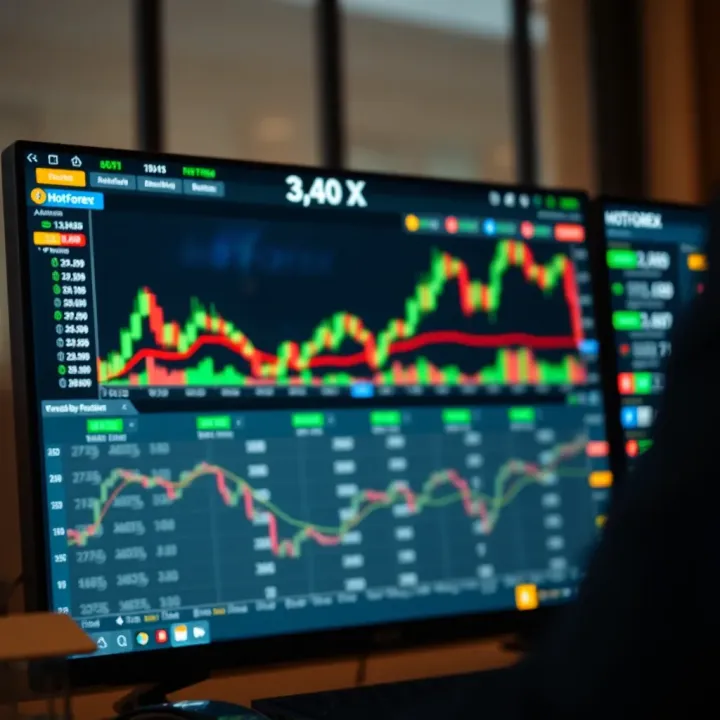
📈 HotForex Kenya offers easy account setup, diverse trading options, secure payment methods like M-Pesa, and clear local regulations for Kenyan traders keen on forex markets.
Based on 6 reviews