

USDJPY Forecast Today: Key Factors & Market Insights
📈 Get the latest USDJPY forecast for today with insights on economic data, geopolitical events & technical trends shaping the currency for Kenyan traders. 🌍
Edited By
Laura Mitchell
The EUR/USD currency pair remains one of the most watched financial instruments by traders and investors in Kenya and globally. Its movements reflect deeper economic shifts, central bank decisions, and geopolitical developments that ripple across nations. Understanding the key factors behind these shifts is essential if you want to make sound trading or investment decisions.
To begin with, economic indicators from both the Eurozone and the United States significantly influence the pair’s direction. Take inflation figures or employment reports, for instance. If the US releases stronger-than-expected jobs data while the Eurozone struggles with slow growth, the US Dollar tends to strengthen against the Euro. Conversely, if the European Central Bank (ECB) signals tighter monetary policy while the US Federal Reserve stays cautious, the Euro may gain ground.

Monetary policy stands out as a major driver. Interest rate adjustments by the ECB and the Fed affect capital flows and investor confidence directly. For example, when the Fed raises rates, Kenyan forex traders often see the USD strengthening as foreign investments flow into US assets for better returns. Plus, announcements concerning quantitative easing or tightening provide strong market signals.
Geopolitical events also play a big role in shaping EUR/USD trends. Political crises in EU member states or trade tensions between the US and Europe create uncertainty, often pushing investors towards the relative safety of the US Dollar. Recall the Brexit aftermath when the Euro faced pressure due to uncertainty over economic ties.
Understanding these factors can help you anticipate short-term swings and grasp longer-term trends, improving your timing and strategy.
Here are the main factors you should follow:
Economic data releases: GDP growth rates, unemployment, inflation, and trade balances
Central bank policies: Interest rate changes, policy guidance, asset purchase programmes
Political stability and events: Elections, geopolitical tensions, trade negotiations
Market sentiment and risk appetite: Impact of global incidents affecting investor confidence
This section sets the stage for a deeper analysis of EUR/USD forecasts by highlighting the critical elements that move this pair. Equipped with this understanding, traders and investors based in Nairobi or any other part of Kenya can better navigate the volatile forex landscape.
The EUR/USD currency pair is the world's most traded forex pair, representing the exchange rate between the euro and the US dollar. This pair acts as a barometer for global economic health, given the significance of both the Eurozone and the United States in international trade and finance. Understanding its movements is essential for traders, investors, and analysts who wish to navigate these interconnected economies effectively.
EUR/USD shows how many US dollars it takes to buy one euro. In forex trading, this is a direct reflection of the relative strength between the Eurozone and the US economies. For example, if EUR/USD rises from 1.10 to 1.15, it means the euro has strengthened compared to the dollar. This can happen when the European economy shows signs of growth or when US economic conditions weaken. Traders watch this pair closely because it often captures shifts in monetary policy, economic data releases, and geopolitical tensions that influence both currencies simultaneously.
This pair is also a favourite among liquidity seekers due to tight spreads and high turnover volumes, which allow traders to enter and exit positions efficiently. Its liquidity is especially important for Kenyan forex traders who depend on predictable execution prices and fair market conditions when using platforms like Safaricom's M-Pesa integrated trading apps.
Historically, EUR/USD has gone through phases of both prolonged strength and weakness. For instance, during the European debt crisis in the early 2010s, the euro lost considerable ground against the dollar due to fiscal worries in countries like Greece and Italy. Conversely, periods such as 2014 to 2017 saw the euro gaining after the US Federal Reserve tightened its monetary policy earlier than the European Central Bank.
The pair’s performance often reflects broader market sentiment. For example, in times of global uncertainty, investors usually flock to the US dollar as a safe haven, leading EUR/USD to drop. Conversely, a confident European economy and dovish US policies can push EUR/USD higher.
For investors and traders, keeping an eye on EUR/USD is vital because it doesn’t just represent two currencies—it encapsulates economic trends, central bank actions, and geopolitical events that set the broader financial climate.
Understanding these basics about the EUR/USD pair sets the scene for a clearer grasp of the intricate economic indicators, monetary policies, and geopolitical factors that influence its trajectory. This foundation is key to making informed trading and investment decisions in the forex market.
Understanding the key economic indicators that influence the EUR/USD currency pair is essential for traders and investors. These indicators offer a snapshot of the economic health of both the Eurozone and the US, directly affecting the currency's demand and supply dynamics. Monitoring these figures helps anticipate shifts in market sentiment and potential exchange rate movements.
GDP growth rates reveal how fast or slow the Eurozone economy is expanding. A strong GDP growth signals increased business activity and investor confidence, often leading to a stronger euro against the dollar. For example, if quarterly GDP growth improves from 0.2% to 0.5%, it could prompt traders to buy EUR/USD, expecting further euro appreciation. Conversely, sluggish growth or contraction points to economic troubles, weakening the euro.
Inflation figures measure the pace at which prices for goods and services rise within the Eurozone. The European Central Bank (ECB) targets inflation near, but below 2%. When inflation surpasses this level, it might force the ECB to adjust interest rates, impacting the EUR/USD rate. For instance, rising inflation beyond 2% might trigger the ECB to lift rates, making the euro more attractive and pushing EUR/USD upwards.
Unemployment statistics provide insight into labour market health. A declining unemployment rate usually signals a robust economy, bolstering the euro's value. For example, if unemployment drops from 7% to 6%, it suggests more people are earning wages, increasing consumer spending and economic growth. High unemployment often pressures the ECB to stimulate the economy, which may weaken the euro against the dollar.

Federal Reserve interest rate decisions are a major driver of USD strength and, by extension, EUR/USD fluctuations. When the Fed raises interest rates, it often attracts capital flows into the US, strengthening the dollar and pushing EUR/USD lower. For example, a 0.25% rate hike can lead to short-term USD gains. Conversely, a rate cut or signal of slower hikes can weaken the dollar, allowing EUR/USD to rise.
Employment reports, especially the monthly Non-Farm Payroll (NFP) data, reflect the US labour market's vitality. Strong job creation typically boosts the dollar as it shows economic resilience, while weak numbers might drag the dollar down. For instance, NFP growth of 300,000 jobs versus an expected 150,000 might cause EUR/USD to fall.
CPI and PPI inflation data track consumer and producer price changes in the US. Higher inflation readings can prompt the Federal Reserve to tighten monetary policy, strengthening the dollar and pushing EUR/USD lower. For example, if the consumer price index (CPI) rises sharply in a given month, markets may price in faster Fed rate hikes.
Keeping an eye on these economic data points enables traders to position themselves wisely on EUR/USD, balancing risks and opportunities in line with evolving economic realities.
Monetary policies by the European Central Bank (ECB) and the US Federal Reserve heavily influence the EUR/USD exchange rate. These policies dictate interest rates and liquidity levels, which affect capital flows and currency valuation. For traders and investors, staying informed on these central banks’ moves helps anticipate market shifts and plan entry or exit points accordingly.
Interest rate trends play a significant role in determining the strength of the euro against the US dollar. When the ECB signals rate hikes, the euro tends to appreciate since higher interest rates attract foreign capital seeking better returns. Conversely, rate cuts often weaken the euro, as borrowing costs diminish and investors look elsewhere. For instance, after the ECB’s rate increases in late 2023 aimed at curbing inflation, the euro gained momentum against the dollar.
Quantitative easing and asset purchase programmes have been key ECB tools, especially during economic downturns. By buying government bonds and other securities, the ECB injects liquidity into the market, lowering borrowing costs and stimulating growth. However, this also tends to dilute the euro’s value due to increased money supply. Traders note that announcements of tapering or halting these programmes often boost the euro as liquidity tightens, affecting EUR/USD movements.
The Fed’s approach to inflation control directly impacts the dollar’s value and thus the EUR/USD rate. The Fed often raises interest rates to cool high inflation, which strengthens the dollar by offering higher returns on dollar-denominated assets. For example, during the 2022 inflation spikes, the Fed raised rates aggressively, leading to a dollar rally that put downward pressure on the euro. Investors track inflation data closely, as any sign of easing or acceleration triggers swift adjustments in currency positions.
Balance sheet adjustments refer to the Fed’s actions to reduce or expand its holdings of government and mortgage-backed securities. After expanding its balance sheet during the COVID-19 pandemic, the Fed began shrinking it to normalise policy. This reduction pulls liquidity from the system, pushing up yields and supporting the dollar. EUR/USD traders monitor these moves since tighter liquidity in the US often strengthens the dollar against the euro.
Central bank moves are among the most predictable yet powerful drivers of EUR/USD fluctuations, making monetary policy analysis essential for anyone dealing in this currency pair.
ECB rate decisions and commentary can signal shifts in euro strength.
Changes in ECB asset purchases affect liquidity and sentiment.
Fed inflation control measures often cause dollar swings.
Fed balance sheet policies inform broader market liquidity conditions.
Understanding these elements offers a clearer picture of where EUR/USD may head, helping market participants make more informed, confident decisions.
Geopolitical events significantly shape the EUR/USD exchange rate by affecting investor confidence, trade flows, and economic outlooks. For traders and investors, understanding these factors helps anticipate currency movements beyond pure economic data or monetary policies. Political stability, diplomatic relations, and trade negotiations can cause sudden volatility or trend shifts in the currency pair.
Impact of elections: Elections across the Eurozone can reshape fiscal policies and economic priorities, influencing the euro’s strength. For instance, a win by parties favouring fiscal austerity may stabilise the euro by assuring markets of disciplined spending. Conversely, election victories by populist or Eurosceptic parties often raise concerns over the Eurozone’s cohesion, triggering euro weakness. An example is the Italian general elections where shifts in government affected bond yields and EUR/USD volatility. Traders need to monitor election calendars and potential policy changes closely.
Trade agreements and disputes: The Eurozone’s ability to negotiate or maintain favourable trade agreements directly impacts the euro. New trade pacts with major partners can boost exports and economic growth, supporting the euro. Conversely, trade disputes, like tariff disagreements with the US or China, can weigh on the euro by threatening supply chains and market access. For example, during past US-EU trade tensions, heightened tariffs slowed eurozone exports, leading to a dip in EUR/USD. Understanding these dynamics helps traders evaluate medium-term euro strength or pressure.
Trade policies: US trade policies, especially towards the Eurozone, affect EUR/USD by altering trade balances and expectations. Protective tariffs or sanctions can disrupt trade flows and reduce the euro’s appeal if US imports from Europe fall. Conversely, trade agreements signalling cooperation may strengthen economic ties and support the euro against the dollar. For example, shifts in US policy on steel tariffs or digital services taxes often influence EUR/USD swings. Market participants should watch related announcements for early clues on currency trends.
International relations: Broader US foreign policy decisions, such as sanctions on other countries, military engagements, or diplomatic moves, can indirectly influence EUR/USD. Heightened geopolitical tensions tend to increase demand for the US dollar as a safe haven, often weakening the euro. On the other hand, improved US-European cooperation on global issues might boost market confidence in the euro. The US-China rivalry also plays a role; any escalation can disrupt global markets and impact EUR/USD indirectly. Following geopolitical updates helps traders anticipate shifts in risk sentiment and currency demand.
Geopolitical developments are less predictable than economic indicators but can create sudden and impactful movements in EUR/USD, so staying informed offers a practical edge in trading decisions.
In practical terms, traders and investors should track election outcomes, trade talks, and major international events. Combining this geopolitical insight with economic and technical analysis provides a fuller picture of EUR/USD prospects. This approach is especially valuable for managing risks when unexpected political news hits the markets.
Technical analysis offers traders and investors a direct method to understand the EUR/USD currency pair by focusing on price actions and market behaviour rather than just economic fundamentals. It plays a vital role in shaping trading strategies because it allows quick decisions based on trends, momentum, and market psychology. For those dealing with this pair, getting familiar with technical analysis tools means spotting entry and exit points more clearly.
Moving averages smooth out price data to highlight the direction of trends over a specific period. For EUR/USD, traders often use the 50-day and 200-day moving averages as benchmarks to judge if the market is bullish or bearish. For example, when the 50-day average crosses above the 200-day, it might signal a buy opportunity, known as a "golden cross". Conversely, a drop below it could mean the opposite.
Relative Strength Index (RSI) measures the speed and change of price movements on a scale of 0 to 100, signalling when a currency is overbought or oversold. For EUR/USD, an RSI above 70 suggests the pair might be overbought and due for a price correction. Below 30, it could be oversold and ready for an upward bounce. This helps traders avoid buying at peak prices or selling at temporary lows.
Support and resistance levels are horizontal lines that mark where the price has historically struggled to move past. Support refers to a price floor that tends to prevent further declines, while resistance acts as a ceiling limiting upward moves. Identifying these levels on EUR/USD charts helps traders set stop-loss orders and plan take-profit targets more confidently.
Trendlines connect successive highs or lows, revealing the overall direction of the EUR/USD pair in the short term. An upward trendline shows consistent higher lows, indicating a bullish market sentiment. Traders might use a break below this line as a warning that the trend could reverse, signalling a potential short sell or a profitable exit.
Candlestick formations offer detailed clues about market sentiment based on daily or hourly price action. Patterns such as the "hammer" or "shooting star" show potential reversals, while formations like the "engulfing" pattern suggest strong momentum. For example, spotting a hammer near a support level in EUR/USD charts may hint at a bounce back from that price area.
Technical analysis tools are essential for understanding EUR/USD movements in real time, helping traders make informed decisions with limited lag compared to fundamental news.
By using these indicators and patterns, traders and investors can better time their moves and manage risks effectively while dealing with EUR/USD fluctuations. Practical application of these insights complements economic and policy analysis, rounding off a comprehensive trading approach.
Current market sentiment offers a snapshot of how traders and investors feel about the EUR/USD pair right now. It's a practical tool for understanding immediate momentum and potential price moves, especially helpful for short-term traders. For example, if sentiment swings sharply towards a stronger dollar, this could signal sell-offs in the euro, guiding position adjustments accordingly.
Sentiment reflects a mix of economic data, geopolitical events, and central bank signals; ignoring it can leave you blindsided. Beyond gut feeling, sentiment can be measured through indicators like the Commitment of Traders (COT) report or sentiment surveys. Knowing whether the market is bullish or bearish on EUR/USD helps investors time their entries and exits with more confidence.
In the short term, EUR/USD often reacts strongly to recent economic releases and policy announcements. For instance, if the US releases robust employment numbers while the Eurozone faces disappointing industrial output, the pair may dip below critical support levels. Conversely, a hawkish shift by the European Central Bank (ECB) could reignite upward momentum.
Traders should track the latest Consumer Price Index (CPI) figures, employment reports, and interest rate hints from both the ECB and the US Federal Reserve. If the Fed signals tapering asset purchases faster than expected, expect the dollar to strengthen, putting downward pressure on EUR/USD. Meanwhile, any Eurozone surprises, such as unexpected GDP contraction, could weigh heavily on the euro.
For example, traders keen on short-term moves watched the March 2024 US non-farm payrolls closely—better-than-expected numbers pushed EUR/USD below 1.08 before slight recovery.
Inflation trends in both economies play a big role in shaping EUR/USD over the long haul. Suppose Eurozone inflation accelerates beyond ECB’s 2% target while US inflation cools off steadily; this could prompt rate hikes in Europe but looser Fed policies. Such divergence tends to boost the euro against the US dollar.
On the flip side, persistent inflation pressures in the US might force the Fed into more aggressive tightening, which would likely strengthen the dollar, dragging EUR/USD lower. Traders and investors should keep an eye on inflation expectations and central bank reactions—they often set the stage for currency valuations years ahead.
Uncertainties such as trade tensions, geopolitical conflicts, or unexpected events like pandemics can unsettle markets and impact the EUR/USD outlook. For instance, renewed trade disputes involving the US or Eurozone economies usually reduce confidence, leading to risk aversion that tends to strengthen the dollar as a safe haven.
Furthermore, global economic slowdowns can hurt export-driven countries, particularly in the Eurozone, and this can depress the euro relative to the US dollar. Investors need to watch developments like China’s economic health or EU trade policies closely, as these external factors often sway long-term currency performance.
Long-term planning for EUR/USD exposure means factoring these risks carefully to avoid surprises and adjust portfolios with foresight.
By regularly reviewing current market sentiment and combining it with an understanding of key risks, traders and investors can better navigate the volatile EUR/USD market and make more informed decisions.
📈 Get the latest USDJPY forecast for today with insights on economic data, geopolitical events & technical trends shaping the currency for Kenyan traders. 🌍
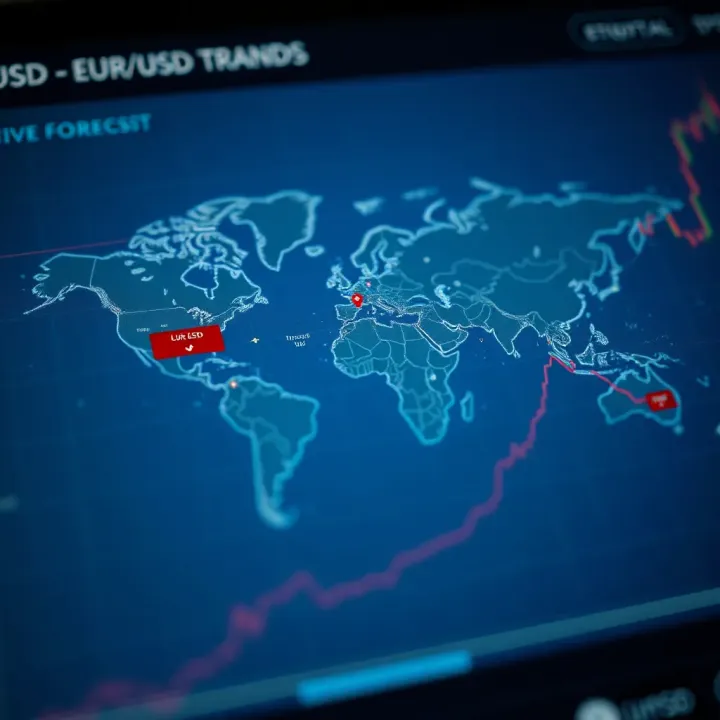
📊 Track EUR/USD trends with insights on ECB & Fed policies, geopolitics, and market sentiment for Kenyan investors and businesses doing cross-border deals. 🌍💼

📊 Explore the AUD/USD forecast with detailed market trends, economic factors, and central bank insights. Get practical trading tips relevant for Kenyan investors! 🌍

📉 Discover what shapes the USD to KES exchange rate 📈 from inflation to trade and policy. Stay ahead in Kenya’s forex market with expert insights and tips.
Based on 11 reviews