

Ethereum Price Prediction: What to Expect
📈 Discover Ethereum's price trend, expert views, and market signals shaping its future. Get informed insights for savvy investment decisions in Kenya.
Edited By
Sophia Turner
Gold, traded as XAUUSD in financial markets, is priced in US dollars and remains a key asset for investors worldwide. For many traders, especially in Kenya, understanding how gold moves against the US dollar can unlock opportunities in both long-term investing and short-term trading.
The price of gold doesn’t just float aimlessly; it reacts to various economic, political, and market forces. For example, when the US dollar weakens due to inflation concerns or monetary policy shifts by the Federal Reserve, gold prices typically rise as investors seek it as a safe haven. Conversely, when the dollar strengthens, gold often faces downward pressure.

Besides currency dynamics, global events shape gold price action. Political uncertainties, such as trade disputes or geopolitical tensions, tend to push gold prices higher, as investors look for a less risky store of value. Meanwhile, interest rates also have a direct impact; higher rates increase the opportunity cost of holding non-yielding assets like gold, often causing prices to fall.
Technically, traders watch charts and price levels keenly. Support and resistance zones, moving averages, and indicators such as the Relative Strength Index (RSI) provide clues about possible price movements. For instance, if gold breaks above a significant resistance level on strong volume, it might signal a bullish trend, encouraging buyers to enter the market.
Understanding XAUUSD requires a blend of fundamental knowledge and technical skills. Neither alone tells the full story.
For Kenyan investors, gold also holds a cultural and economic significance beyond trading floors. Physical gold remains popular as a store of wealth, especially in rural areas, while financial products like ETFs or CFDs offer exposure for those trading online.
In this article, we'll explore these factors in detail and offer practical insights tailored to Kenyan traders and investors. You'll learn how to interpret price movements on XAUUSD and apply that knowledge when making decisions, whether you’re trading on the Nairobi Securities Exchange, or through global forex brokers.
This understanding is crucial for managing risk and spotting opportunities, especially as global economic conditions continue to evolve rapidly.
Understanding XAUUSD is key for anyone looking to trade or invest in gold priced against the US dollar. This pair reflects the value of one troy ounce of gold in dollars, acting as a benchmark for gold’s international price. Since the US dollar remains the world’s main reserve currency, the XAUUSD rate directly influences many markets, especially for investors and traders in Kenya who watch both global and local currency movements closely.
XAUUSD is the trading symbol that combines "XAU" for one troy ounce of gold and "USD", the US dollar. This pair shows how much US dollars are needed to buy a single ounce of gold. Traders worldwide track XAUUSD to gauge gold price trends, hedge against currency fluctuations, or speculate on changes in gold’s value. For example, if the pair moves from 1,700 to 1,750, gold has become more expensive relative to the dollar.
Gold is widely viewed as a safe-haven asset, especially during periods of economic or political uncertainty. When the markets get turbulent, investors tend to flock to gold to protect their wealth. For instance, during inflation spikes or geopolitical tensions, gold prices typically rise as demand increases. This behaviour makes XAUUSD a useful gauge for risk sentiment in the financial markets.
Gold’s appeal in Kenya goes beyond international markets — it offers a means to protect savings against the fluctuating Kenyan shilling and inflation. Many Kenyans invest in gold indirectly through XAUUSD trading or gold-backed funds. During times when the shilling weakens against the dollar, gold prices often rise in local terms, providing a buffer for investors who otherwise would see their wealth erode.
For Kenyan traders and investors, adding gold exposure through XAUUSD can diversify portfolios and reduce risk. Unlike equities or bonds, gold tends to move independently, sometimes even in an opposite direction to stocks or currencies. This makes it handy for hedging against unexpected drops in the Nairobi Securities Exchange or instability in currency markets. For example, a farmer or businessperson might use gold investments to safeguard their earnings during times of currency volatility or inflation.
Tracking XAUUSD is not just about following gold prices — it’s about understanding how global economic factors and local realities interact, giving Kenyan investors a clearer edge in managing risk and seizing opportunities.
By grasping what XAUUSD measures and why gold matters, Kenyan traders and investors can make more informed decisions and navigate the gold market confidently.
Gold prices against the US dollar (XAUUSD) respond to several factors that traders and investors must watch closely. Understanding these drivers helps Kenyan investors make smarter decisions when trading gold or considering it for portfolio diversification. The key players influencing prices include global economic indicators, political events, and shifting supply-demand conditions.
Inflation is a top concern worldwide, including in Kenya, since rising prices eat away at purchasing power. Gold has traditionally served as a hedge against inflation because it tends to retain value when currencies weaken. For example, during periods when Kenyan shilling inflation surges, global investors often turn to gold, pushing XAUUSD higher as a safe store of value. This relationship matters especially now as many countries wrestle with post-pandemic inflation.
The US dollar’s strength inversely affects gold prices. When the dollar gains on other currencies, including the Kenyan shilling, gold usually becomes more expensive for buyers using those currencies, leading to decreased demand and lower gold prices. On the flip side, a weaker dollar makes gold cheaper globally, boosting its appeal. Kenyan traders following the forex market can spot chances where dollar movement might hint at gold’s next move.
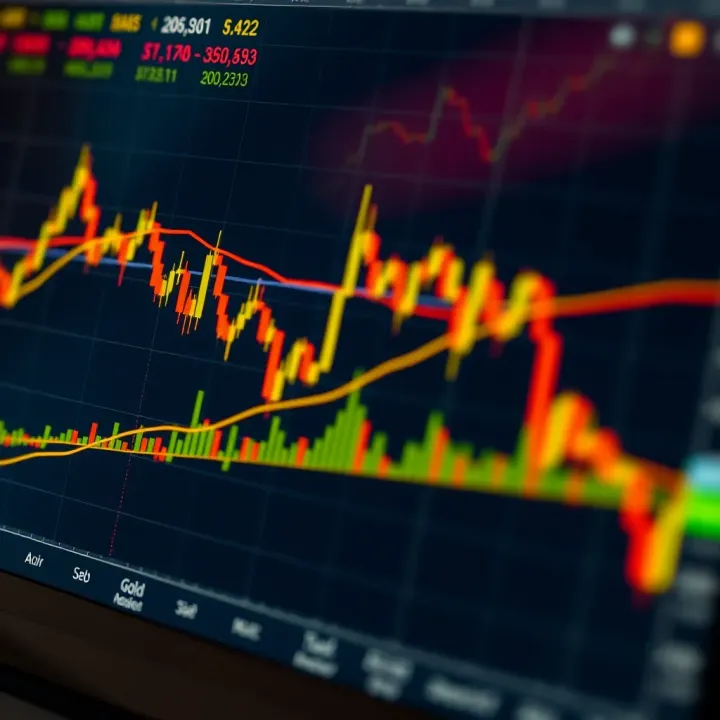
Periods of political unrest or geopolitical uncertainty tend to push investors towards gold as a safe asset. For instance, when tensions flare either globally or regionally, demand for gold rises as it’s seen as protection against market turbulence and currency risk. This push typically lifts gold prices against the dollar. Kenyan investors, aware of regional politics like East African diplomatic relations or US-China trade friction, should track such events for timely trading decisions.
Events like increased instability in the Horn of Africa or trade disputes involving major economies influence gold prices directly and indirectly. For example, disruptions in supply chains or uncertainty in currency markets caused by these events prompt investors to shift funds into gold. Kenyan investors benefit by keeping an eye on these developments as they can lead to sudden XAUUSD price shifts.
Gold’s availability depends heavily on mining production and existing reserves. A decline in mining output due to operational challenges or strikes can tighten supply, pushing prices upwards. Conversely, if large gold reserves are discovered or production ramps up, this excess supply can weigh on prices. For Kenyan traders, monitoring gold mining news from top producers like South Africa and Ghana provides clues about potential price movements.
Demand from investors and central banks also swings gold prices. Central banks buying gold to diversify reserves can drive prices up. Similarly, during times when investors perceive higher risk in equities or bonds, they increase gold holdings. In Kenya, the Central Bank and institutional investors’ gold-related moves, along with global investment flows, significantly impact XAUUSD trends. Staying informed about these activities helps traders anticipate shifts and adjust strategies accordingly.
Gold prices don’t move in isolation. Following economic data, political news, and supply changes gives XAUUSD traders an edge in capturing opportunities and managing risks effectively.
Technical analysis helps traders understand gold price movements against the US dollar by examining past price data and market trends. For XAUUSD trading, it offers practical tools to forecast potential price swings and identify entry or exit points. This approach complements fundamental analysis by focusing on market behaviour rather than economic reports alone.
Support and resistance levels are crucial in technical analysis. Support is the price point where demand tends to keep XAUUSD from falling further, while resistance is where selling pressure prevents it from rising. For example, if gold prices keep bouncing back around $1,900 per ounce, this level acts as support. Traders watch these points because they often signal where prices may reverse or stall.
Recognising these levels allows traders to place orders strategically. For instance, buying close to support can reduce risk, while selling near resistance can lock in profits. In the Nairobi Securities Exchange (NSE), for traders managing margin accounts, understanding support and resistance helps manage exposure during volatile sessions.
Moving averages and the Relative Strength Index (RSI) help smooth out price fluctuations and gauge momentum. The Moving Average (MA) calculates the average price over a set period—commonly 50 or 200 days—helping to identify whether XAUUSD is in an uptrend or downtrend. If the 50-day MA crosses above the 200-day MA (a golden cross), it signals bullish momentum; a cross below is bearish.
RSI measures the speed and change of price movements on a scale from 0 to 100. An RSI above 70 suggests gold is overbought and might correct lower, while below 30 indicates oversold conditions, possibly signalling a rebound. Kenyan traders using platforms like MT4 or MT5 can apply RSI to fine-tune their timing, especially during news releases affecting the US dollar.
Understanding short-term vs long-term trends is essential for effective trading. Short-term trends cover minutes to days and suit day traders who want quick profits from XAUUSD price swings. Long-term trends span weeks to months, better for investors aiming to hold positions through market ups and downs. For example, a trader may use a daily chart to spot long-term gold trends but zoom into the hourly chart for precise entry points.
Kenyan traders must consider their risk tolerance and trading style. Short-term traders can face rapid price changes influenced by US economic data releases whereas long-term traders focus on broader themes like inflation or currency shifts.
Traders’ preferred time frames vary based on goals. Commonly, 15-minute, 1-hour, and 4-hour charts are popular for active traders seeking nimble decisions. Swing traders often prefer daily or weekly charts to reduce noise. In Kenya’s jua kali economy, where time is a premium, many part-time traders lean towards daily time frames to balance analysis with other commitments.
Monitoring multiple time frames together provides a fuller picture. For instance, when the daily chart shows a strong uptrend, but the 15-minute chart signals overbought conditions, a trader might wait for a minor pullback before buying. Combining this with support, resistance, and indicators like RSI can improve chances of success.
Successful XAUUSD trading in the Kenyan context involves blending technical tools with an understanding of local market habits and global economic news to make informed, timely decisions.
Fundamental analysis plays a key role in forecasting gold prices by examining economic and market forces beyond just charts. For traders and investors in Kenya, understanding these factors helps anticipate price movements of XAUUSD — gold priced against the US dollar — especially given gold’s sensitivity to global events and monetary policies.
Interest rate decisions by the Federal Reserve have a significant impact on gold prices. When the US central bank raises interest rates, it often strengthens the dollar, making gold more expensive for holders of other currencies, which can lower demand and prices. Conversely, low or falling interest rates tend to weaken the dollar and boost gold’s appeal as a non-yielding asset, raising prices. For example, during the 2020–2021 period of low US rates, gold prices rose as investors sought safety amid uncertainty.
Additionally, the Federal Reserve’s statements about future monetary policy influence market expectations. Traders watching these announcements closely can adjust positions ahead of shifts in gold price trends.
US employment and GDP figures also provide vital clues on gold’s direction. Strong job growth and expanding GDP usually signal a robust economy, increasing confidence in riskier assets and reducing gold’s safe-haven appeal. On the other hand, weaker employment numbers or slower GDP growth might raise concerns about economic health, prompting investors to move funds into gold.
For example, during times when US unemployment rises unexpectedly, gold prices often jump as investors look for stability. These indicators also help Kenyan investors gauge the timing for entering or exiting gold positions amid global economic shifts.
Reports from the World Gold Council, a leading industry body, offer detailed supply and demand data, which is crucial for fundamental analysis. These reports include insights on jewellery demand, central bank buying, and investment trends across regions, including Africa. Kenyan investors benefit from such information to understand broader consumption patterns that affect XAUUSD prices beyond immediate trading signals.
Regularly reviewing these updates helps traders stay informed about shifts in gold’s global demand and supply balance, aiding better forecasting.
Market sentiment and investor positioning in futures and ETFs also influence price movements. When large institutional investors accumulate long positions, it often indicates a bullish outlook for gold. Conversely, heavy selling by speculators can signal declining prices.
Monitoring sentiment through commitment of traders reports or ETF inflows is practical for Kenyan traders. For instance, if ETF holdings soar during regional unrest or inflation concerns, it suggests rising demand that could push prices higher, offering trading opportunities.
Effective fundamental analysis requires keeping an eye on both economic data and market mood. Combining these insights allows for more accurate gold price forecasts and informed trading decisions.
By linking US economic indicators, monetary policy changes, and gold market news, investors get a clearer picture of what drives XAUUSD prices. This approach is vital for those who want to navigate the gold market with confidence rather than relying on guesswork or just technical signals.
Trading gold against the US dollar (XAUUSD) offers Kenyan investors a chance to diversify their portfolios beyond the local market. However, practical knowledge about trading platforms, tools, and managing risk is vital. These tips address the realities Kenyan traders face, such as access to reliable brokers, understanding software, and safeguarding investments in a volatile market.
Local vs international brokers: Kenyan traders must decide between local brokers regulated by the Capital Markets Authority (CMA) and international brokers. Local brokers like Nairobi Securities Exchange (NSE) licensed firms often provide easier deposit and withdrawal options through M-Pesa and bank transfers in KSh, making fund management straightforward. Plus, familiar regulatory frameworks offer some peace of mind.
On the other hand, international brokers might provide better spreads, access to advanced trading instruments, and global market exposure. Nonetheless, they may require forex conversions and charge higher fees, which affect profitability. Therefore, Kenyan traders should assess factors like transaction costs, platform reliability, and regulatory trustworthiness before choosing.
Essential trading software and resources: Successful XAUUSD trading needs dependable software. Platforms like MetaTrader 4 and MetaTrader 5 are popular for their user-friendly interfaces, charting tools, and fast execution. Many brokers in Kenya support these platforms with access to live XAUUSD price feeds.
Besides platforms, traders should use economic calendars, real-time news from trusted sources like the World Gold Council, and technical analysis tools to anticipate market moves. For example, tracking US Federal Reserve announcements directly impacts gold prices. Kenyan traders who integrate these resources gain an edge by making informed decisions without delay.
Setting stop-loss and take-profit: Controlling losses and securing gains prevents unexpected blows in volatile markets. Setting stop-loss orders helps limit potential losses by automatically closing positions at predetermined levels. Take-profit orders lock in profits when prices reach specific targets, ensuring gains are not eroded by sudden reversals.
Consider a trader buying XAUUSD at $1,900 per ounce expecting a rise to $1,950. Placing a stop-loss at $1,880 limits downside if prices fall, while a take-profit at $1,950 ensures profits when the goal is hit. In Kenya, where market swings can be sharp due to global events, these tools save traders from emotional decision-making and protect trading capital.
Managing leverage effectively: Leverage amplifies buying power, enabling larger trades with smaller capital. However, it increases risk; high leverage can wipe out your account quickly if the market moves against you.
Kenyan traders should use modest leverage ratios, especially when starting. For example, 1:10 leverage is safer than 1:100. Applying leverage with care means trading smaller position sizes relative to capital and adjusting leverage based on market conditions. This cautious approach prevents excessive losses and preserves funds for future opportunities.
Practical risk management is the backbone of sustainable XAUUSD trading. Combining reliable platforms, smart order settings, and sensible leverage helps Kenyan traders navigate gold markets confidently while protecting their hard-earned money.
Understanding recent trends and the outlook for XAUUSD is essential for anyone involved in gold trading or investment, especially in the Kenyan market. Tracking price movements alongside economic indicators and political events offers valuable clues that can influence entry and exit decisions. Kenyan traders, who often juggle local currency volatility with global market forces, benefit from clear insights into these moving dynamics.
Recent market developments show that gold prices against the US dollar have been responding to a mix of inflation fears and fluctuating US Federal Reserve policies. For instance, in early 2024, hawkish signals from the Fed pushed the dollar higher, putting downward pressure on gold prices. However, safe-haven demand caused by geopolitical tensions and concerns over global economic growth have often counteracted this, creating a seesaw effect.
For Kenyan investors, this volatility means timing is critical. Gold tends to react strongly to changes in the US economy but also to local factors, as Kenya’s import costs for gold-related products and exchange rates affect overall affordability and demand.
The Kenyan shilling (KES) has shown periods of weakness against the dollar in recent months, driven by trade imbalances and inflationary pressures at home. As gold is priced in US dollars, a weakening KES often leads local investors to see higher KSh prices for gold. This correlation makes gold a preferred asset for hedging against shilling depreciation, especially when inflation remains sticky in Kenya.
Looking ahead, most expert forecasts suggest a cautious bullish outlook for XAUUSD over the medium term. Analysts point to ongoing geopolitical uncertainties, persistent inflation in major economies, and cautious monetary policy shifts as factors likely to support gold prices. However, they also warn that a swift and stronger-than-expected US economic recovery could strengthen the dollar and cap gold gains.
Traders should watch out for a few key risks and opportunities. On one hand, rising interest rates could increase opportunity costs for holding gold, since gold doesn’t pay interest or dividends. On the other hand, persistent inflation and regional conflicts create safe-haven demand that could push prices up. Strategically, Kenyan investors might consider combining gold positions with dollar-hedging strategies to shield themselves from local currency swings.
Staying informed about both global developments and local currency trends lets you navigate the XAUUSD market more confidently, adjusting your trading approach to real-time risks and opportunities.
In summary, keeping a close eye on recent price actions and expert predictions helps Kenyan traders and investors make better decisions. Gold remains an asset that reflects a delicate balance between US economic indicators and local realities, so an understanding of both is vital for success.
📈 Discover Ethereum's price trend, expert views, and market signals shaping its future. Get informed insights for savvy investment decisions in Kenya.

📈 Today’s XAU/USD forecast digs into gold price moves, reviewing market trends, economic cues, and global events shaping demand. Perfect insight for Kenyan investors.

📈 Explore Cardano price trends for 2024 and beyond. Dive into market shifts, tech updates, and expert insights shaping ADA's future in Kenya and worldwide.

📊 Get a detailed WLD token price prediction with expert views, market trends, risks, and factors shaping WLD's future. Stay informed for smarter investment decisions.
Based on 13 reviews