
Understanding the Volatility Index in Financial Markets
📉 Understand the VIX – the market’s barometer of risk and investor mood. Learn how this index guides trading decisions here and across global markets.
Edited By
Amelia Walsh
Volatility indices offer a snapshot of market sentiment by measuring how much price swings investors expect over a set period. Unlike ordinary market indices that track price levels, these indices quantify the expected fluctuations, often signalling fear or calm among traders. For example, the Chicago Board Options Exchange’s Volatility Index (VIX) is among the most closely watched worldwide, sometimes nicknamed the “fear gauge”.
These indices are calculated primarily using the prices of options—contracts giving buyers the right to buy or sell an asset at an agreed price in the future. The premiums investors pay for options reflect their anticipation of how volatile the underlying asset will be. Higher option costs indicate a market expecting bigger moves.
In practical terms, volatility indices help traders and investors by:
Offering early warnings of rising uncertainty ahead of major events like elections or economic data releases
Aiding risk management through volatility-based trading strategies
Complementing traditional price indices to give a fuller picture of market conditions
For Kenyan investors, volatility indices tend to work alongside the Nairobi Securities Exchange (NSE) indices. While Kenya’s local market volatility indices are not as widely publicised as global ones, understanding the VIX and similar measures can guide portfolio decisions amid regional economic changes or global shocks that affect local markets.
Volatility indices don’t predict market direction but highlight the degree of expected price swings, which can impact trading decisions and risk assessment.
Since volatility often rises during market distress and falls in calmer times, these indices serve as barometers for picking moments to be cautious or more aggressive. However, the indices themselves can be volatile, so relying on them alone without considering broader fundamentals could mislead.
In the next sections, we will explore how these indices are constructed, their role in various financial markets, and how to use them effectively while keeping in mind the risks involved.
Volatility indices serve as crucial barometers of market behaviour by measuring how much asset prices are expected to fluctuate over a certain period. For traders and investors, these indices provide insight beyond mere price movements—they signal shifts in market sentiment and potential risk levels. Understanding volatility indices can help financial professionals anticipate periods of turbulence or calm, enabling better strategy and decision-making.
Market volatility refers to how wildly asset prices swing over a timeframe. High volatility means prices change rapidly and unpredictably, while low volatility points to more stable, steady price action. Consider the Nairobi Securities Exchange (NSE) during election seasons—prices can jump sharply in reaction to political developments, reflecting increased volatility.
Volatility impacts not only how risky an investment appears, but also the potential costs for traders, like wider bid-ask spreads or higher premiums on options. It is an everyday reality in financial markets, especially in emerging markets where economic or political shifts can cause unexpected price moves.
Volatility indices summarise market expectations about future volatility, often derived from options prices on major stock indices, such as the VIX for the S&P 500 in the US. They act as a snapshot of risk perceived by market participants.
For Kenyan investors accessing global markets, watching volatility indices can guide portfolio adjustments ahead of uncertain times. If volatility spikes, it might suggest hedging strategies or reducing exposure to riskier assets. On the other hand, low volatility can imply a comfortable environment for growth-focused investing.
Often called "fear gauges," volatility indices rise sharply when investors become nervous about future conditions. A sudden spike in an index like the VIX may reflect widespread anxiety—perhaps due to geopolitical tensions, economic reports, or unexpected shocks.
For example, during the 2008 global financial crisis, the VIX reached extreme highs, signalling panic across markets. In Nairobi, although local indices may react differently, international volatility often influences investor behaviour indirectly through capital flows.
During times of uncertainty, volatility indices serve as early warnings. Kenyan traders active in currency or commodity markets may notice increased implied volatility ahead of major announcements like CBK monetary policy meetings or election results.
This information allows quick adjustment—traders can tighten risk controls, hedge currency exposure, or reconsider timing of transactions. It also aids fund managers balancing between local and international assets to navigate looming market storms.
Volatility indices act like a thermometer measuring market temperature; rising levels mean investors are feeling the heat of uncertainty, prompting caution or strategic moves.

By grasping what volatility indices represent, financial players can make more informed decisions in an unpredictable environment, which is especially vital given Kenya's interconnectedness with global financial developments.
Understanding how volatility indices are calculated is fundamental for anyone looking to use them effectively in trading or investment decisions. These indices are not just pulled out of thin air; rather, they rely on specific market data and mathematical models to reflect expected market swings. By grasping their calculation methods, traders and analysts can better interpret what these indices signal about market risk and sentiment.
Volatility indices generally use options price inputs to measure what’s called implied volatility. Implied volatility estimates how much the market expects the price of an asset, like a stock index, to fluctuate in the near future. This is derived from prices of options—contracts that give holders the right, but not the obligation, to buy or sell the asset at a certain price. For example, if option premiums on the S&P 500 rise sharply, it implies market participants anticipate more significant price swings ahead. This approach is practical because it reflects real-time market expectations rather than relying solely on past price movements.
Standard mathematical models play a key role in turning option prices into a volatility index. The most common model is the Black-Scholes formula, which estimates the theoretical price of options based on factors like the underlying asset’s current price, strike price, time till expiry, risk-free interest rate, and implied volatility. By inputting market prices of many options into this model, analysts can back out the implied volatility component. These calculations are repeated across a range of option strike prices and maturities to capture a comprehensive picture of expected volatility. This method ensures the index stays sensitive to changing market conditions.
The most famous volatility index is the CBOE Volatility Index, widely known as the VIX. It measures expected 30-day volatility of the S&P 500 index by using prices from a wide range of options. Because the S&P 500 is a broad gauge of the US stock market, the VIX effectively acts as a “fear gauge” for investors, reflecting how much uncertainty or stress is currently priced into US equities. When the VIX spikes, it often signals heightened fear or risk aversion, prompting many traders to adjust their portfolios.
Other notable volatility indices serve similar roles for different markets. The VXN tracks implied volatility for the Nasdaq 100, focusing mostly on technology and growth stocks, which tend to be more volatile than broad-market averages. Meanwhile, the VSTOXX measures 30-day volatility expectations in the Euro Stoxx 50 index, representing the Eurozone’s blue-chip stocks. Traders using these indices gain insight into regional market sentiment and can diversify their risk management strategies accordingly.
Volatility indices translate option market data into a practical gauge of expected risk, guiding traders in timing and hedging decisions across global markets.
In summary, the calculation of volatility indices relies on option prices and established financial models like Black-Scholes to convert market expectations into a numerical measure of risk. The various indices worldwide, including VIX, VXN, and VSTOXX, cater to different regional markets but serve the common purpose of signalling investor sentiment and potential price turbulence.
Volatility indices serve as practical tools for traders and investors to gauge market sentiment and manage exposure to risks. By reflecting expected market fluctuations, they provide valuable signals for decision-making, especially in unpredictable markets. For Kenyan investors, understanding how to use these indices can improve portfolio resilience and trading strategies.
One common strategy to hedge market risk involves using volatility indices as a reference to protect investments during turbulent times. When volatility spikes, it often signals increased uncertainty or fear in the market. Investors can hedge by buying options or futures linked to volatility indices, effectively offsetting potential losses in their equity holdings. For example, if a Kenyan investor holds shares on the Nairobi Securities Exchange (NSE), monitoring the implied volatility from international markets like the VIX can guide decision-making on protective measures.
Portfolio diversification also benefits from incorporating volatility indices. These indices often behave differently from traditional assets; they may rise when stock prices fall and decline when markets are calm. Including assets tied to volatility can balance overall portfolio risk. For instance, investors might combine shares, bonds, and volatility-based instruments to reduce the impact of sudden market swings. This approach helps in creating a smoother investment journey despite the ups and downs.
Futures and options on volatility indices offer direct exposure to market sentiment changes without trading the underlying equity. These derivatives allow traders to speculate on or hedge against future volatility levels. For example, a trader expecting higher market turbulence might buy VIX futures to profit or mitigate losses elsewhere. These contracts are available on major exchanges and offer flexibility in managing short-term risks.
Exchange-traded products (ETPs) and other derivatives tied to volatility indices provide accessible means for retail investors in Kenya to participate in volatility trading. ETPs, like volatility exchange-traded funds (ETFs), track the performance of volatility indices without requiring direct futures trading. This lowers the entry barrier and allows Kenyan investors to diversify more effectively. However, it's essential to understand that these products may carry higher risks due to the complex behaviour of volatility, so informed choices and continuous monitoring are vital.
Volatility indices are not just abstract measures but practical tools in trading and investment, offering ways to manage uncertainty and protect portfolios when markets get choppy.
By leveraging the right instruments and strategies linked to volatility indices, traders and investors in Kenya can navigate market uncertainty with more confidence and agility.
Volatility indices provide valuable insights into market expectations, but they come with inherent risks and limitations that traders and investors need to consider carefully. Understanding these constraints helps in using these tools effectively, especially in risk management and decision-making.
Challenges in forecasting spikes
Predicting sudden surges in volatility remains a tough task. While volatility indices like VIX measure expected market fluctuations, they can spike unexpectedly after unforeseen events such as geopolitical tensions or sudden economic shocks. For instance, during the onset of the COVID-19 pandemic, global markets saw an abrupt jump in volatility levels that few anticipated. This unpredictability means relying solely on historical patterns or standard models to forecast volatility spikes can lead to underestimating risk.
Such challenges highlight the need for contingency plans in risk management. Investors should incorporate stress testing and consider the possibility of extreme market moves rather than depending only on volatility forecasts. This approach safeguards portfolios against unexpected shocks.
Market anomalies
Market anomalies sometimes cause volatility indices to behave in ways that don’t reflect actual market conditions. For example, during low-liquidity periods or times of extreme market complacency, volatility indices might signal calm while hidden risks grow. The so-called "volatility smile" observed in some option pricing can also cause distortions, affecting the implied volatility calculations that form the basis of most indices.
These anomalies can mislead traders into wrong assumptions about market risk. It's important to combine volatility data with other market indicators and economic information to form a more comprehensive view.
Overreliance on volatility levels
One common pitfall is putting too much emphasis on the absolute level of volatility indices without considering the broader context. High volatility readings often scare investors into selling, while low readings might create false comfort. However, high volatility isn’t always a signal to exit the market; sometimes it offers buying opportunities if underlying fundamentals remain sound.
In Kenyan markets, where information flow can be uneven, relying purely on international volatility indices without understanding local market nuances may lead to poor decisions. For example, a spike in VIX might not always correspond with Nairobi Securities Exchange moves, especially during isolated local events.
Misuse in timing market entries
Volatility indices are sometimes misused as precise tools for timing market entry or exit, but their lagging nature and sensitivity to external shocks reduce their reliability for such strategies. Attempting to predict exact turning points based on volatility alone can result in missed opportunities or losses.
A practical approach is to use volatility indices as part of a broader strategy that includes fundamental analysis and economic indicators instead of relying solely on them for market timing. This balanced method reduces the risk of acting on misleading signals.
Using volatility indices wisely means recognising their limits and integrating them with wider market knowledge. No single tool can fully capture the complexities of financial markets.
Volatility indices serve as valuable tools for assessing market sentiment and risk, but their presence and use in East Africa remain limited. Understanding their availability and utility in Kenyan and regional markets reveals opportunities for investors and points to areas needing development. In particular, Nairobi Securities Exchange (NSE) plays a key role as East Africa's largest bourse and a window into regional investor behaviour.
The NSE currently does not publish an official volatility index similar to the VIX in the US. However, market participants increasingly track implied volatility indicators derived from option prices on select blue-chip stocks or market-wide indices. This helps traders gauge near-term expectations of price fluctuations, though these metrics are less established and less accessible than those in more developed markets.
Still, local brokerages and research houses are experimenting with volatility-related analytics to enhance risk assessment and trading strategies. For example, some now provide analytics showing historical volatility of top equities like Safaricom and East African Breweries to support more informed decisions. The limited range of derivatives and less liquidity compared to global markets keep volatility measures somewhat tentative but growing in practical relevance.
East African financial integration initiatives, such as through the East African Community (EAC), have encouraged deeper capital market collaboration. This has spurred discussions on creating regional indices or volatility benchmarks that could capture risk perceptions across member countries, including Kenya, Uganda, Tanzania, Rwanda, and Burundi.
Although still in early phases, such efforts aim to provide investors with better tools to assess macroeconomic and market shocks within the region. A shared volatility benchmark could also facilitate cross-border hedging and portfolio management by reflecting regional political and economic developments impacting equities and bonds alike.
Kenyan investors keen to use volatility indices can access major international benchmarks like the VIX via global brokerage platforms. Derivatives and exchange-traded products (ETPs) linked to these indices are increasingly accessible to local retail and institutional investors through accounts with firms offering offshore trading services.
Using these instruments, investors in Kenya can hedge exposure to global market swings or speculate on volatility changes in developed markets. Although currency risk and regulatory considerations exist, access to these tools broadens the range of portfolio risk management options beyond local market limitations.
Incorporating volatility measures into local portfolio management encourages a more dynamic response to risk. Investors can use observed or implied volatility trends to adjust asset allocations, for instance, shifting from riskier equities to safer government securities during times of anticipated market turbulence.
Furthermore, awareness of volatility encourages better timing for entry and exit in local securities, especially those prone to price swings amid political or economic news shocks. Kenyan fund managers increasingly look to combine fundamentals with volatility signals to enhance returns, a practice that benefits from more refined volatility data becoming available locally.
Integrating volatility indices, whether local or international, equips Kenyan investors with sharper tools to navigate uncertain markets and protect their investments against sudden shocks.
In summary, while Kenya and the East African region are catching up on volatility index development, opportunities exist for savvy investors to leverage international volatility tools and emerging local analytics to improve decision-making and risk management.
📉 Understand the VIX – the market’s barometer of risk and investor mood. Learn how this index guides trading decisions here and across global markets.
📈 Understand global trading sessions, their effects on market moves, liquidity, and strategies. Learn how Kenyan traders can timing trades for better results in worldwide markets.
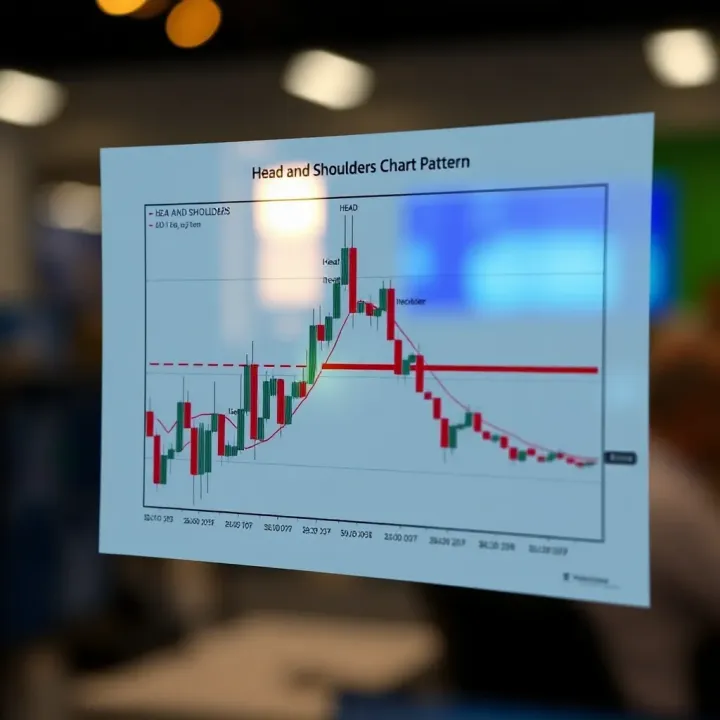
📈 Learn to spot the head and shoulders pattern in Kenyan markets. Discover key reversal signs, variations, plus practical trading tips for smarter investments in Nairobi and beyond.

Explore how DB traders shape markets, manage risks, and use tech💹. Learn about their impact, regulations, & careers in Kenya's financial scene📈.
Based on 7 reviews