

Understanding DB Traders and Their Market Role
Explore how DB traders shape markets, manage risks, and use tech💹. Learn about their impact, regulations, & careers in Kenya's financial scene📈.
Edited By
Sophia Turner
The head and shoulders pattern is a well-known chart formation that traders in Kenyan markets watch closely to anticipate possible changes in price trends. It signals a potential reversal in the direction of a financial asset, whether in equities traded on the Nairobi Securities Exchange (NSE), forex pairs, or commodities.
This pattern consists of three peaks: two smaller ones called the shoulders and a taller middle peak known as the head. Together, they form a shape resembling a human head with shoulders on either side. Spotting this formation correctly helps you predict when an existing uptrend might be ending or when a downtrend could be reversing.
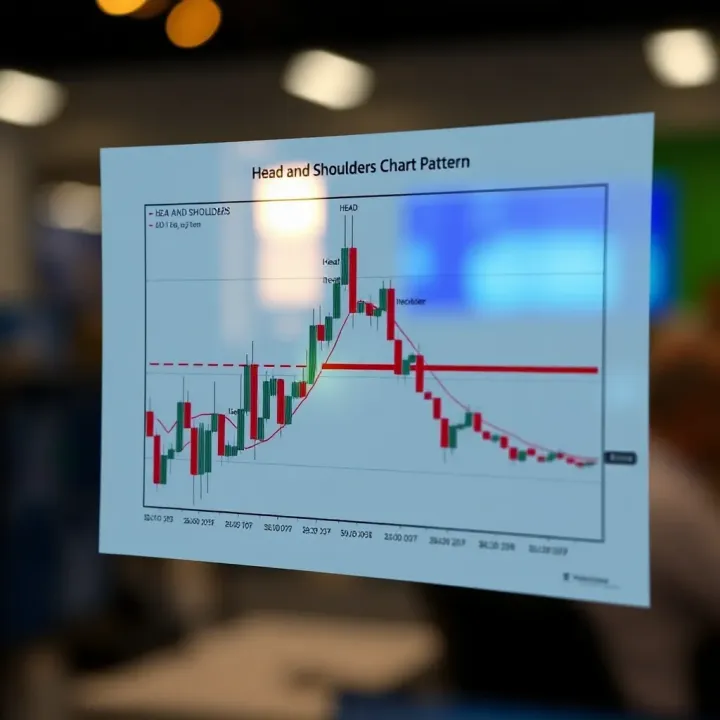
Recognising this pattern goes beyond just seeing the three peaks. You need to confirm the so-called “neckline” — a support level drawn by connecting the lows between the shoulders and the head. When the price breaks below this line after forming the second shoulder, it often confirms a trend reversal.
For example, if a Kenyan trader spots a head and shoulders pattern in a stock like Safaricom or East African Breweries on their price chart, they might decide to sell or short the stock expecting its price to drop.
The head and shoulders is particularly reliable because it reflects shifts in supply and demand balance, showing when bulls are losing strength and bears start gaining control. It’s often used with other technical tools like volume analysis and moving averages to improve decision-making.
Understanding this pattern is vital for traders and investors aiming to make smarter moves in Nairobi’s fast-moving markets. Being able to identify the formation early can help avoid losses during trend reversals and capitalise on new opportunities.
In subsequent sections, we will explore how to spot the pattern clearly, its variations, and practical examples relevant to local markets, plus tips on using it effectively alongside Kenyan trading platforms and regulations.
The head and shoulders pattern is a well-known chart formation that traders use to predict a potential reversal in a financial market trend. It usually appears after an upward price movement and signals that the current bullish trend may be coming to an end. This pattern is especially relevant for traders and investors looking to protect profits or spot entry points in markets like the Nairobi Securities Exchange or forex pairs involving the Kenyan shilling.
At its core, the head and shoulders pattern consists of three peaks: two smaller ones called the shoulders, sitting on either side of a taller peak known as the head. These three peaks form a shape resembling a person's head and two shoulders on a price chart. The pattern is completed when the price breaks below the 'neckline', a support line drawn by connecting the lowest points between the shoulders and the head. This break signals that sellers are gaining strength, often leading to a downward price move.
For example, suppose Safaricom shares show rising prices reaching a peak, followed by a higher peak, then a lower peak similar to the first. If the price drops below the neckline after the right shoulder forms, it could indicate the bullish run is over and a bearish trend may be starting.
Traders focus on the head and shoulders pattern because it offers a clear visual sign of market sentiment shifting from bullish to bearish. It helps them decide when to exit long positions or take short positions. Its reliability is supported by the volume behaviour typically seen: volume usually increases during the formation of the left shoulder and head, then diminishes by the right shoulder, indicating waning buying pressure.
By recognising this pattern early, a trader can avoid losses that come with stubbornly holding on as prices start to fall. They can also set more effective stop-loss orders just below the neckline to manage risk. In Kenyan markets, where price swings often follow local economic or political events, spotting such reversal signals can give traders an edge.
The head and shoulders pattern isn’t just a chart shape: it reflects a battle between buyers and sellers, helping traders sense when momentum is shifting.
Understanding this pattern adds a valuable tool to your trading arsenal, allowing more informed decisions based on the market’s rhythm rather than guesswork.
Understanding the key components of the head and shoulders pattern is essential for traders who want to identify reliable reversal points in financial markets. These components give structure to the pattern and provide clear signals for entry, exit, and risk management. Kenyan investors using Nairobi Securities Exchange (NSE) charts or Forex platforms can particularly benefit from recognising these elements.
The pattern builds from three peaks or "shoulders" visible on price charts. First comes the left shoulder, where prices rise and then fall back. It forms the initial high point, but usually on moderate volume. The next peak is the head, which is taller than the shoulders. It represents the highest price in the pattern and signals a strong temporary uptrend during its formation. Finally, there's the right shoulder, where the price rises again but struggles to reach the head's peak before dropping once more.
Picture this in a real trade: suppose Safaricom shares climb from KS0 to KS0, pull back to KS5 (left shoulder), surge to KS8 (head), and then retreat to around KS8 (right shoulder). This shape hints that bulls are losing strength. The shoulders are roughly similar in height, while the head is clearly higher — this visual cue helps traders predict that prices might soon reverse.
The neckline connects the lowest points between the shoulders and the head, acting like a support level. When prices break below this line after forming the right shoulder, it often confirms the pattern’s completion and signals a reversal from an uptrend to a downtrend. This breakout is where most traders in Kenya place sell orders or short positions.
The slope of the neckline also matters: a horizontal neckline suggests balanced pressure between buyers and sellers, while an upward or downward slant might affect the strength of the signal. For example, if Equity Bank shares form a head and shoulders with a gently declining neckline, the break below that trendline could lead to a quicker drop in price.
Recognising the neckline break is crucial. It often marks the moment when traders should act to protect profits or avoid losses.
Traders should always watch volume during these phases. Higher trading volumes during the head formation and the neckline break add credibility to the pattern. Low volume can signal a false pattern or weak reversal.

In summary, the left shoulder, head, right shoulder, and neckline together form a clear shape that signals weakening market momentum. Kenyan traders who spot these components accurately gain a meaningful edge in anticipating market turns and planning their trades effectively.
Recognising the head and shoulders pattern on price charts is a skill that can help traders anticipate trend reversals early. Spotting this formation in time often means entering or exiting positions with better timing, improving profits or limiting losses. This pattern doesn’t appear randomly — it follows specific price movements and shapes, so knowing what to watch out for is key.
The head and shoulders pattern usually unfolds with three peaks: the first and third peaks form the "shoulders", while the middle peak is the highest and forms the "head". Price rises to the left shoulder peak, dips to a level called the neckline, then climbs higher to the head before dropping back to the neckline again. Finally, it rises once more to the right shoulder, which generally peaks lower than the head.
A common real-life example would be a stock climbing steadily on the NSE, such as Safaricom shares, then forming these three peaks over a few weeks or months. Traders watch how the volume behaves during this pattern — volume tends to be higher during rallies to the left shoulder and head but lower on the right shoulder. The decline breaking below the neckline signals a shift from an uptrend to a possible downtrend.
Understanding these price moves helps traders map their strategies around entry points (like selling when price falls below the neckline) or setting stop-loss orders just above the right shoulder.
Mistaking random price swings for a proper head and shoulders pattern is a typical error. Traders might jump the gun by seeing any three peaks as the pattern without confirming if the head is truly higher than both shoulders or if the neckline is clearly identifiable.
Another pitfall is ignoring volume cues, which can lead to false signals. For example, if the volume doesn’t decrease on the right shoulder or doesn’t increase on the breakout below the neckline, the pattern may be weak or invalid.
Also, some traders only focus on perfect symmetry, expecting the shoulders to be mirror images. In reality, the shoulders can differ in height and timing, especially in volatile markets like forex trading in Nairobi.
To avoid these mistakes, it helps to cross-check with trendlines and other technical tools like the Relative Strength Index (RSI) or Moving Averages (MA). This combined approach reduces false alarms and sharpens entry and exit decisions.
Recognising the head and shoulders pattern accurately takes practice and patience, but mastering its price movements and common traps can give you an edge in Kenya’s dynamic markets.
Understanding the variations of the head and shoulders pattern helps traders spot different market conditions and adapt their strategies. While the classic head and shoulders signals a bearish reversal, its variations provide clues for bullish trends or more complex market behaviour. Recognising these differences is practical in Kenyan markets where price movements can be volatile and influenced by local events.
The inverse head and shoulders pattern flips the classic formation upside down and signals a potential bullish reversal after a downtrend. It starts with a low point (left shoulder), lower low (head), followed by a higher low (right shoulder). The neckline acts as resistance which, once broken with strong volume, confirms the upward reversal.
For example, a stock listed on the Nairobi Securities Exchange (NSE) that has been falling might form this pattern before rising again. Traders who identify the inverse pattern early can position themselves for gains by entering long positions just after the neckline breakout. This is quite useful during periods when Kenyan sectors like banking or manufacturing show signs of recovery after economic slowdowns.
Some charts reveal more complicated formations, such as the complex or triple head and shoulders. These involve multiple peaks and troughs, making it harder to spot clear reversal points but potentially offering stronger signals once confirmed.
A triple head and shoulders pattern features three distinct peaks (shoulders and head) and can indicate prolonged indecision in the market. For instance, a commodity like tea or coffee futures on Kenyan markets may form a complex pattern due to fluctuating export demand and weather influences. Traders need to watch volume and other indicators closely to avoid entering prematurely.
In practice, complex patterns test the discipline of investors and analysts. They often require confirmation from additional tools like moving averages or RSI (Relative Strength Index) to validate the trend reversal.
Variations of the head and shoulders pattern emphasise that price action isn’t always straightforward. Learning to read these forms accurately can improve your timing and decisions, especially in markets like Kenya's where external factors often impact price movements.
Recognising these variations expands your toolkit beyond the basic pattern, helping you navigate diverse market scenarios with confidence.
Applying the head and shoulders pattern in trading requires more than just recognising its shape on charts. Knowing when to enter and exit trades, and confirming signals with volume and other technical indicators, can greatly improve your decision-making and minimise risks. This section explains practical strategies that traders often follow to make the most of this pattern.
Identifying the right moment to enter a trade is key when using the head and shoulders pattern. Typically, traders look to enter a short position when the price breaks below the neckline after forming the right shoulder in a standard head and shoulders pattern. This break indicates that the previous uptrend may be reversing. For example, on the Nairobi Securities Exchange (NSE), a stock trending upwards might exhibit the pattern before the price dips below the neckline. Traders would then consider selling or shorting at that point.
Setting a stop-loss just above the right shoulder helps manage risk in case the pattern fails. For exits, a common approach is to measure the distance from the head's peak to the neckline and project this distance downward from the neckline breakout point. This gives a target price where profits can be taken. Using this method provides a clear plan rather than leaving trades open to guesswork.
For inverse head and shoulders (typically signalling bullish reversals), traders generally enter a long position when prices rise above the neckline after the right shoulder formation. Again, setting stop-losses below the right shoulder protects from false signals.
Volume plays an important role in confirming head and shoulders patterns. In many cases, volume should increase during the formation of the left shoulder and then decrease at the head, reflecting waning buying interest. When price breaks the neckline, volume should pick up again, signalling sellers moving in. Without this volume behaviour, the pattern might give false signals.
Besides volume, combining the pattern with other indicators like the Relative Strength Index (RSI) or Moving Averages can help confirm trend reversals. For instance, if the head and shoulders pattern signals a downtrend but the RSI remains above 50, the reversal might be weak. Conversely, crossover of short-term and long-term moving averages at the same time as the neckline break adds weight to the signal.
When you align the head and shoulders pattern with volume spikes and supporting indicators, you reduce the chance of acting on false breakouts.
In Kenyan markets, where liquidity varies, especially in forex or commodity trading, confirming patterns with volume and indicators is crucial. It guards against sudden market swings caused by low trading activity.
By combining clear entry and exit plans with smart confirmation techniques, traders can use the head and shoulders pattern as a reliable part of their toolkit for navigating market trends confidently.
Understanding how the head and shoulders pattern shows up in Kenyan financial markets helps traders make smarter decisions locally. The Nairobi Securities Exchange (NSE) often reflects market sentiment through such technical patterns, making it a useful reference for spotting trend reversals in stocks listed there. Plus, Kenyan forex and commodity markets provide dynamic environments where this pattern’s predictive power can be put to practical use. Examining real examples reduces guesswork and enables investors to navigate Kenya's market terrains more confidently.
Take the performance of Safaricom shares in early 2023 as an example. During this period, Safaricom’s stock chart formed a clear head and shoulders pattern over several weeks. The left shoulder showed a rise to KSh 38.50 before a dip, the head pushed higher to nearly KSh 41.00, then the right shoulder failed to exceed the earlier peak, topping at around KSh 39.00. The neckline, roughly at KSh 37.50, acted as support. Once the price broke below this neckline with increased volume, many traders on NSE interpreted it as a signal of a bearish reversal.
This case highlights the power of combining volume with pattern recognition. Volume picked up significantly on the neckline break, confirming selling pressure. Traders who had identified the pattern earlier could plan exit points or short positions, avoiding losses when the price dropped to KSh 35.00 over the next month. This example shows how real NSE data can put theory into practice.
Forex traders in Kenya, especially those dealing in USD/KES or EUR/KES pairs, often rely on the head and shoulders pattern to anticipate market turns. For instance, during periods of political uncertainty or economic changes like interest rate decisions by the Central Bank of Kenya (CBK), these patterns help predict shifts. A forex trader noticing an inverse head and shoulders could prepare to enter a long position anticipating shilling strengthening against the dollar.
Similarly, commodities such as tea and coffee, crucial to Kenya’s economy, show patterns that help farmers, exporters, and investors. If Kenyan coffee prices on international markets form a head and shoulders pattern suggesting a downward trend, exporters might delay selling or hedge accordingly.
In all contexts, the pattern’s key advantage lies in providing clear entry and exit signals backed by historical price behaviour, tailored to Kenyan market specifics.
When using the head and shoulders in local trading, consider market liquidity, news events, and seasonal factors. Combining technical signals with these practical realities makes for better, more reliable decisions tailored to Kenya’s unique financial environment.
Traders often find the head and shoulders pattern useful, but it's important not to rely on it blindly. Like any trading tool, this pattern has its limitations and can sometimes give misleading signals. Being aware of these risks helps you avoid costly mistakes and improve your overall trading strategy.
False signals occur when the pattern appears to form but price movements do not follow through as expected. For example, a trader might spot a head and shoulders pattern on a stock listed on the Nairobi Securities Exchange but find that the price instead continues upward, leading to a loss if they've shorted prematurely. This happens when the pattern is either incomplete or forms in low-volume markets where price fluctuations aren't strong enough to confirm a trend reversal.
To dodge false signals, watch for confirmation from volume trends. In genuine head and shoulders setups, volume usually declines at each shoulder and surges during the breakout below the neckline. Without this volume confirmation, the pattern may be unreliable. Also, avoid forcing the pattern onto charts where price swings don't clearly define the shoulders and head; unclear formations often lead to false readings.
Using the head and shoulders pattern alone can leave you exposed to risks. It's wise to combine it with other technical indicators such as relative strength index (RSI), moving averages, or support and resistance levels. For instance, if RSI shows overbought conditions right before a head and shoulders pattern forms, this strengthens the case for a reversal, making the signal more trustworthy.
Moreover, checking the wider market context is helpful. If the overall market trend on the NSE is bullish, a bearish head and shoulders pattern might not lead to a significant drop but rather a sideways correction. Similarly, look at fundamental factors like company earnings reports or economic data to avoid taking trades purely based on chart patterns.
Remember: No pattern guarantees success. Combining technical patterns with volume, momentum indicators, and fundamental insights creates a fuller picture, reducing your chances of getting trapped by false moves.
By understanding these limitations and layering your analysis, you increase your chances of making prudent decisions in Kenyan markets and beyond.
Explore how DB traders shape markets, manage risks, and use tech💹. Learn about their impact, regulations, & careers in Kenya's financial scene📈.
📈 Explore boom and crash markets in Kenya, learn to spot trends, manage risks, and make smart investment choices in changing economic times. 💼

📈Explore binary options trading in Kenya with clear insights on basics, risks, strategies, regulation, and choosing trusted platforms for smarter investing.

📊 Learn to read and analyze different candlestick types in trading charts. Understand market trends and sharpen your trading strategies in Kenya and beyond.
Based on 10 reviews