
HotForex Kenya: Your Guide to Forex Trading
📈 HotForex Kenya offers easy account setup, diverse trading options, secure payment methods like M-Pesa, and clear local regulations for Kenyan traders keen on forex markets.
Edited By
Isabella Hughes
Margin is a key concept in forex trading, especially for Kenyan traders handling currency pairs like USD/KES or EUR/USD. Essentially, margin represents the amount of money you need to set aside to open and maintain a trading position. It acts like a security deposit rather than the full cost of the trade.
A forex margin calculator helps you determine that exact amount before placing a trade. It factors in your trade size (lot), leverage ratio, and the current exchange rate to show how much margin you’ll need. This is vital because it prevents surprise margin calls or forced liquidations by your broker.
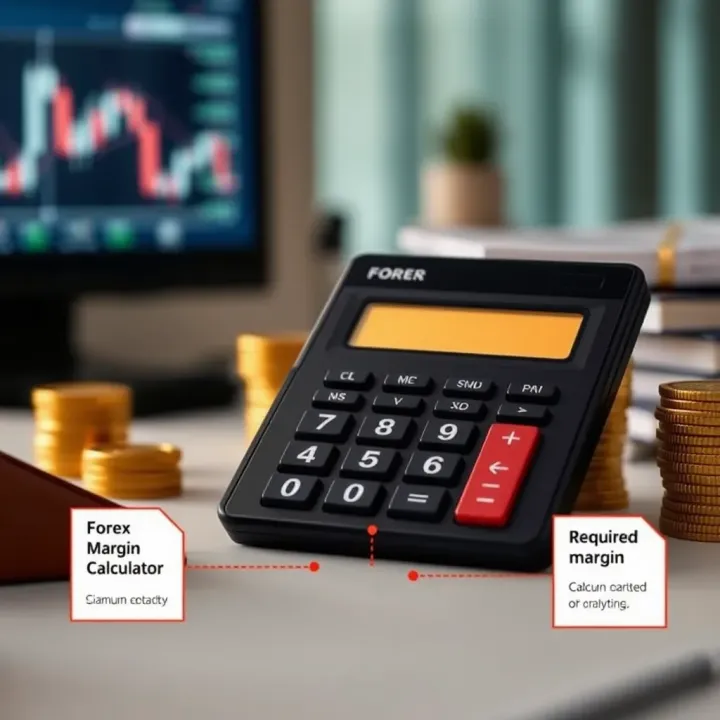
For instance, if you want to trade one standard lot (100,000 units) of USD/KES at a leverage of 1:100, your margin calculator will tell you the KSh amount you need to have in your account to open that position safely.
Knowing your margin requirement helps manage your exposure and avoid overtrading, which can quickly drain a Kenyan forex trader’s capital.
Risk Management: Helps you understand how much of your capital is tied up in each trade.
Planning Trades: Calculate margin before entering a position to ensure your account balance covers it.
Broker Compatibility: Different brokers have varying margin rules; calculators adapt to these differences.
Leverage Awareness: Seeing the effect of leverage on margin keeps you aware of potential risks and rewards.
In Kenya’s forex markets, where leverage can go up to 1:500 with some brokers, a margin calculator is not just a tool but a necessity. Without it, traders risk exposing themselves to unexpected margin calls, especially when the Kenyan shilling fluctuates against major currencies.
You input three main details:
Trade size (lots or units)
Leverage ratio
Currency pair and price
Then the calculator uses the formula:
plaintext Margin = (Trade Size / Leverage) * Current Price
The result shows you the amount of local currency (in KSh) that you need to hold in your account to open the position. This helps you decide if your account has enough funds or if you need to adjust the trade size.

By mastering forex margin calculators, Kenyan traders can make more informed decisions, managing both their funds and risks with confidence.


## What Is Forex [Margin](/articles/margin-level-forex-trading-guide/) and Why It Matters

[Understanding](/articles/understanding-deriv-guide-kenya/) forex margin is essential for anyone wanting to trade currencies successfully in Kenya. Margin acts like a deposit or a security that allows you to open and maintain larger trading positions than your actual capital. Without grasping margin properly, traders risk overleveraging and losing more than they expect. Let’s break down the fundamentals.

### Definition and Role of Margin in [Forex Trading](/articles/hotforex-kenya-forex-trading-guide/)

**Understanding leverage and margin requirements**: Leverage means borrowing money from your broker to control a bigger position than your actual cash would allow. For example, with a leverage of 1:100, KSh 10,000 of your money could control a trade worth KSh 1,000,000. The broker doesn’t lend you the full amount but requires a margin—usually a small percentage—to keep your position open. The margin requirement depends on the leverage level and the size of your trade.

**How margin allows you to control larger positions**: Think of margin as a kind of security deposit. Instead of paying the full value of the trade, you only need to set aside a portion (the margin), allowing you to increase your buying power. For instance, if you want to buy USD/KE (US dollar versus Kenyan shilling) worth KSh 1 million, and your broker provides 1:100 leverage, you only need KSh 10,000 to open that position. This lets traders with smaller capital jump into bigger trades, increasing potential returns.

**Difference between used margin and free margin**: Used margin is the amount currently locked for your open trades—it’s your broker’s way of ensuring you keep part of your funds as security. Free margin is what remains in your trading account and is available for opening new positions or absorbing losses. For example, if your account balance is KSh 50,000 and you’ve used KSh 10,000 as margin for a trade, your free margin is KSh 40,000. Knowing this difference helps you avoid overtrading or margin calls.

### Risks Involved with Trading on Margin

**Potential for greater profits and losses**: Leverage amplifies both gains and losses. While margin lets you control bigger trades, it also means that a small market move against your position can wipe out your deposit quickly. For example, a 1% adverse movement on a leveraged KSh 1 million trade could result in a loss of KSh 10,000, which is your full margin. This potential calls for cautious position sizing.

**Margin calls and liquidation risks**: If losses eat into your free margin and your account falls below the maintenance margin, brokers issue margin calls. This means you have to add funds or close positions to avoid automatic liquidation, where the broker closes your trades to prevent further losses. In Kenya, many retail traders have faced sudden liquidations because they did not monitor margin closely or adjust trade sizes when the market swung.

**Importance of managing margin carefully**: Managing margin is not just about avoiding calls but also about protecting your trading capital. Regularly checking your used and free margin, cautiously adjusting leverage, and setting stop-loss orders helps you curb potential losses. For [Kenyan traders](/articles/deriv-forex-trading-guide-kenya/), especially those with limited capital, careful margin management can mean the difference between a long trading career and a short-lived experience.

> Trading on margin offers exciting opportunities, but it's a double-edged sword. Wise management and understanding of margin help protect your capital while maximising your trading potential.

In summary, knowing what margin is and how it works equips you to trade forex with clearer risk awareness. It is the bedrock for effective use of forex margin calculators to size your trades wisely in Kenya’s market environment.

## How Forex Margin Calculators Work

Forex margin calculators simplify one of the trickier parts of trading — knowing exactly how much margin you need to open a position. Especially for Kenyan traders managing limited capital, these tools help you avoid mistakes like overcommitting funds. By inputting a few key details about your trade, you get a clear margin requirement that guides your decision making.

### Key Inputs for Margin Calculation

**Trade size or lot size** defines how much of a currency pair you want to buy or sell. In forex, a standard lot usually equals 100,000 units of the base currency, but many brokers allow mini and micro lots to suit smaller investors. For instance, if you choose a mini lot (10,000 units) instead of a standard, your margin needs decrease proportionally, reducing exposure and risk.

**Leverage ratio offered by the broker** represents how much you can control with borrowed funds. For example, with a leverage of 1:100, you can control KSh 1 million with just KSh 10,000 margin. However, higher leverage means higher risk because losses multiply too, so Kenyan traders must pick leverage levels that balance opportunity and caution.

**Currency pair and its current price** affect the margin because the position value depends on the price per unit. A pair like USD/KE might have a different exchange rate than EUR/USD, and this directly influences how much margin Kenyan shilling traders need to provide. Since forex prices fluctuate, the calculator uses the live rate to give updated margin figures.

### Steps to Calculate Margin Using a Calculator

**Entering trade details** is the first step. You select your currency pair, input your trade size (lot amount), and choose your leverage. This straightforward process helps avoid manual errors that can affect margin estimates.

**Understanding the output margin requirement** means recognising the exact amount of cash you must set aside to maintain your position. If your margin requirement says KSh 50,000, you must have that amount in your account to keep the trade open, or risk a margin call.

**Adjusting trade size or leverage** lets you manage risk actively. If the margin required is too high, you can reduce your trade size or lower your leverage to a safer level. For example, cutting your lot size from a standard to a mini lot might bring your margin down from KSh 100,000 to KSh 10,000, making the trade more manageable.

> Using a forex margin calculator regularly helps Kenyan traders plan positions carefully and avoid overexposure, especially when juggling volatile currency pairs.

In summary, margin calculators take the guesswork out of margin requirements. By considering trade size, leverage, and currency price in one place, you get clear insights to trade confidently and safely with your capital in Kenya.

## Using a Forex Margin Calculator in Kenyan Shilling (KSh) Context

For Kenyan traders, using a forex margin calculator in the context of Kenyan Shilling (KSh) is vital to manage trading risks accurately. Most brokers price forex pairs in US dollars, so converting margin requirements to KSh helps you understand how much actual capital you need to set aside before placing a trade. This approach also aligns with local budgeting and money management practices, especially since most Kenyan traders operate with domestic currency.

### Converting Margin Requirements from USD to KSh

Since many margin calculators show margin requirements in USD, it’s necessary to convert these figures using the current USD to KSh exchange rate. For example, if a margin calculator indicates you need $100 to open a trade, and the current exchange rate is 1 USD to 140 KSh, then your actual margin in Kenyan Shillings would be KSh 14,000. This conversion reflects real purchasing power and gives a clearer view of your required deposit.

Exchange rates fluctuate daily due to market dynamics and macroeconomic factors, so always use real-time rates for conversion instead of older or average rates. Several financial platforms and banks provide updated exchange rates to help traders make timely decisions.

Brokers may offer different account currency options, which affects how margin is calculated and displayed. A Kenyan trader using a USD-denominated account will get margin requirements directly in dollars, while others might offer KSh-denominated accounts or allow pricing in euros or pounds. Choosing an account currency that matches your base currency reduces currency risk and simplifies margin management.

Note that when trading via brokers whose base currency is not KSh, you must still convert margin requirements before assessing how much capital to commit locally. Some brokers price their services entirely in USD even for Kenyan clients, so understanding this distinction is important.

### Practical Examples Relevant to Kenyan Traders

When calculating margin for popular currency pairs like USD/KE (US dollar against Kenyan Shilling), the calculation is straightforward. Suppose you want to trade one standard lot (100,000 units) of USD/KE; if the broker requires a 1% margin, you need $1,000 expressed in KSh. Using the current exchange rate of 1 USD = 140 KSh, the margin requirement becomes KSh 140,000.

For pairs like EUR/USD, even though this pair does not involve the Kenyan Shilling directly, Kenyan traders use the USD to KSh conversion to understand required margin. For instance, if a trade requires $500 margin, convert it to KSh 70,000 (assuming the same exchange rate). This allows Kenyan traders to assess funding needs and risks in local currency terms.

Leverage levels offered by brokers in Kenya commonly range from 1:50 to 1:500. Higher leverage cuts down margin needed per trade but exposes you to greater risk. For example, trading with 1:100 leverage on KSh 140,000 worth position demands only KSh 1,400 margin. However, you should manage leverage carefully because while it lowers upfront costs, it magnifies both potential profits and losses.

> Always consider your trading capital and risk tolerance when deciding on leverage and margin size. Using a margin calculator with accurate KSh conversions ensures you neither overcommit nor waste capital unnecessarily.

In summary, integrating Kenyan Shilling conversions in forex margin calculations helps traders connect their trading plan with local reality. This practical step is essential for successful margin management, risk control, and informed decision-making.

## Benefits of Using a Margin Calculator for Kenyan Forex Traders

Using a forex margin calculator offers clear advantages for traders in Kenya by improving risk control and helping to manage trading positions prudently. These calculators make it easier to understand exactly how much margin is needed for each trade, so traders avoid unexpected margin calls or liquidations. Given the volatility in forex markets and fluctuating KSh exchange rates, this tool is quite handy for keeping trading activities within safe limits.

### Risk Management and Position Sizing

#### Avoiding overexposure to the market

One key benefit of using a margin calculator is its help in avoiding overexposure. Overexposure happens when a trader risks a large portion of their trading capital on one or multiple positions. For example, if a Kenyan trader with KSh 100,000 trades with very high leverage without calculating margin properly, they might unknowingly risk more than their account can sustain. A margin calculator highlights the actual margin needed, showing if the position size is too big for available capital. This way, the trader can adjust the trade size and keep exposure within a reasonable level.

#### Setting realistic trade sizes based on available capital

Margin calculators support traders to set trade sizes that fit their account balance realistically. Suppose a trader has KSh 50,000 and wants to open a USD/KE position with 1:100 leverage. The calculator quickly shows the margin required, making it clear if the trade size should be reduced to avoid risking too much of the account. By knowing the exact margin needed upfront, traders can plan multiple trades without running out of free margin, helping to spread risk across positions rather than putting all capital into a single risky trade.

### Improved Trading Discipline

#### Planning trades in advance

A margin calculator nudges traders to plan before entering trades. Instead of jumping into the market blindly, the trader inputs details like lot size, leverage, and currency pair to see their margin requirement. This process encourages thoughtful consideration of whether the trade fits their overall risk management strategy. Say a trader wants to speculate on the EUR/USD; they can calculate margin first to ensure their capital can handle potential losses without panic closing positions prematurely.

#### Understanding margin limits to reduce emotional trading

Knowing margin limits helps keep emotions in check during trading. Emotional decisions often happen when traders don't understand their margin exposure and suddenly get margin calls. When a trader consistently uses a margin calculator, they become aware of their financial boundaries, reducing impulsive decisions driven by fear or greed. This consistent awareness brings greater confidence and steadiness to trading—a big plus for Kenyan traders aiming for sustainable results.

> Proper use of a forex margin calculator builds solid risk management habits, helping Kenyan traders trade confidently and stay in the market longer.

By integrating a margin calculator into daily trading routines, Kenyan traders can make smarter choices, protect their capital from outsized risks, and improve their overall chances of success in forex trading.

## Tips for Choosing and Using Forex Margin Calculators Effectively

Using a forex margin calculator is not just about punching in numbers; picking the right tool and using it properly can make a big difference in your trading results. These calculators help you figure out how much margin you need before entering a trade, which is especially important when trading with leverage common in Kenya’s forex market. To get the best from these tools, it’s essential to focus on reliability, ease of use, and real-time accuracy.

### Selecting Reliable and User-Friendly Tools

When choosing a margin calculator, look for features that build trust and save time. Accuracy is key — the calculator should work with up-to-date currency prices and provide clear explanations of the margin required. A simple interface with easy input fields for lot size, leverage, and currency pairs makes it straightforward to use without second-guessing. For example, a calculator that instantly updates margin as you change the lot size helps you spot risky trades before committing your capital.

Several well-known forex platforms now offer built-in margin calculators trusted by Kenyan traders. For instance, the calculators on MetaTrader 4 and 5 platforms are widely respected due to their integration with live market data and user-friendly design. Other independent options like the calculators from Forex.com or IG also provide reliable results and support multiple currency accounts, including KSh, which is practical for local traders.

### Integrating Calculators into Daily Trading Routine

Margin requirements can change quickly, especially with volatile forex pairs like USD/KE or EUR/USD. Always update your calculator’s inputs to mirror the current market price before planning any trade. This habit helps you avoid surprises when the real margin call comes due to rate shifts. For example, if the USD/KE exchange rate rises sharply, the margin needed for the same trade size also increases, so your calculator must reflect this.

Before placing any trade, double-check the margin requirements given by your calculator. Confirm that leverage levels and trade sizes are set right because errors here can lead to excessive exposure or unnecessary margin blocking. This practice not only protects your trading capital but also promotes disciplined risk management. Kenyan traders often report that using calculators to verify margin before execution helps reduce emotional decisions during hectic market moments.

> Using a forex margin calculator is like checking your vehicle’s fuel before a long journey — it ensures you won’t get stranded midway by running out of margin unexpectedly.

Employ margin calculators consistently, and you’ll find they become an indispensable part of staying in control of your trades, managing risk solidly, and making informed decisions every day.📈 HotForex Kenya offers easy account setup, diverse trading options, secure payment methods like M-Pesa, and clear local regulations for Kenyan traders keen on forex markets.
📊 Discover how margin level shows your forex trading risk and account health. Learn safe practices to protect your KSh investments amid market shifts.
📊 Learn forex trading basics in Kenya, from understanding currency pairs to using platforms and managing risks. Get practical tips and avoid common mistakes. Start strong today!
📈 Discover how to trade forex on Deriv with tips tailored for Kenyan traders! Learn platform features, effective strategies & risk management today.
Based on 14 reviews