
How to Make DERIV Mpesa Deposits in Kenya
🔍 Learn how to make DERIV Mpesa deposits easily in Kenya. Step-by-step guide, fees explained, common issues, and tips for secure transactions. 💼📲
Edited By
Oliver Hayes
Withdrawing money from M-Pesa is a frequent task for many Kenyans, especially for amounts like KSh 10,000, whether it’s to pay bills, buy groceries, or settle debts. However, it's not just a simple press of a few buttons—there are charges involved that users should understand to avoid surprises.
M-Pesa withdrawal fees depend mainly on the amount you take out and the agent or bank you use. For a withdrawal of KSh 10,000, the standard charge as per Safaricom’s official tariff ranges between KSh 25 and KSh 55, depending on where you withdraw. For example, withdrawing at a Safaricom agent usually costs KSh 55, while withdrawals through bank-linked kiosks or certain agents might have slightly lower fees.
The withdrawal fee is a flat rate within a specific withdrawal bracket, so whether you withdraw KSh 10,000 or slightly less, the fee remains the same.
Several factors influence these charges:
Withdrawal venue: Safaricom agents generally charge the standard fee, but some third-party agents or banks may add their own commission.
Amount bracket: Safaricom sets fees based on withdrawal slabs; amounts above or below KSh 10,000 fall into different fee brackets.
Time and location: Some rural or remote areas might have agents charging more due to operating costs.
To keep withdrawal costs manageable, consider these practical tips:
Plan withdrawals: Stick to amounts that fall within lower fee brackets.
Use reputable agents: Choose well-known agents to avoid extra commissions.
Withdraw larger sums less often: This can reduce the frequency of fees, but balance it with safety concerns.
Understanding these nuances helps traders, investors, and finance professionals manage their cash flow and fees effectively. Knowing that withdrawing KSh 10,000 from M-Pesa generally costs around KSh 50 means you can factor this into your daily transactions and overall financial planning without unexpected costs piling up.
Understanding how withdrawal charges are set up by M-Pesa is essential if you want to manage your costs effectively. For traders, investors, and finance professionals dealing with regular cash-outs, knowing what drives these fees can help in budgeting and optimising transactions.
M-Pesa withdrawal fees are generally fixed within specific ranges depending on the amount withdrawn. There are standard categories such as small, medium, and large withdrawals, each carrying a preset fee, which Safaricom publishes and updates periodically. For example, withdrawing between KSh 1 and KSh 100 can attract a lower fixed charge, while amounts closer to KSh 70,000 attract the highest fees allowed.
This system is practical because it helps customers quickly gauge costs without complex calculations. For business users handling cash-out of various sizes regularly, understanding these categories assists in avoiding surprises on transaction receipts.
Fees scale with the withdrawal amount in a tiered structure—larger withdrawals carry higher absolute fees but relatively lower percentage charges. For instance, a KSh 1,000 withdrawal might attract a fee of about KSh 27, which is a higher percentage than a KSh 10,000 withdrawal fee of approximately KSh 80. This graduated system encourages larger yet fewer withdrawals to save on costs.
Awareness of these tiers allows you to plan withdrawals that balance cash needs and fees. For example, a trader withdrawing KSh 10,000 at once often pays less in fees as a percentage than doing five separate withdrawals of KSh 2,000 each.
While M-Pesa is the market leader in Kenya, other providers like Airtel Money and Telkom’s T-kash offer similar services but with slightly different fee structures. Generally, M-Pesa's fees are competitive given the widespread agent network and convenience. However, some competitors may have lower withdrawal fees for small amounts, which might matter for users making frequent small withdrawals.
For financial analysts considering investment or operational strategy, comparing M-Pesa’s fee structure against alternatives provides insight into user behaviour and service positioning.
M-Pesa withdrawals are most commonly done at Safaricom agent outlets scattered across towns and rural areas. Each agent can impose daily withdrawal limits, sometimes linked to their float balance. Typically, agents can process withdrawals between KSh 100 and KSh 70,000 per transaction, though daily limits vary.
For business users, it’s important to confirm an agent’s cash availability before making large withdrawals to avoid multiple trips or partial withdrawals, which increase cumulative fees.
You can also withdraw M-Pesa funds via ATMs, especially those linked to banks cooperating with Safaricom. This offers quick access without needing to visit an agent. However, ATM withdrawals may include charges from the ATM operator in addition to M-Pesa withdrawal fees.
For investors or traders near urban centres, ATM withdrawals can save time, but balancing extra ATM fees is vital when calculating overall costs.
Apart from physical cash withdrawal, M-Pesa allows you to transfer money digitally to bank accounts. You can then withdraw from your bank using cards or bank agents. This method may incur different or lower charges depending on the bank’s policies.
This option is ideal for those whose business partners or suppliers prefer bank transfers or who want to avoid carrying large cash sums. Planning such digital withdrawals can reduce cash handling costs and improve security.
Knowing exactly how M-Pesa withdrawal charges are structured empowers you to make smarter choices about when, where, and how to cash out, keeping expenses lower and operations smoother.
Understanding the exact cost of withdrawing KSh 10,000 from M-Pesa is essential for anyone managing business cash flows or personal finances. This clarity helps in budgeting for transaction fees and assessing if alternate withdrawal options might save money. Since M-Pesa charges vary depending on several factors, working out the fees upfront avoids surprises and ensures better control over expenses.
Safaricom, the operator of M-Pesa, publishes a standard tariff for withdrawals. For a KSh 10,000 cash-out, the official charge usually falls within the KSh 100 to KSh 110 range, depending on updates by Safaricom. This fee is deducted directly from your M-Pesa balance when the withdrawal is processed. Knowing this base tariff is key because it sets the benchmark before additional costs come into play.
Though Safaricom sets the standard fees, actual charges might differ by agent and location. For instance, agents in rural areas sometimes add a small surcharge to cover transport and security costs, while those in urban centres might stick closer to the official tariff due to higher competition. This variation means a trader withdrawing in Nairobi may pay less compared to one in a remote county.
Consider a small business withdrawing KSh 10,000 daily. If the official tariff is KSh 100, that translates to KSh 3,000 a month purely on withdrawal fees. Over time, these charges affect profitability, especially if transactions are frequent. Being aware of the fees allows you to plan withdrawals strategically, perhaps opting for larger but fewer withdrawals to reduce total charges.
M-Pesa's network isn’t always stable, particularly during peak hours or in areas with weak signals. An interrupted transaction might fail but still deduct the withdrawal fee, causing frustration and potential loss. Hence, it's wise to confirm transaction completion and check balances before attempting another withdrawal.
M-Pesa sets daily and monthly withdrawal limits to reduce fraud. If your cash-out exceeds these limits, you might need to make several withdrawals, each attracting separate fees. For example, if the daily limit is KSh 70,000, withdrawing KSh 10,000 in smaller chunks can accumulate multiple charges, increasing costs.
Agents can add commission fees over and above the Safaricom tariff as compensation for their services. These surcharges vary widely and might not always be transparent. To avoid extra costs, ask the agent upfront about fees before withdrawing. Remember, a slight difference in commission can add up significantly, especially for traders who withdraw regularly.
Plan your M-Pesa withdrawals carefully by knowing both the official charges and additional possible costs to save money and avoid unexpected fees.
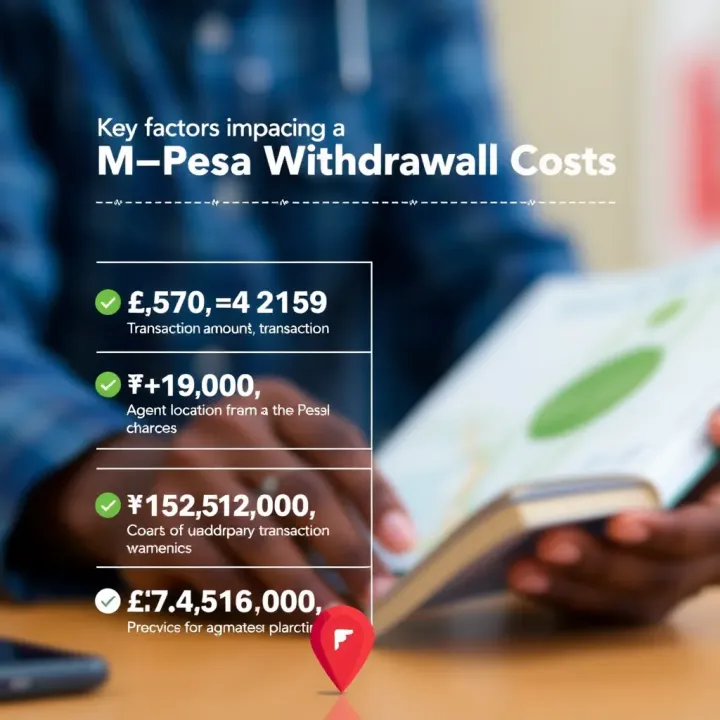
Understanding the factors that influence withdrawal fees beyond the set M-Pesa charges is vital for traders, investors, and finance professionals. These fees don't remain static; they vary depending on parameters like location, timing, and transaction frequency. Knowing how these variables play out can help you plan your withdrawals better and save on unnecessary costs.
Urban vs rural agent pricing often shows noticeable differences. In Nairobi or Mombasa, agents may charge the official M-Pesa fees or slightly less due to high competition and high transaction volumes. However, in rural areas—say in parts of Turkana or Kitui—agents sometimes add surcharges to cover their transport or operational costs, which raises the withdrawal fees beyond the standard rate. For example, withdrawing KSh 10,000 in Nairobi might cost a flat KSh 90, but in a remote rural town, the agent could charge an extra KSh 20–50 on top of that.
County regulations impacting fees also influence withdrawal costs. Some counties have introduced caps or additional levies on financial transactions to boost local revenue, which agents pass to customers. For instance, counties like Nairobi and Kiambu may have stricter compliance rules for agents, indirectly affecting their service fees. Traders working across counties should check local rules as fees might climb subtly from one county to another. This variation is important when you withdraw KSh 10,000 repeatedly; small differences add up.
Peak hours and busy periods impact withdrawal fees. Agents in busy malls or markets during lunch or weekend peaks tend to charge higher fees due to increased demand and longer queues. This can be the case in places like the Gikomba market or Nairobi CBD. Conversely, withdrawals during quieter hours might cost less or offer room for negotiation. For those handling large amounts regularly, timing withdrawals after peak hours may lessen the fee burden.
Daily and monthly withdrawal limits imposed by M-Pesa affect how often and how much you withdraw. For instance, the maximum daily withdrawal limit is usually KSh 70,000, but it may differ depending on your account type and agent. Frequent withdrawals under these limits may accumulate higher total fees compared to fewer, bigger transactions. Understanding these limits helps in structuring withdrawals so you don’t exceed thresholds that might trigger additional charges or inconvenience.
Being aware of these practical factors can greatly influence how much you spend withdrawing KSh 10,000 or similar amounts. From where and when you withdraw, to how often, the choices you make can tighten your cash management and avoid unnecessary costs.
Understanding how to reduce withdrawal fees can save you a fair bit, especially if you frequently take out amounts like KSh 10,000. Managing withdrawal costs wisely means more money stays in your pocket and reduces unnecessary charges that can add up over time. For traders, investors, and finance professionals who handle numerous transactions, small savings per withdrawal become quite significant.
Using M-Pesa agents remains the most common and convenient way to withdraw cash. However, fees may vary depending on the agent’s location and business model. Urban agents tend to charge the standard M-Pesa tariffs, while rural or small-scale agents sometimes add a surcharge to cover their operational costs. To keep costs low, it pays to withdraw from reputable agents in busy centres where competition keeps fees in check.
Withdrawing cash through ATMs linked to M-Pesa or bank accounts is another option. This method often has fixed or lower charges compared to agents, especially for larger amounts like KSh 10,000. However, not all ATMs support M-Pesa debit, and sometimes banks add their own ATM fees. It is good to check with your bank or the ATM provider regarding exact charges before opting for this method.
Another way to avoid agent fees is to transfer money from your M-Pesa wallet to a linked bank account and then withdraw from your bank’s ATM or counter. Banks usually charge lower fees for such transfers, and withdrawing from your bank tends to attract minimal or no charges, depending on your account type. This method is especially useful if you plan to withdraw larger sums or want to consolidate funds in one place.
Timing is key when it comes to limiting charges. Avoid withdrawing small amounts multiple times a day as each transaction attracts a fee. Instead, plan your cash needs in advance and withdraw larger sums less frequently. This practice not only cuts down on fees but also minimizes the inconvenience of regular trips to agents or ATMs.
Small cash-outs, say KSh 500 or KSh 1,000 repeatedly, can quickly eat into your money through repeated fees. For instance, withdrawing five times KSh 2,000 incurs more charges than one withdrawal of KSh 10,000. This is particularly important for businesses or investors who deal with cash regularly – batch your withdrawals to save on cumulative costs.
Always ask the agent or check your M-Pesa app to confirm the exact withdrawal fee before proceeding. Some agents might add unofficial surcharges, especially in low-competition areas. Knowing the fee upfront helps you decide whether to proceed, wait, or find an alternative withdrawal point. Keeping your M-Pesa app updated also helps with accurate fee displays.
Being strategic about how and where you withdraw cash from M-Pesa ensures you keep more of your money. Small adjustments in withdrawal habits often result in meaningful savings over time.
In summary, picking the right withdrawal channel, planning your cash needs carefully, and consistently confirming fees safeguard your funds and makes withdrawals smoother for traders, investors, finance professionals, and brokers alike.
M-Pesa continues to be a backbone for many Kenyans' financial transactions, but withdrawing funds comes with questions around costs, safety, and limits. This section addresses key concerns traders, investors, and finance professionals often face when handling withdrawals, especially for amounts like KSh 10,000. Understanding these frequently asked questions helps you manage charges better and avoid unexpected surprises.
Yes, M-Pesa has a minimum withdrawal limit, which typically starts from KSh 50. This low threshold allows even small-scale traders and daily wage earners to access cash conveniently. However, withdrawing very small amounts repeatedly may increase cumulative fees, so it’s wiser to plan withdrawals efficiently. For large investors or brokers, the minimum is rarely a concern, but it’s good to know it exists.
You can indeed withdraw more than KSh 10,000 in a single transaction, but there are daily and monthly limits set for individual users on M-Pesa, usually around KSh 70,000 per day and KSh 300,000 per month for basic accounts. These limits aim to protect users from fraud and money laundering risks. For bigger withdrawals, especially from business accounts, limits may be higher but usually require prior arrangements or verification.
Withdrawing cash from M-Pesa agents is generally safe, provided you transact with authorised and well-known outlets. Agents must follow strict Safaricom guidelines, but risks like fraud or counterfeit notes exist. Always check the agent's licence visibly displayed, confirm the amount before and after withdrawal, and avoid agents in isolated areas. For big sums, consider using bank ATMs linked to your M-Pesa for added security.
Sometimes, mistakes happen – like being charged more than the stated fees or double debits. The first step is to note the transaction details: time, amount, and agent name if applicable. Immediately check your M-Pesa transaction history via the mobile menu or statement. If discrepancies appear, report to the agent first. If unresolved, escalate the issue through Safaricom’s official channels promptly.
Safaricom offers several ways to reach support, including dialing *100# for automated services or calling the customer care line. You can also visit a Safaricom shop or use their online support portals. Providing complete and clear transaction details speeds up resolution. For traders and investors, having proper documentation like SMS receipts always helps when explaining cases.
Once a dispute is reported, Safaricom typically investigates within 48 to 72 hours. If an error is confirmed, refunds are processed directly into your M-Pesa account. Keep in mind that during peak times, delays may occur but maintaining communication with support is crucial. For unresolved cases, Safaricom’s complaints unit or the Communications Authority of Kenya (CAK) can intervene.
Understanding withdrawal FAQs is essential not just for routine daily users but also for traders and finance pros who transact in volumes frequently. Staying informed will help you navigate M-Pesa’s system confidently and safeguard your funds.
🔍 Learn how to make DERIV Mpesa deposits easily in Kenya. Step-by-step guide, fees explained, common issues, and tips for secure transactions. 💼📲

Learn how to withdraw money from your Deriv trading account to M-Pesa smoothly in Kenya 📲. Step-by-step guide, tips, and common challenges explained.

📈 Discover how to trade stocks, forex, and crypto using M-Pesa on popular Kenyan apps. Learn to link accounts, stay safe, and invest wisely from your mobile.
Discover the best forex brokers in Kenya accepting M-Pesa! Learn how to fund accounts, trade safely, and boost your forex journey with M-Pesa 💼📱💰
Based on 12 reviews