
Binary Trading Apps Guide for Kenyan Traders
Explore how binary trading apps work 📱, their risks ⚠️ & benefits 💹, plus tips for Kenyan traders 🇰🇪 to choose the best app safely.
Edited By
Edward Price
Trading in Kenya has seen a major boost since mobile money became widespread. M-Pesa, Safaricom’s mobile payment platform, has made it easier for Kenyans to invest in stocks, forex, and cryptocurrencies from their phones. This guide explains how trading apps in Kenya integrate with M-Pesa, allowing users to fund accounts and make transactions smoothly.
Using M-Pesa on trading platforms means you no longer have to visit banks or use complex bank transfers. Instead, you fund your trading wallet directly from your M-Pesa account within seconds. Many apps now accept deposits and withdrawals via M-Pesa, opening opportunities for more Kenyans to participate in investing.
Popular trading apps that accept M-Pesa include platforms like EQUITY Trader, Tickmill, and Binance Kenya. These apps offer user-friendly interfaces tailored for Kenya’s market. To get started, you typically sign up with your phone number tied to M-Pesa and complete any verification steps required.
Linking your M-Pesa is usually straightforward. You simply provide your M-Pesa number to the trading app and authorise transactions via the M-Pesa menu on your phone (known as Lipa na M-Pesa). This makes topping up your trading account as easy as paying for airtime or sending money to friends.
Many first-time traders find the M-Pesa option comforting because it feels familiar and secure. As M-Pesa PINs are needed for authorisation, this adds an extra layer of safety.
Still, it’s essential to be cautious and only transact on reputable platforms with strong security measures. Always verify the app’s licence and watch out for phishing scams asking for your M-Pesa PIN or personal details.
The convenience of using M-Pesa within trading apps has lowered barriers for Kenyan investors, enabling more people to explore markets from their devices anywhere in Kenya. As you continue, you will learn about the specific apps available, how to link M-Pesa safely, security tips, and trading best practices to help you trade with confidence.
M-Pesa has reshaped how Kenyans engage with financial services, and its integration into trading apps has significantly eased investment for many. This connection reduces the usual hassle of transferring funds between banks and trading platforms, allowing traders to move money smoothly and quickly. The system bridges traditional finance and digital trading, offering a straightforward method for deposits and withdrawals that suits local users who rely heavily on mobile money.
M-Pesa plays a foundational part in Kenya's financial activities, reaching even rural areas where banking infrastructure is limited. It serves as a popular, trusted, and widely accessible method of handling money. When integrated into trading apps, it expands investment opportunities to a wider population. For example, a trader in Kisumu can fund a forex account without visiting a bank or using complicated international transfer services. This accessibility fosters more participation in financial markets across the country.
Using M-Pesa within trading apps offers several concrete advantages. First, it reduces waiting times; deposits reflect immediately in most cases, enabling traders to act swiftly on market changes. Withdrawals processed back to M-Pesa accounts mean funds are available instantly, unlike traditional bank transfers that may take days. Secondly, there's no need to disclose bank details, enhancing privacy and security for users. Also, M-Pesa’s familiar PIN-based input reduces errors during transactions, which is a major plus for new traders unfamiliar with complex banking procedures.
With M-Pesa integrated, Kenyan traders enjoy unmatched convenience. Since M-Pesa operates on a simple USSD menu, there is no requirement for internet access, which is vital for users in areas with poor connectivity. Besides, the option to use M-Pesa means traders don't have to open new bank accounts or use credit cards that not everyone can access. This lowers the barrier to entry and encourages participation in trading activities by many individuals who otherwise might be excluded.
Integrating M-Pesa with trading apps has boosted financial inclusivity in Kenya by turning simple mobile money accounts into gateways for stock, forex, and cryptocurrency trading.
In summary, M-Pesa’s role in Kenyan trading apps means easier, faster, and safer financial transactions, helping investors focus on market moves instead of payment problems. This practical integration has made mobile trading not only feasible but attractive for a wide range of Kenyans.
M-Pesa’s integration with trading apps in Kenya has made it easier for investors to access local and international markets directly from their mobile phones. This setup is especially handy because it cuts out the fuss of bank transfers or credit card payments, which can be slower or less accessible for many Kenyans. Having popular trading platforms support M-Pesa means traders can fund their accounts and withdraw earnings swiftly, reducing delays that often disrupt trading strategies.
Stock trading apps that connect to M-Pesa allow Kenyans to invest in equities listed on both the Nairobi Securities Exchange (NSE) and global exchanges like the New York Stock Exchange. For example, platforms such as Chaka and *EQUITY Investment Bank’s EQUITY Market app enable deposits directly from M-Pesa wallets. This means you don't need a separate bank account just to start trading stocks — your mobile money is enough. These apps also make the buying and selling process straightforward with real-time updates and instant transaction confirmations via M-Pesa.
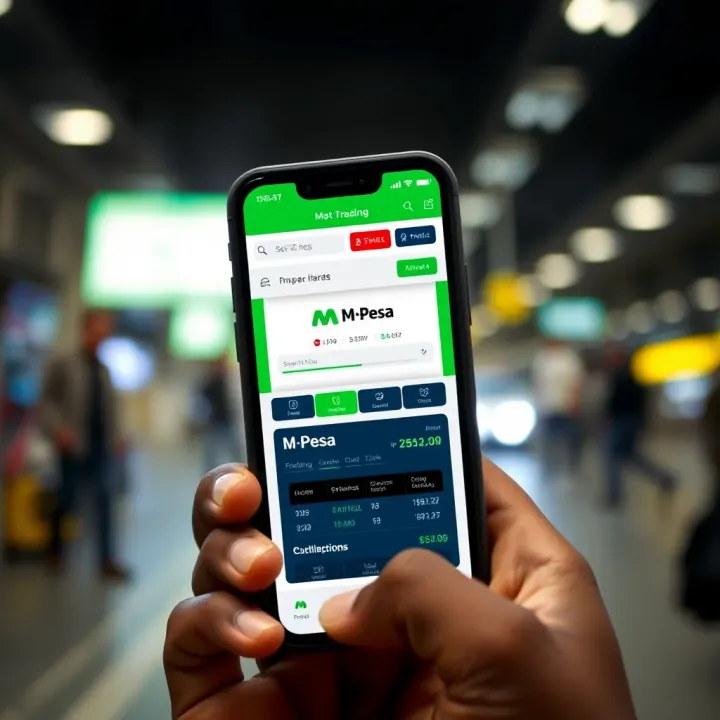
Forex trading, which involves buying and selling currencies, is popular among Kenyan traders seeking quick returns. Apps like Pepperstone and HotForex have made it convenient to deposit and withdraw through M-Pesa, allowing traders to move money quickly into their trading accounts. The speed of M-Pesa transactions is vital here since forex markets can shift rapidly. Using M-Pesa reduces the gap between making deposit payments and starting trades.
Cryptocurrency trading continues to grow in Kenya, and a few exchanges now accept M-Pesa for deposits and withdrawals. Platforms like Binance through local partners, and BitPesa (now part of AZA Finance), facilitate funding crypto wallets via M-Pesa transactions. This has opened the door for many Kenyans who’d otherwise struggle to bridge the gap between traditional money and digital assets. These exchanges often feature KSh pricing and allow traders to cash out their crypto profits straight to M-Pesa, keeping the process simple and homegrown.
The seamless integration of M-Pesa with various trading platforms is a strong example of how mobile money has become central in Kenya’s digital finance scene, especially for investment and trading activities.
Using trusted platforms that support M-Pesa can save you time and reduce unnecessary transaction costs, which are important when trading financial markets.
Overall, whether you want to trade stocks, gamble on forex prices, or buy cryptocurrencies, picking platforms with M-Pesa payments ensures you stay connected to your funds without relying heavily on banks. This flexibility makes trading more accessible, especially for people who depend mostly on mobile money for daily financial transactions.
Linking your M-Pesa account to a trading app is a vital step in seamless investing. Since M-Pesa is Kenya's most widely used mobile money platform, setting it up with trading apps lets you fund your account quickly and withdraw profits without the usual delays banks might introduce. This not only saves time but also reduces the hassle of multiple banking transactions.
To get started, first ensure your trading app supports M-Pesa payments—most popular platforms like EGM Securities or ZoomTrader do. Open the app and navigate to the payments or wallet section, then select the option to link or add M-Pesa as your payment method. The app will prompt you to enter your registered M-Pesa mobile number. After submitting, you should receive an M-Pesa prompt asking you to authorise the connection. Enter your M-Pesa PIN to confirm. Once verified, the app will notify you that your M-Pesa account is linked and ready for transactions.
Depositing funds is usually straightforward. Go to the deposit section and choose M-Pesa as the payment method. Enter the amount you want to fund, and confirm. You will receive an M-Pesa prompt to authorise the transaction with your PIN. Deposited funds often reflect instantly in your trading app wallet.
When withdrawing profits, access the withdrawal or payout option in the app, specify the amount, and select M-Pesa for transfer. Unlike deposits, withdrawals may take a few minutes to a couple of hours, depending on the trading platform’s processing time.
Keep your M-Pesa phone number consistent across platforms to avoid delays and mistakes.
Sometimes, users face issues such as failed transactions or delays. A common cause is insufficient funds in your M-Pesa account, so always check your balance before making deposits or authorising withdrawals.
Network problems can trigger timeouts; retry after a few minutes or switch to an area with better connectivity. If the app shows a rejected transaction despite enough balance, it might be a temporary system glitch. Contact customer support for that trading app with transaction details for quick resolution.
Some users struggle with authorising M-Pesa prompts. Make sure your SIM card is active and correctly inserted. Also, avoid closing the M-Pesa pop-up prematurely, as this interrupts the transaction.
Lastly, always update your trading app to the latest version. Apps often fix bugs related to M-Pesa integration in newer releases.
Setting up and using M-Pesa on trading apps is generally a smooth process once you follow these steps carefully. Doing so will let you focus more on your trading strategies rather than worrying about fund transfers.
Trading using M-Pesa in Kenya has brought a lot of convenience, but it also calls for heightened attention to security. Since mobile money links directly to your bank and trading accounts, any weak security can lead to financial losses. Making sure your M-Pesa and trading app accounts are well-protected isn't just smart; it's necessary to keep your investments safe.
Start by securing your M-Pesa account with a strong, unique PIN. Avoid using obvious numbers like birthdates or repeated digits, which are easy to guess. Change your PIN regularly and don’t share it with anyone. Likewise, activate Safaricom’s M-Pesa notifications via SMS to get alerts for every transaction, so you track withdrawals or deposits in real-time.
On trading apps, use two-factor authentication (2FA) when available. This adds a second layer of security, typically a text code or app-generated code, apart from just your password. Ensure your login details are unique to the trading platform to limit the risk if one account is compromised. Also, keep your smartphone software and app versions updated to patch security holes hackers may exploit.
Scams around online trading and M-Pesa are growing, with fraudsters using fake websites, phishing messages, or impersonating brokers. Watch for unsolicited offers promising huge returns quickly; these are often too good to be true. Always verify the trading app’s authenticity through Kenyatta’s Capital Markets Authority (CMA) licence details or trusted app sources like Google Play or Apple App Store.
Be cautious with links sent via SMS or email asking you to log in or enter personal details. For example, a typical phishing message might mimic your trading app but directs you to a fake site that steals your password. Instead, always open trading apps by typing the official URL or launching the installed app directly.
Always cross-check the sender’s mobile number or email and confirm with the official support channels if you are unsure about any communication.
Practising good online security habits can save you from unnecessary trouble. Use a strong password manager to handle your various logins safely. Avoid using public Wi-Fi when trading or making M-Pesa transactions, especially unsecured networks at cafes or matatu stations.
Set daily transaction limits on M-Pesa to reduce potential losses if your phone is lost or hacked. Regularly review your transaction history to spot any suspicious activity early. Also, educate yourself continuously about new scam tactics by following updates from Safaricom and CMA Kenya.
In essence, secure your devices and accounts, stay alert to fraud signs, and maintain vigilance with every trade and payment. This way, you can enjoy the ease of trading with M-Pesa while protecting your hard-earned cash and peace of mind.
Using M-Pesa-enabled trading apps in Kenya opens up easy access to markets right from your phone, but new traders should approach with a clear plan and understanding. These tips help you pick suitable platforms, handle risks wisely, and know what fees to expect. That way, you can trade confidently without surprises eating into your profits.
Start by identifying what kind of trading interests you most: stocks, forex, or cryptocurrencies. Then, check if the app offers reliable M-Pesa integration. For instance, some popular stock trading apps like EGM Securities or NCBA's trading platform accept M-Pesa directly, making deposits and withdrawals swift and straightforward.
Aside from payment options, look at the app’s user interface and customer support—particularly if you are new to trading. Apps that provide educational material, demo accounts, or clear market data can help you get comfortable faster. Also, consider the app’s regulation status. Licensed platforms ensure better protection of your funds and fair trading conditions.
Trading always carries risk, but using mobile money adds layers to manage. Always trade amounts you can afford to lose. Since M-Pesa transactions are instant and mostly irreversible, double-check your amounts before confirming deposits or withdrawals.
Keep your M-Pesa PIN secret and update it often to prevent unauthorised access. Pair this with even stronger passwords on your trading app. Also, avoid quick, emotionally-driven trades triggered by market swings. Planning your trades and setting stop-loss orders on your app helps contain potential losses.
Never share your M-Pesa PIN or trading account credentials, even if someone claims to be from customer support. Scams remain common, so stay alert.
Most trading apps do not charge for deposits made via M-Pesa, but M-Pesa itself levies a small transaction fee depending on the amount sent. For example, sending KSh 10,000 might cost about KSh 28. Withdrawals back to M-Pesa may also have fees.
Some trading apps add extra charges on withdrawals or for inactivity, so read their terms carefully before committing. Knowing these costs helps you calculate your true profit margins and avoid unpleasant surprises. Always monitor your M-Pesa statements regularly to verify that fees align with what you expect.
In short, new traders benefit by picking apps that fit their needs, managing their money cautiously when using mobile payments, and understanding the fees involved. This practical approach builds a solid foundation for successful trading with M-Pesa in Kenya.
Explore how binary trading apps work 📱, their risks ⚠️ & benefits 💹, plus tips for Kenyan traders 🇰🇪 to choose the best app safely.

Discover the best trading apps in Kenya 📱 Compare fees, features, security, and markets to find the ideal fit for your investing goals and budget.
📈 Discover how deriv trading works, its risks & benefits, platforms, strategies, and Kenyan regulations to trade smart and secure your investments wisely.

💹 Explore crypto trading in Kenya with this practical guide covering platforms, market tips, risks, and regulations to trade responsibly and smartly.
Based on 7 reviews