

Using Deriv and TradingView for Smarter Trading
Explore practical tips on using Deriv & TradingView for smarter trading in Kenya 🇰🇪. Learn to combine tools, analyze markets, and manage risks effectively.
Edited By
Sophia Turner
TradingView and Deriv are popular tools for Kenyan traders aiming to improve their market decisions. While Deriv offers a platform for trading various assets like forex, commodities, and synthetic indices, TradingView provides advanced charting and technical analysis features. Using them side by side can boost your trading game significantly.
TradingView delivers detailed charts with indicators, drawing tools, and alerts, which are useful for spotting trends and entry or exit points. However, it does not directly execute trades. That’s where Deriv comes in — it allows you to place real-time trades based on your analysis. Linking the two means you plan on TradingView but trade confidently on Deriv.

Combining TradingView's analysis with Deriv's execution capability lets you make timely decisions backed by solid data, a must in fast-moving markets.
Kenyan traders often face challenges like limited access to high-end trading tools or slow connections. These platforms are optimised for accessibility via mobile or desktop, and even on modest internet speeds. Plus, both support M-Pesa payments for easy deposits and withdrawals, which suits local trading needs.
Here’s how to get started:
Open a TradingView account and explore chart tools relevant to your asset of interest.
Open a Deriv trading account and familiarise yourself with the platform’s interface.
Use TradingView’s indicators to spot potential trades, then manually enter those trades on Deriv.
While direct integration between the two platforms is limited, Kenyan traders benefit by switching efficiently between analysis and execution. This approach helps reduce emotional trading and improves risk management through better preparation.
With this basic understanding, you’re ready to learn specific methods for using TradingView’s tools effectively alongside Deriv. This combination can lead to more consistent and informed trading outcomes, especially within our local market context.
Understanding TradingView and Deriv is key to improving your trading decisions. These platforms serve distinct but complementary purposes. TradingView offers advanced charting tools and market analysis, while Deriv is a trading platform accessible to Kenyan investors for binary options, CFDs, forex, and more. Combining these two can help you build smarter strategies based on reliable data and trading conditions.
TradingView is an online charting service that delivers real-time data and technical analysis for global financial markets. It stands out because of its user-friendly interface and a wide range of indicators and drawing tools. For example, Kenyan traders can track the NSE 20 Share Index or commodities like gold and oil with up-to-date price charts. Its social features also let you see ideas shared by other traders, which might inspire your next move.
Deriv is a trading platform popular in Kenya for offering access to various financial instruments with low minimum deposits. It supports payments through local options such as M-Pesa, making fund management easier for traders. Beyond just execution, Deriv provides demo accounts where you can practise strategies risk-free. The platform’s interface caters for both beginners and experienced traders, handling assets ranging from currency pairs to synthetic indices.
Relying on Deriv’s charts alone can limit your perspective. TradingView’s advanced charting tools provide deeper technical insights like trend lines, RSI, and Bollinger Bands that are not always available on Deriv. By analysing assets on TradingView first, you can spot entry and exit points more confidently and then execute trades seamlessly on Deriv. For instance, a trend reversal pattern identified on TradingView can guide your binary option expiry choice on Deriv. This combination helps reduce guesswork and sharpens your trading edge in Kenya’s fast-moving markets.
Using TradingView to inform trades on Deriv bridges analysis and execution, helping Kenyan traders make decisions based on thorough technical data.
In summary, TradingView equips you with tools to understand market movements, while Deriv allows you to act on those insights efficiently. Knowing how each works and why to link them forms the foundation for a better trading experience.
Setting up and connecting TradingView with Deriv is a key step for traders wanting to blend insightful chart analysis with live trading execution. This integration allows you to use TradingView’s rich visual tools alongside Deriv’s robust trading platform, providing a more informed approach to buying and selling assets. For Kenyan traders especially, making these two platforms work smoothly together can improve decision making and timing, which are vital in the often volatile markets.
Before anything else, you need active accounts on both TradingView and Deriv. Creating an account on TradingView is straightforward: just provide your email, choose a secure password, and verify via email. For Deriv, Kenyan traders can easily register on the platform by submitting basic personal information, ensuring they meet KYC (Know Your Customer) requirements, and linking payment methods like M-Pesa for quick deposits and withdrawals.
Having these accounts active ensures you have access to TradingView charts and can place trades seamlessly on Deriv. Both platforms offer free versions, but upgrading to paid plans on TradingView unlocks more indicators and features that can boost your trading edge.
Linking TradingView charts directly to Deriv’s trading interface isn’t about literal connection between accounts but using TradingView for analysis then executing trades on Deriv. Here's how you can effectively work between the two:
Open TradingView and set your preferred asset charts (forex pairs, synthetic indices, commodities) matching Deriv’s offerings.
Analyse these charts using indicators and tools available on TradingView.
Switch to your Deriv trading platform to place trades based on the signals or confirmations from TradingView.
While Deriv does not currently provide direct API integration with TradingView for one-click trading, using both side by side allows for in-depth preparation on TradingView and quick execution on Deriv’s platform. Kenyan traders can benefit by having both windows or devices ready during active trading hours.
Customising your TradingView workspace improves efficiency when using it alongside Deriv. Organise your chart layout to focus on assets available on Deriv. For example:
Pin charts for Deriv’s popular assets like synthetic indices or forex pairs.
Save custom indicator templates such as Moving Averages or RSI that align with your trading strategy.
Use multiple timeframes—daily, hourly, and 15-minute charts—to get a full market picture.
Also, set alerts for critical price levels. TradingView alerts notify you when asset prices hit predetermined points, helping you react fast on the Deriv platform. This workflow reduces the chance of missing trading opportunities in fast-moving markets common to Kenyan traders focusing on forex or commodities.
Having a well-organised TradingView workspace tailored to Deriv’s assets helps Kenyan traders not just study the markets better but act fast and confidently when trading.
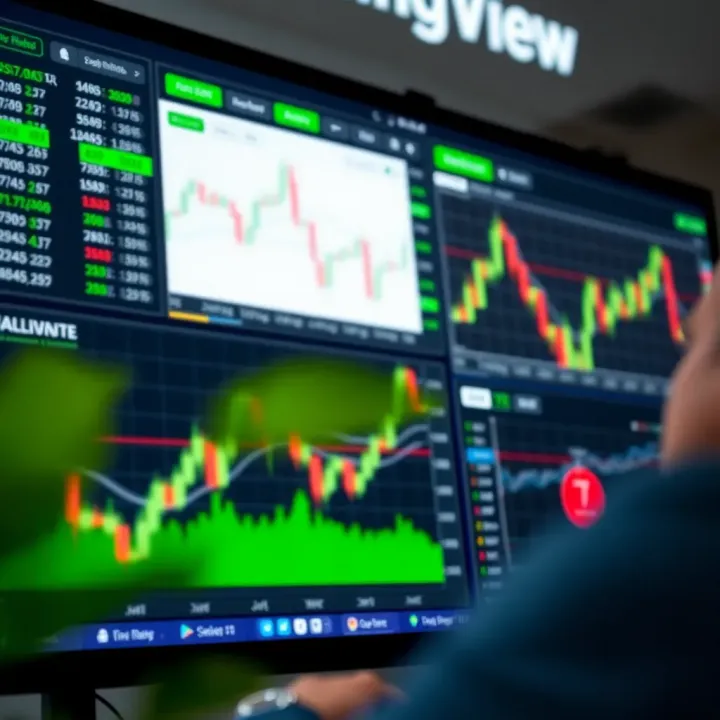
With accounts ready, charts analysed, and your workspace personalised, you’re set for a trading experience that combines solid technical insight with responsive execution on Deriv.
TradingView charts provide a visual and detailed way to study Deriv assets before making trades. By analysing price movements, trend directions, and market signals on TradingView, traders can make more informed decisions rather than guessing. This connection helps especially in spotting entry and exit points that improve trading outcomes with Deriv's diverse asset offerings.
Candlestick charts are the bread and butter for many traders because they show the opening, closing, high, and low prices for each time segment clearly. Each candle tells a story: a green (or hollow) candle means buyers dominated, closing higher, while a red (or filled) candle generally shows sellers were stronger. This makes it easier to spot reversals or strong momentum.
For example, an evening star pattern in candlesticks often signals a potential bearish turn, guiding Kenyan traders to consider selling binary options on Deriv. Because Deriv offers short-term contracts, observing these candlestick signals can be a quick way to react to market sentiment.
Line charts give a straightforward view by connecting the closing prices over time, cutting through the noise and focusing on overall direction. This is helpful when you want a clean look at trend history without distractions from intra-period price fluctuations.
If you’re trading on Deriv’s forex pairs, line charts let you easily detect steady upward or downward paths. It’s a simple tool to confirm what’s happening over days or weeks and complements other more detailed charts for timing trades better.
Heikin Ashi charts smooth out price data to reduce the impact of market noise. This makes trends more visible and weakens false signals, which can otherwise trick traders.
By using Heikin Ashi on TradingView with Deriv, you can better hold your trades during sustained movements and avoid premature exits. For instance, when Heikin Ashi candles remain green for several periods, it suggests a strong uptrend worth riding.
Moving averages (MAs) replace erratic prices with smoothed averages that track overall trends. Simple moving averages (SMA) and exponential moving averages (EMA) are common varieties.
On Deriv, observing when a short-term MA crosses above a long-term MA (a golden cross) can be a signal to buy, while the reverse (death cross) might suggest selling or avoiding positions. This helps Kenyan traders spot trend changes without obsessing over every price twitch.
The RSI measures how overbought or oversold an asset is, oscillating between 0 and 100. Typically, an RSI above 70 means the asset might be overbought (potential drop soon), while below 30 indicates oversold conditions (possible rise).
Using RSI on Deriv assets allows traders to sense when a market is stretched to the upside or downside and prepare accordingly. For instance, trading binary options after an RSI hits overbought levels can reduce risk.
Bollinger Bands wrap price data in an upper and lower band based on standard deviation. When prices touch the bands, it often hints at potential reversals.
Kenyan traders can use Bollinger Bands on commodities or indices in Deriv to identify when prices are too high or low relative to recent averages. A squeeze in the bands typically precedes a volatility burst, signalling an opportunity.
Support levels are price points where buyers tend to step in, preventing further drops, while resistance levels cap price rises as sellers enter. Identifying these on TradingView guides where to place stop-loss or take-profit orders on Deriv.
For example, if gold consistently bounces off KS,000 on Deriv, that price becomes a support. A trader might buy near this point and set a stop-loss slightly below to limit losses.
Trend lines connect consecutive lows in an uptrend or highs in a downtrend, visually marking market direction. They provide quick references for deciding if a trend is intact or weakening.
In Deriv trading, a break below an uptrend line may warn Kenyan traders to exit or avoid new buys. Similarly, successful tests of trend lines might confirm momentum and trade continuation.
Charts often form repeatable patterns like head and shoulders, double tops/bottoms, or triangles. Recognising these gives clues about forthcoming price movements.
Detecting a triangle pattern on a Deriv forex pair might alert you to a potential breakout. Preparing to enter trades just as prices break from these patterns can improve timing and boost trading success.
Traders who master chart types, indicators, and trend identification on TradingView will greatly enhance their risk management and trade precision when using Deriv. Combining these tools lets you spot opportunities ahead of many other market participants.
Managing risks carefully and applying solid trading strategies are essential when using TradingView with Deriv. These steps help protect your capital and make trading more predictable, especially when dealing with volatile assets or derivatives like CFDs (Contracts for Difference) and binary options. Without proper risk control, even the best analysis can’t save you from unexpected losses.
Stop loss and take profit orders are your safety nets that automatically close trades at set price levels. Setting a stop loss limits how much you stand to lose on a trade, while take profit locks in gains once a target is reached. For instance, if you buy a CFD on a forex pair at KS00 and decide you can't lose more than 2%, you place a stop loss at KSh98. Stop loss placement is critical on Deriv because it shields your account from sharp reversals.
Take profit helps avoid the common pitfall of holding onto winning trades for too long, hoping for bigger gains but ending up losing it all. In TradingView, you can visually pinpoint ideal stop loss and take profit levels using support and resistance lines or technical indicators like the Average True Range (ATR) for volatility-based stops.
Trend following involves identifying strong, sustained price movements and trading in the direction of the trend. On TradingView, you would look for clear uptrends or downtrends using moving averages or trend lines. For example, if the 50-day moving average is above the 200-day moving average, it signals an uptrend, so you may consider buying CFDs or calling binary options on that asset.
This strategy suits Deriv’s platform because it allows you to ride longer trends, increasing the chance of profitable expiry times on binary options and better CFD positions. However, staying aware of trend reversals is key. Using RSI or MACD indicators on TradingView can help confirm that momentum remains strong.
Range trading focuses on buying low and selling high within a horizontal price band – where prices bounce between support and resistance without clear trending. This works well in quiet markets or during times when there is little market-moving news.
In TradingView, you can draw horizontal lines to define the range and watch for price hitting these levels repeatedly. On Deriv, you place trades near support with the expectation that price will rise, or near resistance expecting a fall. This strategy requires quick reactions and strict risk management, as breaks out of the range can result in losses.
TradingView’s alert system is invaluable for staying on top of your trades without staring at charts all day. You can set alerts for price levels, indicator conditions, or even drawing tool activations. For example, you might create an alert that notifies you when the price crosses a key moving average or breaches a support level.
These alerts help you adjust stop loss or take profit points on Deriv in real-time, or close trades early to protect profits or cut losses. Alerts are especially useful during busy hours or when managing multiple trades. This proactive monitoring ensures decisions are timely, which can make a big difference in highly volatile markets.
Proper risk management coupled with clear trading strategies on TradingView and Deriv forms the backbone of consistent, disciplined trading. Kenyan traders benefit greatly by combining visual analysis with automatic trade tools and alerts to guard their capital and maximise returns.
For Kenyan traders, maximising the potential of TradingView and Deriv requires attention to specific local factors. These tips focus on practical ways to address challenges tied to payment methods, market timing, and analysis pitfalls. With these strategies, you avoid common setbacks and strengthen your trading approach.
Kenyan traders should prioritise using local payment methods like M-Pesa when funding their Deriv accounts. M-Pesa offers convenience and speed, making deposits almost instantaneous compared to international bank transfers. For example, depositing KSh 10,000 via M-Pesa into Deriv’s platform typically clears within minutes, letting you enter trades faster.
Besides swift deposits, M-Pesa is widely accessible throughout Kenya, including smaller towns, removing the need for international cards or complicated wire transfers. To make your life easier, connect Deriv to your M-Pesa account through platforms like Lipa Na M-Pesa or Paybill options. Always confirm the exact Deriv Paybill or Till number for deposits to avoid delays or loss of funds.
Understanding Kenyan market hours and how they sync with global markets is key. Kenyan business hours roughly align with East Africa Time (EAT), which affects your access to different assets on Deriv. For example, the London and New York forex markets open and close at times that overlap partly with Kenyan daytime.
To make the most of this, check Deriv's asset trading hours and pick those active during your peak focus times. It helps avoid trying to trade assets when liquidity is low, which can lead to slippages or unfavourable spreads. Also, avoid trading volatile news events early in the morning or late at night unless you have clear strategies for such moves.
Planning your TradingView analysis sessions just before these liquidity windows can improve decision-making. Study support and resistance levels while the market is calm, then execute trades during overlapping market hours to catch better price movements.
While TradingView is an excellent tool, Kenyan traders sometimes fall into traps like relying too heavily on one indicator or misreading signals. For instance, using RSI alone without confirming with volume or trend lines can cause false entry signals.
Also, avoid cluttering your charts with too many indicators. Instead, focus on a few key tools like moving averages combined with candlestick patterns. That balance keeps analysis straightforward and more reliable.
Remember to cross-check TradingView alerts with live price action on Deriv. Sometimes chart setups look promising on TradingView, but Deriv's pricing and execution may differ slightly due to platform differences or volatility.
Successful trading in Kenya means adapting global tools like TradingView to local realities — especially payment methods, market hours, and thoughtful chart analysis to avoid unnecessary losses.
By focusing on these tips, Kenyan traders can better integrate TradingView and Deriv for a smoother, more profitable trading experience. Always keep your tools updated and stay informed about local market conditions to stay ahead.
Explore practical tips on using Deriv & TradingView for smarter trading in Kenya 🇰🇪. Learn to combine tools, analyze markets, and manage risks effectively.
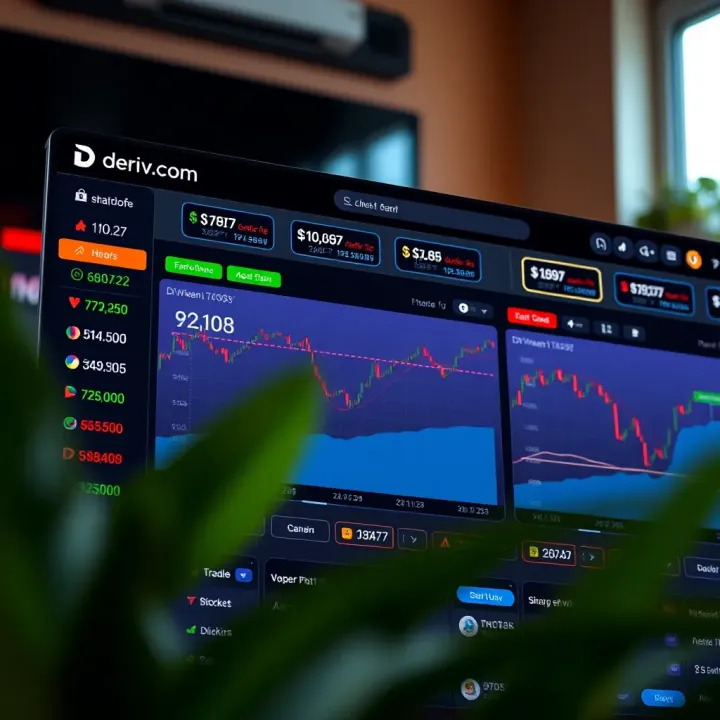
Start trading smart on Deriv.com in Kenya 🇰🇪. Learn how to register, fund with M-Pesa, trade forex, CFDs & crypto safely 🔒 while managing risks effectively 📊.

📊 Discover how Kenyan traders can master TradingView for binary trading. Learn chart setups, market analysis, key indicators, and smart decision tips for success.
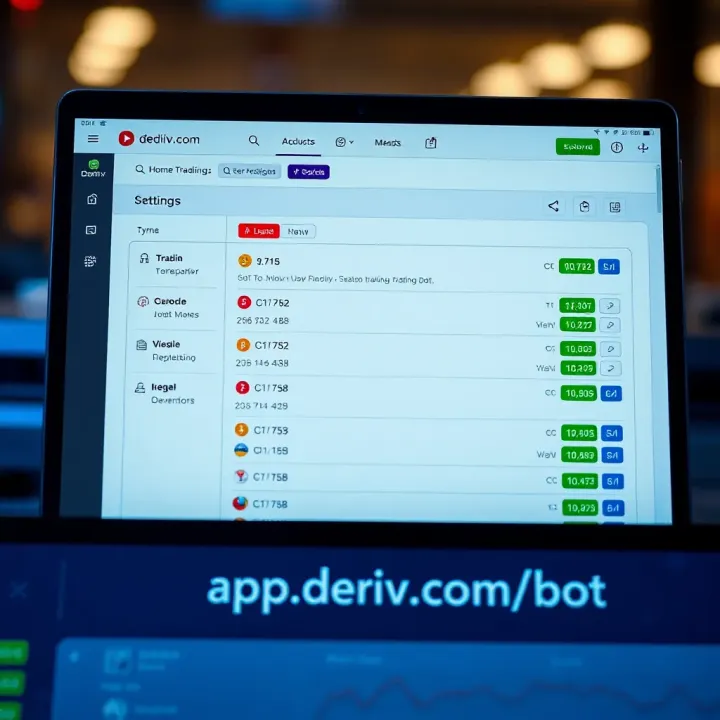
📈 Discover how to set up and optimize your trading bots on app.deriv.com/bot designed for Kenya users. No coding needed—trade smarter with smart risk management! 🤖💡
Based on 8 reviews