

Understanding Deriv Bot for Smarter Trading
Explore Deriv Bot 🤖: features, benefits & setup tips to enhance trading strategies in Kenya. Learn how to optimize your trading with smart automation!
Edited By
Sophie Bennett
Automated trading has steadily become a go-to option for traders who want to take emotion and guesswork out of the game. app.deriv.com/bot is one such platform that brings this concept to life, allowing users—especially in Kenya—to build and manage trading bots without needing any coding skills.
This guide walks you through what app.deriv.com/bot actually is, why it's relevant today, and how it can be a useful tool in your trading arsenal. Whether you’re a seasoned investor or just getting your feet wet in finance, understanding how to effectively use a trading bot can give you an edge.
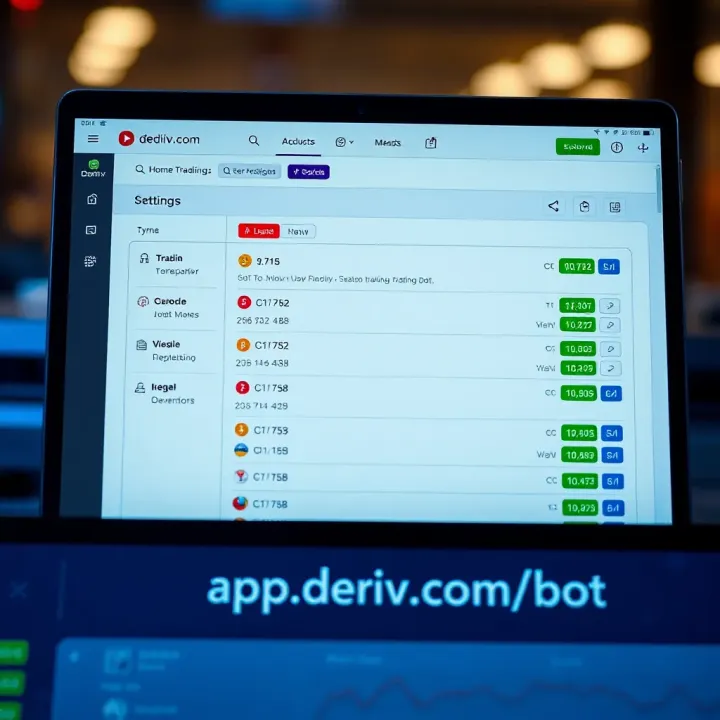
From setting up your first bot to exploring strategies and managing risks, this article covers the essentials and more. You’ll learn to navigate the platform with ease and find practical tips on tailoring your bot to the Kenyan market’s quirks and opportunities.
Automated trading isn't about replacing a human trader but about making smarter, more consistent decisions under market pressure.
Let’s dive into how you can turn app.deriv.com/bot into your trading sidekick, taking your trading strategy from manual effort to automated execution with confidence.
Understanding app.deriv.com/bot is a solid first step for anyone interested in automated trading on the Deriv platform. Automated trading bots can take away much of the guesswork and stress involved with manual trading, allowing traders to set their own rules and let the bot carry out trades on their behalf. This section lays the groundwork by explaining what the platform really offers and who stands to benefit the most.
At its core, app.deriv.com/bot is a user-friendly platform designed to help traders build and run automated trading bots without needing any programming skills. Think of it as your personal trading assistant that follows specific instructions you give about when and how to trade. The bot can execute trades swiftly and consistently based on predefined strategies, helping users act promptly on market shifts which often happen too fast for the human eye.
For example, imagine you want to buy a certain asset only when its price crosses a moving average, and sell when it moves back below this point. You can set these rules on the Deriv bot platform and then watch it react instantly without you staring at the screen all day. This automation frees you up and makes your trading more disciplined, reducing the chance of emotional decision-making.
Anyone with a Deriv trading account can tap into the potential of this bot platform, whether you're a complete newbie or a seasoned trader. The platform has been designed with accessibility in mind, so even folks who aren’t comfortable with coding can create bots by choosing predefined conditions and actions. This levels the playing field for many interested in exploring automated strategies without cracking open complex programming manuals.
Professional traders can also benefit by customizing bots to manage multiple trades or track various assets simultaneously, saving time and effort. Likewise, investors who prefer a more hands-off approach but want to stay active in the market will find its simplicity and efficiency appealing.
The beauty of app.deriv.com/bot lies in its flexibility — it adapts to your experience level while providing powerful tools to trade smarter, not harder.
With clarity on what the platform is and who it's made for, readers will be better positioned to dig deeper into setting up and optimizing their bots, which the following sections will explain in detail.
Getting your account set up on Deriv is the first real step to automated trading success. Without a properly configured Deriv account, none of your bot strategies or trades can take off. This section goes beyond just creating an account; it covers everything from registration to verification to ensure you’re ready to trade smoothly and securely.
Setting up an account on Deriv is important because it establishes your identity, links your payment methods, and verifies your readiness to comply with trading regulations. For traders in Kenya, this process is straightforward but must be done carefully to avoid hiccups later, especially when you want to deposit funds or cash out winnings.
Missing a small detail during setup can lead to delays or restrictions. For example, incorrect personal info might trigger identity checks, or an unverified account might restrict your trading limits. Making sure your Deriv account setup is done right the first time saves you the headache and gets you on the trading floor quicker.
Creating a Deriv account is a quick and user-friendly process. Here's what you typically need to do:
Fill in your personal details such as full name, email, date of birth, and mobile number. It's essential your details match your official ID documents to avoid complications later.
Select your country of residence, which for this guide is Kenya, and choose your preferred base currency. For many locals, Kenyan Shillings (KES) or US Dollars (USD) are common choices.
Agree to the terms and conditions after reading them carefully, especially sections related to trading risks.
A practical example: Imagine you’re a Nairobi-based trader wanting to use Deriv bots. During sign-up, you’ll select Kenya as your residence, KES as currency, and provide a valid phone number where you can get SMS codes for verification. This ensures smooth progress to the next step.
Even if you plan just to test the platform, creating an account allows you to access demo trading features, which is a great way to get comfortable without risking real cash.
Verification is a mandatory step that secures your account and allows Deposits, Withdrawals, and live trading. Deriv requires you to upload proof of identity and proof of address documents. Here's what usually works well:
Proof of Identity: A government-issued ID such as your Kenyan National ID card, passport, or driving license.
Proof of Address: A utility bill (electricity, water, or internet bill) or bank statement dated within the last 3 months.
Remember, providing clear, legible scans or photos speeds up verification. Blurred or cut-off documents often lead to rejection or delays.
Once submitted, the verification process may take a few hours to a couple of days. While waiting, you can explore the platform with a demo account.
Verification not only complies with regulatory requirements but also protects you against fraud. It ensures your account is uniquely yours and that trading profits can be safely withdrawn without issues.
In short, setting up and verifying your Deriv account is the bedrock of your automated trading adventure. Doing it right gives you peace of mind and uninterrupted access to your trading bots.
Getting comfortable with the bot interface is key to using app.deriv.com/bot effectively. Without a good grasp of the platform's layout and tools, even the best strategy can fall flat. This section explains what you’ll find on the interface, how to use those features to your advantage, and why investing time to learn this upfront pays off when your trading bot starts working for you.
Choosing the right trading instrument is the first step before your bot can put any plan into action. Deriv offers a range of instruments from forex pairs to synthetic indices and even cryptocurrencies. Each has its own rhythm—some are jittery and fast-moving, others steady but slow.
For example, if you pick EUR/USD, you're dealing with one of the most liquid forex pairs, which can mean tighter spreads and more predictable movements. On the other hand, synthetic indices like Volatility 75 offer unique price behaviors that strike traders might want to exploit.
To select your instrument, the interface provides an easy dropdown menu where you can preview basic stats and recent trends. This helps you make educated choices tailored to your strategy, whether you’re in for aggressive short-term scalping or steadier trend following.
One of the platform’s strong suits is how flexible it lets you get with your bot’s settings. Customization means you’re not stuck with a cookie-cutter approach; you can fine-tune your entry points, exit points, and risk levels to suit your personal trading style.
For instance, suppose you want your bot to buy when the RSI dips below 30 and sell when it crosses above 70. The parameter settings let you lock in those exact rules without needing to write a single line of code. You also set things like trade duration and stake amounts.
Tweaking these variables directly impacts the bot’s behavior and potential results. It’s a good practice to start modestly, then gradually adjust parameters based on your backtesting outcomes.
Watching your bot in action can be both exciting and telling. The interface includes a live dashboard that tracks your bot’s trades in real-time. You'll see details such as executed trades, current profits or losses, and overall win rate.
This immediate feedback loop lets you judge if your settings are hitting the mark or if adjustments are needed. Don’t ignore this step; some traders create a habit of inspecting performance daily, using the data to tweak or switch strategies swiftly.
Keeping an eye on performance isn’t just about numbers — it’s about understanding your bot’s behavior so you can make smarter moves before big losses pile up.
Deriv’s bot interface is designed with simplicity in mind, even for folks who aren’t tech-savvy. The layout is clean, avoiding clutter that can confuse or overwhelm users new to automated trading.
Menus are straightforward, with clear labels and helpful tooltips that explain what each option does. For instance, if you hover over the "Take Profit" field, a small note pops up describing how it limits your gains per trade.
Accessibility extends to device compatibility — whether you’re sitting at a desktop in Nairobi or checking your bot updates on a smartphone while commuting in Mombasa, the interface scales well. This flexibility means you can manage trades virtually anywhere without feeling trapped behind a desk.
All in all, knowing your way around the bot interface turns trading from a guessing game into a more controlled and confident operation. Take your time to explore and test each feature — this foundation sets the stage for smarter, smoother trading ahead.
Building a trading bot without coding skills is a game changer for traders who want to automate their strategies but aren't programming wizards. On app.deriv.com/bot, this approach cuts through the complexity, letting users focus on strategy rather than syntax. It's especially handy for Kenya-based traders who want to quickly test ideas or manage trades around the clock without staring blindly at charts all day.
The real beauty lies in its accessibility; you don’t need to hire a developer or tinker with complicated scripts. Instead, the bot uses predefined building blocks — conditions and actions — to create a logical flow. This means even a newbie can set their rules, fine-tune them, and run the bot efficiently.
Entry and exit rules are the backbone of any trading bot. Essentially, these rules tell your bot when to jump into a trade and when to get out. On app.deriv.com/bot, you can set these without writing any lines of code by choosing from straightforward options like “buy if the price crosses above moving average” or “sell if RSI exceeds 70.”

This practical setup lets you define clear triggers to avoid guesswork. For instance, if you prefer a conservative approach, you could set your bot to enter a trade only when two indicators agree, like price breaking resistance and MACD signaling bullish momentum. Exiting the trade can be equally precise; you might instruct the bot to sell once the profit hits 5% or if the price dips below a certain threshold to cut losses.
By having these rules clearly laid out, your trading bot becomes a tireless assistant, sticking to your plan and sidestepping emotional decisions.
Indicators are like the eyes and ears of your trading bot—they process market data and signal conditions that the bot uses to make trading decisions. App.deriv.com/bot offers several popular indicators such as Moving Averages, Relative Strength Index (RSI), and Bollinger Bands.
Selecting the right indicators depends on your trading style and goals. For trend followers, the Moving Average Cross might be a go-to, signaling when a short-term average crosses over a long-term one, hinting at momentum shifts. On the other hand, if you’re targeting quick scalping trades, RSI can help catch overbought or oversold conditions.
To apply this, you simply pick the indicator, tweak its settings like the period length, and pair it with your entry or exit rules. This plug-and-play method takes the guesswork out of tech analysis and lets the bot do the heavy lifting.
Before unleashing your bot on real money, running it through simulation mode is key. This feature mimics how your bot would perform in the live market, using historical data to test your strategy's strengths and weaknesses.
Simulation mode helps you spot flaws without financial risk. For example, you might find that your bot enters too many losing trades during volatile sessions or that your stop-loss is set too tight, cutting profits prematurely. The feedback you get here is like a dress rehearsal for your bot, giving you the confidence to tweak settings before the real deal.
After simulations, analyzing the results is where the real improvement happens. If the bot is racking up losses or missing potential gains, you can adjust entry points, change indicator settings, or tighten risk controls.
This iterative process lets you refine your bot gradually. Maybe you notice that switching your RSI threshold from 70 to 65 improves entry timing, or widening your stop-loss prevents premature exits during market noise. These small changes can make a big difference.
Continuous testing and fine-tuning ensure your bot adapts to shifting market conditions, making it less of a set-and-forget tool and more of a smart partner in trading.
In short, building a trading bot without coding on app.deriv.com/bot lets you take charge of your strategy with clarity and control. With predefined rules, indicator choices, and careful testing, even those without tech experience can craft bots that trade calmly and consistently.
When using the Deriv bot for automated trading, picking the right strategy can make all the difference between steady gains and frustrating losses. These strategies guide the bot's actions, allowing you to capitalize on market conditions without constantly watching the screen. In this section, we look at three solid approaches popular with traders in Kenya and beyond: trend following, range trading, and scalping. Each has its own rhythm, risk profile, and best-use case.
Trend following is a straightforward approach: the bot tries to catch the direction the market is moving and ride it. If the price is climbing steadily, the bot will enter long positions hoping to catch the upward momentum, and if it's dropping, it will short to profit from the decline.
This strategy works well when markets have strong momentum, for example during major economic announcements or clear uptrends in currency pairs like USD/KES. Using moving averages or the Relative Strength Index (RSI) as indicators helps your bot decide when to jump in and out. The key benefit here is letting emotions aside — the bot sticks with the trend no matter what, which can avoid impulsive trades influenced by fear or greed.
Some markets tend to hover between two price points without breaking out often, creating a ‘range’. Range trading strategies have the bot buy near the support level (the "bottom" of the range) and sell near the resistance level (the "top").
This method suits less volatile assets or times when the market lacks a clear direction, such as the Nairobi Securities Exchange during quiet weeks. Indicators like Bollinger Bands help the bot identify these upper and lower bounds realistically.
The trick is patience and careful monitoring of breakouts, which can signal the end of the range and a shift in strategy. For Kenya’s local traders, this can offer steady small profits with limited exposure to big swings.
If you prefer fast action, scalping lets the bot rack up many small profits from tiny price movements. It’s about speed and volume — holding positions only for seconds or minutes before closing them.
The Deriv bot can use this strategy effectively with pairs that have tight spreads and high liquidity, like EUR/USD. It looks for quick spikes or dips based on short-term signals like MACD crossovers or fast-moving averages.
Bear in mind, scalping requires close attention to transaction costs and risks — a few bad trades can wipe out many smaller wins. However, when done right, it can significantly boost overall returns without tying up capital for long.
Pro Tip: Test each strategy in the bot’s simulation mode first. What works well in one market phase may struggle in another, so tweaking parameters to fit current market behavior is a game changer.
By leveraging these popular strategies, you're offering your Deriv bot a clear playbook. The choice depends on your trading style, goals, and market conditions—but with the right setup, automated trading can genuinely help you trade smarter and more consistently.
Using a trading bot without solid risk management is like driving blindfolded on a busy highway — you’re more likely to crash than finish the race. For traders leveraging the automation capabilities of app.deriv.com/bot, managing risk effectively is not just smart, it’s essential. The platform gives users tools to control potential losses and safeguard profits, which helps keep emotions in check and trading consistent.
Risk management here means setting predefined limits on your trades to avoid blowing your account on unexpected market swings. For example, by setting stop loss and take profit points, the bot can automatically exit trades when your predetermined price level is hit — preventing the kind of losses that make you wince and the type of gains that make the hard work worthwhile. Practical risk controls also include daily trading limits that prevent overexposure.
Managing risk isn’t about avoiding losses altogether — it’s about controlling them so they don’t wipe out your gains or capital. This mindset keeps you in the game longer and lets you trade another day.
One of the simplest yet most effective tools in the risk management toolkit is the stop loss. This is an order your bot places to automatically sell an asset once its price falls to a certain level, stopping you from bleeding more money if the market turns against you. For instance, if you buy USD/JPY at 110.50 and set a stop loss at 110.00, the bot will exit when the pair hits 110.00, limiting your loss to 0.50 pips per unit.
Take profit points work on the flip side — they close your position when a favorable price target is reached, locking in gains without you having to stare endlessly at your screen. Setting these points lets you systematically capture profits without greed taking over.
On app.deriv.com/bot, you can easily input these stop loss and take profit values when setting your bot’s conditions. It’s worth experimenting with tight and wider stops in the simulation mode to get a feel for how much price movement you can tolerate.
Another practical risk management method is setting daily trading limits. Even automated bots can run wild without controls, especially if the market is volatile or unpredictable. Limiting your daily trade amount caps the money at risk each day, so you won’t burn through your account in a single bad session.
For example, if your total account balance is KES 50,000, setting a daily limit of KES 5,000 to be spent on trades ensures you can’t lose more than 10% of your capital on a bad day. This kind of discipline prevents emotional decisions triggered by big losses or unexpected market moves.
Using the Deriv bot, you can configure such limits within the bot’s money management settings. The bot will then automatically stop trading once your daily limit hits, allowing you to review performance and adjust your strategy calmly.
Having these guardrails means you trade smart and stay in control even when the markets throw curveballs. Practical risk management techniques like stop loss, take profit, and daily limits are the backbone of consistent trading success with app.deriv.com/bot.
Keeping an eye on your trading bot’s performance is non-negotiable if you want to avoid nasty surprises and keep your trades profitable. Monitoring helps you spot patterns, uncover errors, and understand how your bot behaves in different market conditions. Without this step, you’re basically flying blind, relying on guesswork rather than solid data.
Tracking your trading results is the first step toward better bot management. Every trade your bot executes leaves a footprint — profit, loss, trade duration, and frequency — all of which should be recorded and reviewed routinely. For instance, if you notice that your bot consistently dips into losses when trading a certain currency pair during specific hours, you can pinpoint a trigger to adjust.
It’s helpful to create a simple spreadsheet or use the built-in reporting tools on app.deriv.com/bot to monitor key metrics like:
Win/loss ratio
Average profit per trade
Drawdown periods
Total number of trades
By regularly reviewing these stats, you can see which strategies shine and which need a rethink. Don’t just focus on winning trades; understanding losing trades is just as important.
Remember, consistent small losses can quietly erode your account balance if unchecked.
Once you’ve nailed down how your bot performs, tweaking its parameters can greatly improve results. For example, if your stop-loss points are too tight, your bot might be exiting trades prematurely. Loosening the stop-loss slightly or adjusting the take profit levels might give trades more breathing room to become profitable.
Similarly, you can experiment with indicators — maybe your bot is using the RSI indicator at a 14-period setting, but changing it to 9 could make it more responsive in faster markets. Don’t hesitate to try variations but do so cautiously – always test changes in simulation mode first.
Here’s a quick checklist for parameter adjustments:
Reassess stop-loss and take-profit thresholds
Experiment with entry and exit indicators
Adjust trade size based on current account balance
Modify timing for entry signals (e.g., shorter or longer time frames)
These tweaks, although small, can make a noticeable difference over multiple trades. Always log the changes you make and their outcomes to learn what works best for your trading style and the Kenyan market.
In a nutshell, keeping tabs on your bot’s performance and fine-tuning it isn’t a one-off task — it’s part of a continuous cycle to stay ahead in automated trading. The goal is to keep your bot adapting as market conditions evolve, ensuring smarter trades over time.
When using app.deriv.com/bot for automated trading, facing certain challenges is almost inevitable. These hurdles can range from the unpredictable nature of markets to managing one’s own trading habits. Understanding these common issues and learning practical ways to tackle them can save you from costly mistakes and keep your bots running smoothly.
Market volatility is like the wild waves of the ocean—sometimes calm, sometimes stormy. Automated trading bots react to market data, and sudden price swings can trigger unexpected trades that might not fit your overall strategy. For instance, a bot set up to follow trend signals could misinterpret a temporary spike caused by breaking news as a genuine trend change.
To handle this, consider incorporating volatility filters or setting wider thresholds for trade triggers. This approach helps prevent the bot from jumping into trades during minor, erratic price movements. Another tactic is to use indicators like the Average True Range (ATR) to gauge market volatility dynamically. This way, the bot only trades when market conditions align with your risk tolerance.
Remember, high volatility can create opportunities but also raises risks. Tuning your bot to recognize and adapt to these market moods is essential.
Overtrading happens when your bot executes too many trades, often leading to reduced profits due to transaction costs and increased exposure to market noise. This happens when the bot reacts to every small price movement rather than focusing on meaningful trends.
You can prevent overtrading by setting specific limits for the number of trades per day or by implementing cooldown periods between trades. For example, if your bot makes a trade, you can force it to wait a certain number of minutes before opening another position. This simple rule reduces the chance of the bot chasing every little price flicker.
Moreover, refining the bot’s entry criteria can drastically cut down unnecessary trades. Use stronger confirmation signals rather than a single indicator. Say, rather than buying just because the moving average crosses, add a volume spike or RSI confirmation to validate the move.
It’s like fishing with a net versus a spear—sometimes, casting too wide catches a mess of unwanted fish, while a targeted approach brings better results.
Balancing bot activity with discipline is key to sustaining profits without wearing down your account.
Mobile access to trading bots has become a game changer for many traders in Kenya and beyond. The ability to manage and monitor your trading bots while away from your desktop offers a freedom that few other trading platforms provide. This section breaks down why mobile compatibility matters and how it empowers traders to stay in control at all times.
Deriv's mobile bot platform works smoothly on a wide range of smartphones and tablets, whether you're using Android or iOS. This includes popular devices like Samsung Galaxy series, Huawei phones, iPhones, and iPads. The bot's interface is optimized for smaller screens, ensuring buttons and controls are easy to tap and navigation is straightforward.
This means you don’t have to squint at tiny charts or struggle with desktop-only features. For example, if a Kenyan trader is commuting or taking a quick break at a local cafe in Nairobi, they can quickly glance at their bot's performance or make changes without needing a laptop. The responsiveness of the app prevents delays or glitches, which can be critical when market conditions swing fast.
Managing your bots on the go means you can tweak strategies or pause trading if market conditions become unfavorable. Deriv’s mobile bot app provides all essential controls found on the desktop version, like setting entry/exit points, adjusting stop losses, or switching between strategies.
Imagine you've set a scalping strategy running through the day, but news breaks that could cause sudden price swings in the forex market. Without mobile access, you'd miss the chance to adjust or halt trades quickly. With the app, you get push notifications and alerts that can prompt immediate action.
Additionally, the app supports quick backtesting and simulation right from your phone, letting you experiment with minor updates before launching changes live. This tool is invaluable for traders who want to adapt without the fuss of booting up a computer.
Access on the go keeps you nimble. Trading doesn’t stop when you leave your desk, and neither should your bots.
With smartphones and tablets being a daily staple for most Kenyan traders, having a reliable mobile bot platform ensures continuous engagement with the market. It turns your trading into a flexible, anytime activity rather than a rigid task confined to office hours or specific locations.
When it comes to using app.deriv.com/bot for automated trading, security and privacy aren’t just box-ticking exercises—they’re the bedrock that keeps your trading journey safe from hackers, fraudsters, and data leaks. In automated trading, your account grants control to a bot, so any breach could cause substantial financial damage. Plus, personal data handling on platforms like Deriv must meet strict standards to protect your information. This section will break down how you can keep your trading account locked down tight and understand the data protection measures Deriv uses.
Your trading account on Deriv is your gateway to the market, so guarding it against unauthorized access is a must. Basic security steps like using a strong, unique password combined with two-factor authentication (2FA) form a strong first line of defense. For example, enabling Google Authenticator or SMS-based 2FA means even if someone guesses your password, they still can’t get in without your phone.
Another practical tip is to regularly review your account activity logs. Deriv provides details about logins and trades, so if you see an unfamiliar access attempt or trade, you can respond quickly. Also, avoid using public Wi-Fi for trading activities—this common mistake opens the door for cyber snoopers.
Deriv also allows you to set withdrawal limits or disable automatic withdrawals, which can limit damage if someone gains partial access. Some traders even set daily trading limits on their bots to avoid spiraling losses if the bot acts unexpectedly.
Lastly, keep your devices free from malware by installing trusted antivirus programs and updating your operating system regularly. In Kenya, where mobile usage is high, using secure apps and avoiding pirated software helps reduce risks.
Tip: Use a password manager like Bitwarden or LastPass to generate and store strong, unique passwords safely—this beats trying to remember complex strings or reusing passwords across sites, which is a security recipe for disaster.
Data privacy means controlling who sees your personal and trading data and ensuring it’s not used improperly. Deriv takes this seriously by implementing encryption for data transmission and storage, which scrambles your information so outsiders can’t intercept or read it easily.
Deriv's privacy policy is aimed at meeting regulatory standards while also giving you clarity on what data they collect and how it’s used. For example, they need your ID and address proof to comply with anti-money laundering laws but won’t sell this info to marketers. Your trading history and bot activity remain confidential within their systems.
Kenyan traders benefit here since data protection laws, such as the Data Protection Act 2019, require platforms operating locally to handle data responsibly and transparently. This gives you recourse if you suspect misuse.
Still, it’s smart to minimize sharing personal info beyond what Deriv requires, especially on public forums or social media. Also, be cautious about phishing attempts—Deriv will never ask for your password or 2FA codes via email or phone.
Important: Always access app.deriv.com/bot from the official Deriv platform and never through third-party links or apps to avoid fake sites designed to steal your credentials.
By keeping your trading account secure and understanding how Deriv protects your privacy, you’re better placed to trade with confidence. Don’t underestimate these measures—they’re the guardrails that prevent avoidable losses and headaches down the line.
In any technology-driven service like app.deriv.com/bot, users naturally come up with lots of questions. The Frequently Asked Questions (FAQ) section is not just filler; it’s a lifeline for traders looking to get quick, practical answers without wading through lengthy manuals or forum threads. Here, we cover the most common and relevant questions about Deriv bots, focusing on issues that matter practically—from setup hurdles to cost concerns and reliability.
Whether you're a newbie trying to understand if you need coding skills, or a savvy trader wondering about costs and the stability of automated trades, this section aims to clear those doubts. Taking a few minutes to grasp these realities can save you time, money, and frustration.
No, you don’t need to be a programmer to use Deriv’s trading bots. The platform is designed so you can set up your trading strategies visually, picking conditions and actions from menus instead of writing code. For example, you might select an indicator like Moving Average and set a rule to buy when the price crosses above it. This drag-and-drop style is a big plus for users in Kenya who want to automate trading but lack coding skills.
Of course, if you have some coding background, you might find it easier to customize or tweak complex strategies, but it’s certainly not a barrier for getting started or running effective bots.
Like many trading platforms, the primary cost you’ll encounter with Deriv bots relate to trading fees and spreads, not directly from using the bot itself. Deriv doesn’t charge additional fees purely for bot usage; trading happens within your regular account, so standard costs apply.
For example, if you’re trading forex or synthetic indices, spreads might apply, and there could be overnight fees if you hold positions. It’s essential to check Deriv’s current fee schedule for your chosen instruments. Also, testing bots in simulation mode doesn’t cost anything, so you can experiment without risking real money.
This setup keeps costs transparent and straightforward, which is useful for Kenyan traders working with smaller budgets who need to manage expenses carefully.
Automated trading is a solid tool but not a magic wand. The bot executes trades according to the strategy and parameters you set—no more, no less. This means it won’t adapt magically to sudden market news or black swan events unless you have programmed specific conditions to handle those scenarios.
For instance, if your bot follows a trend strategy, it can quickly act on positive momentum without the emotional hesitation that human traders sometimes experience. However, during extreme volatility, like unexpected political announcements in Kenya that impact the forex market, bots can either lock in profits or incur losses depending on the strategy.
It’s key to remember that while bots remove human error and can run trades 24/7, they require careful setup and monitoring. Think of them as reliable assistants—they do what you tell them, but your oversight ensures they stay on track.
Tip: Always start with small amounts in live trading after thorough testing, so you can gauge how your bot handles real market moves.
By addressing these common questions, this section aims to empower you with clear expectations about app.deriv.com/bot, helping you avoid common pitfalls and get the most from automated trading in Kenya’s live financial scene.
Explore Deriv Bot 🤖: features, benefits & setup tips to enhance trading strategies in Kenya. Learn how to optimize your trading with smart automation!
🤖 Explore bot trading on Deriv with this practical guide! Learn how it works, tools, strategies, benefits, risks, and tips for Kenyan traders.

📈 Discover how deriv trading works, its risks & benefits, platforms, strategies, and Kenyan regulations to trade smart and secure your investments wisely.

Discover how to pick the perfect binary bot for options trading in Kenya 📈. Learn about tech, risks, benefits, and expert tips for smarter trading decisions!
Based on 5 reviews