
How to Make DERIV Mpesa Deposits in Kenya
🔍 Learn how to make DERIV Mpesa deposits easily in Kenya. Step-by-step guide, fees explained, common issues, and tips for secure transactions. 💼📲
Edited By
Charlotte Hughes
PayPal and M-Pesa are two major payment platforms that many Kenyans rely on daily. Combining them offers an easy way to send and receive money internationally while still using local mobile money services. This flexibility benefits traders, investors, finance professionals, analysts, and brokers who handle payments across borders.
M-Pesa, a mobile money service developed by Safaricom, dominates Kenya's payment scene with widespread usage and accessibility. PayPal, on the other hand, enables global online transactions, commonly used for e-commerce, freelancing, and business payments. However, linking PayPal directly with M-Pesa requires some careful steps because they operate differently.
While PayPal does not provide a direct integration with M-Pesa, you can still use PayPal funds with M-Pesa by using linked bank accounts or third-party services carefully arranged for withdrawal and funding.
Understanding this connection allows users to move money efficiently between global and local platforms. It also helps navigate fees, verification processes, and common hurdles.
In this guide, you'll learn how to set up your PayPal account, verify it properly, link it with Kenyan financial institutions that connect to M-Pesa, and transfer funds safely. We will explain how to top up your PayPal or withdraw PayPal balance into your M-Pesa wallet, plus outline the charges you might expect during these transactions.
Ultimately, mastering PayPal and M-Pesa interactions opens new opportunities for Kenyan businesses and professionals who depend on reliable cross-border payment solutions. This timely knowledge can save you both time and costs when dealing with international clients, suppliers, or platforms.
Next, we will look into the exact steps to log in, link, and verify your accounts for seamless payment flow.
Linking PayPal and M-Pesa opens practical ways for Kenyans to handle international payments and local transactions with ease. To get the most out of this combo, Kenyan traders, investors, and finance professionals must understand how each service operates separately and together. This knowledge helps in making informed decisions, avoiding common pitfalls, and maximising benefits.
PayPal is a widely recognised global payment platform that enables receiving and sending money across borders. Though PayPal is not deeply embedded in Kenya’s daily retail scene, it is crucial for entrepreneurs, freelancers, and exporters who deal with clients overseas. For instance, a Nairobi-based textile exporter can receive payments from foreign buyers through PayPal in US dollars, which would be difficult to arrange with traditional bank transfers that are slow and costly.
PayPal provides a secure online gateway, supporting international trade and freelancing activities common to Kenyan digital hustlers and SMEs. The convenience of PayPal lies in its wide acceptance on global marketplaces, allowing Kenyan sellers to tap into an international customer base without worries about currency conversion or complex banking fees.
M-Pesa revolutionised mobile money in Kenya, becoming the backbone of everyday transactions for millions. It allows users to deposit, withdraw, and transfer money using their mobile phones without requiring a bank account. For many financiers in Kenya, M-Pesa is the go-to tool for local payments, government disbursements, and business transactions.
Besides everyday person-to-person transfers, M-Pesa supports payment for utilities, online shopping within Kenya, and salary disbursals for small businesses. For example, a boda boda rider gets paid instantly via M-Pesa from a client instead of relying on cash, improving safety and convenience.
Connecting PayPal to M-Pesa bridges the gap between international and local payments, making it easier to convert PayPal funds into spendable Kenyan shillings instantly. This link slows down the need for bank clearance times and high forex charges traditionally associated with cross-border transactions.
For traders and investors, this means faster access to payments from abroad and smoother salary payouts or supplier payments within Kenya. Consider a Kenyan software developer who receives payment from an overseas company via PayPal; linking to M-Pesa lets them access funds on their phone without going through lengthy bank processes.
Enabling PayPal and M-Pesa integration results in quicker cash flow cycles and better cash management, crucial for businesses and individuals managing tight financial schedules in Kenya.
In summary, understanding these two platforms separately and how they interplay equips Kenyan finance professionals to utilise technology that enhances both international and local money movement with less fuss and more convenience.
Setting up and accessing your PayPal account linked to M-Pesa is the first practical step to smoothly handle international and local transactions. Since many Kenyans rely on M-Pesa for everyday money transfers, knowing how to connect it with PayPal simplifies payments, whether you're freelancing, trading, or investing across borders.
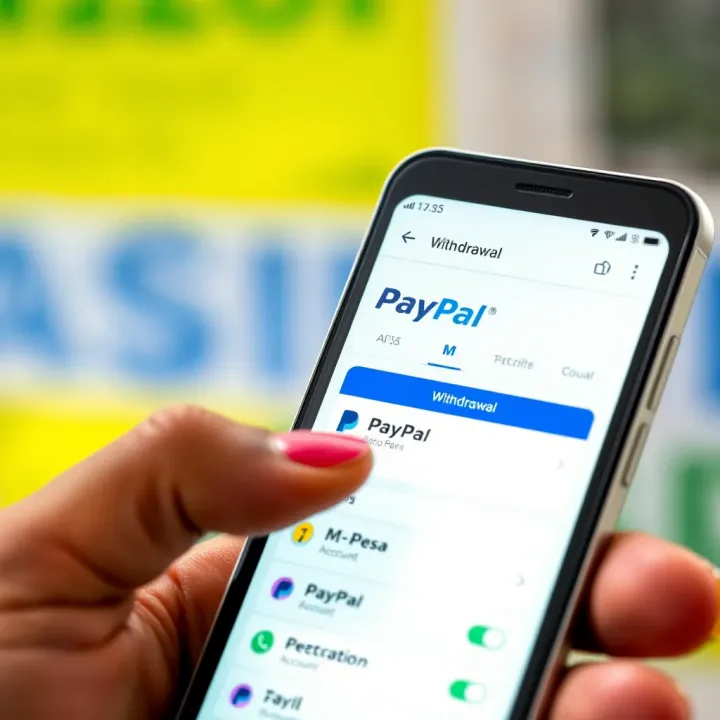
Opening a PayPal account in Kenya is straightforward but comes with specific details to watch out for. Start by visiting the PayPal website or mobile app and registering using a valid email and your personal details. Choose the personal or business account based on your intended use. For instance, if you’re a trader needing to receive payments, a business account fits best.
When logging in, you’ll use the registered email and password. It’s advisable to activate two-factor authentication to prevent unauthorised access, especially since your account will link to your financial sources. If you forget your password, PayPal’s recovery process works globally, sending reset links to your email.
Verification boosts your account limits and confirms your identity, enabling full access to PayPal services. In Kenya, linking your PayPal to a local bank account or card is critical. Options include linking your Equity Bank or KCB debit card, provided it supports international transactions. Remember, cards must be Visa or Mastercard branded for PayPal.
Another way includes confirming a small payment PayPal sends to your bank or card to prove ownership — input the exact code received. Verification allows you to send higher sums, receive payments without holds, and withdraw funds.
Though PayPal doesn’t directly integrate with M-Pesa, you can combine the two via your linked bank or card and services offered by third parties such as TransferKenya or similar platforms. These services allow transferring money from PayPal to your Kenyan bank account and subsequently withdraw to M-Pesa.
For example, after receiving funds in your PayPal account, you withdraw them to your linked Kenyan bank account. From there, you use M-Pesa’s ‘Buy Goods and Services’ or ‘Lipa Na M-Pesa’ options to move funds, or directly withdraw at an M-Pesa agent.
In summary: creating and logging into PayPal is simple, but verification and linking to local payment methods like M-Pesa through bank accounts requires careful steps. Correct setup ensures you can quickly send, receive, and withdraw funds without unnecessary holds or charges, vital for traders, investors, and finance professionals managing cross-border payments from Kenya.
The link between PayPal and M-Pesa opens new avenues for seamless financial transactions, especially for Kenyans involved in cross-border trade, freelancing, or online businesses. Combining these two platforms lets you send and receive money without the hassle traditionally associated with international transfers. This integration reduces the need to depend solely on bank accounts, which may have longer processing times and higher fees.
Sending money from PayPal to M-Pesa involves a few practical steps. First, ensure your PayPal account is linked to a local platform or intermediary that supports M-Pesa withdrawals—services like Selcom or JamboPay often act as bridges. Once set up, log in to your PayPal and initiate a withdrawal to the intermediary’s local account. The service then credits your M-Pesa number, usually within minutes, depending on the provider.
For example, if you’re a freelancer in Nairobi receiving payments from an overseas client via PayPal, you can transfer those funds straight to your M-Pesa mobile money wallet. This means you can pay your bills, buy airtime, or even withdraw cash nearby without waiting for bank clearances.
Many Kenyan entrepreneurs rely on PayPal to get paid by international customers for goods or services like graphic design, consultancy, or e-commerce sales. Once payment lands in your PayPal account, withdrawing to M-Pesa can be done via authorised third-party platforms. You initiate the withdrawal from the PayPal interface, selecting the withdrawal option, then enter your M-Pesa number linked with the withdrawal service.
It’s important to verify your identity according to PayPal’s requirements and confirm your account linkage to avoid failed transactions. Withdrawing through M-Pesa means faster access to funds without moving to a physical bank. It also saves you from costly foreign exchange charges or the inconvenience of bank queues.
There are several scenarios where using PayPal and M-Pesa simultaneously brings real benefits:
Freelancers and remote workers: They can receive payments from international clients and move funds quickly to their mobile money wallets.
Online sellers and exporters: Businesses operating on platforms like Jumia or Etsy can get paid through PayPal and then access their earnings via M-Pesa.
Diaspora remittances: Family members abroad send money to loved ones in Kenya who prefer receiving via mobile money.
Small businesses: Use PayPal to collect payments from global customers and pay local suppliers or staff through M-Pesa.
Integrating PayPal with M-Pesa bridges the international and local payment gap, making money flow smoother for Kenyan users engaged with both markets.
This synergy reduces transactional frictions, cuts waiting times, and expands financial inclusion across Kenya’s digital economy. Traders and finance professionals can leverage these tools to keep funds moving efficiently, not just within Kenya but across borders as well.
Understanding fees, charges, and limits is vital when combining PayPal with M-Pesa for transactions in Kenya. These factors directly affect your cost of business, cash flow, and the speeds at which money moves. Knowing what to expect helps traders, investors, and finance professionals budget correctly and avoid surprises.
PayPal and M-Pesa each impose different transaction fees, and these can stack up depending on the payment flow. When you send money from PayPal to M-Pesa, PayPal often charges a percentage fee plus a fixed amount based on the transaction currency. For instance, PayPal’s fee for international transfers might be around 4.4% plus a fixed KSh equivalent to about KS50 per transaction.
On the M-Pesa side, withdrawing PayPal funds to your M-Pesa account attracts its own charges based on Safaricom’s withdrawal rates. Normally, withdrawals up to KS5,000 attract a minimal fee, but above this the fee scales up. For large sums, the percentage gets important to consider — say KS0,000 withdrawn might cost around KS000 in total fees on M-Pesa alone.
If you receive money into PayPal from a client abroad, PayPal deducts a fee (around 3.9% plus a fixed amount, depending on currency). These fees affect net received funds so plan accordingly.
Both PayPal and M-Pesa apply limits to transactions, which traders and investors must understand to avoid delays or rejections.
PayPal's sending limit depends on account verification status. For Kenyan PayPal users, unverified accounts may face limits as low as $500 per month (approximately KSh70,000). Fully verified accounts can send up to $10,000 (around KS.4 million) per transaction or month, but this also varies with transaction histories.
M-Pesa limits are set by Safaricom and vary per user type and daily thresholds. For example, M-Pesa withdrawals to bank or cash out have daily limits around KSh70,000 for standard users. Higher limits apply for business numbers and registered agents. Also, some counties have specific regulatory constraints affecting transaction ceilings.
Both fees and limits should be checked regularly as they can change based on regulatory updates or company policy changes.
To operate smoothly, users should tailor transaction sizes to stay within free or lower-fee bands — smaller, frequent transfers often reduce overall costs compared to single large transactions. For example, breaking a KS00,000 transfer into three smaller transactions reduces M-Pesa withdrawal fees.
In sum, knowing these fees and limits beforehand reduces risks of stalled transactions and unexpected charges, keeping your financial operations on track. Always consult the latest PayPal and Safaricom M-Pesa pricing and limits information before planning transfers, especially if handling large volumes or high-value payments.
Integrating PayPal with M-Pesa offers Kenyan users a flexible way to manage local and international transactions. However, users often encounter issues that can disrupt their experience. Troubleshooting these common problems helps avoid delays and ensures smooth money transfers, especially for traders, finance professionals, and brokers who rely on timely payments. Being prepared to tackle login errors, transaction failures, or security concerns saves time and protects your funds.
Many users face problems logging into PayPal when accessing it from Kenya. This usually happens due to incorrect credentials, changes in account settings, or IP restrictions. Sometimes, PayPal may flag a Kenyan IP address for verification, creating a block until further identification is provided.
To resolve this, first double-check your email and password for typos. Also, ensure your device's time and date settings are correct, as PayPal’s security checks rely on this. If you've forgotten your password, use the "Forgot Password" feature promptly.
Account verification can stall if Kenyan bank cards or mobile numbers are not properly linked or verified. For instance, linking M-Pesa numbers directly to PayPal requires careful input of mobile details and confirmation codes. Always ensure that your M-Pesa number is active and registered under your name to avoid verification issues.
Failed transactions between PayPal and M-Pesa can result from insufficient funds, incorrect recipient details, or network disruptions. Traders and analysts should frequently monitor their transaction status to avoid surprise failures.
When a PayPal-to-M-Pesa withdrawal fails, start by confirming that your PayPal account has enough balance and the M-Pesa phone number linked is correct. Sometimes, network congestion either on Safaricom’s side or PayPal’s servers can delay or fail transactions temporarily. Waiting a few minutes and trying again can work. For persistent failures, contacting Safaricom customer care or PayPal support is advisable.
Always save transaction IDs and screenshots as proof during disputes to expedite resolution.
Handling money between PayPal and M-Pesa calls for vigilance, especially where fraudsters target unsuspecting users. Avoid sharing your PayPal or M-Pesa PINs, passwords, or verification codes with anyone, even if they claim to be from customer service.
Use strong, unique passwords for your PayPal account, combining letters, numbers, and symbols. Enable two-factor authentication (2FA) on PayPal for an extra security layer. On M-Pesa, regularly change your PIN and be cautious when using USSD codes in public places to prevent skimming.
If you receive unexpected emails or SMS messages asking for personal details or payment confirmations, do not respond directly. Instead, verify through official channels such as Safaricom’s helpline or PayPal’s official app.
In summary, knowing how to spot login issues, handle failed payments, and maintain tight security practices reduces risks and supports smooth operations when using PayPal with M-Pesa. These steps are especially vital for Kenyan finance professionals who depend on these platforms daily for business and investments.
🔍 Learn how to make DERIV Mpesa deposits easily in Kenya. Step-by-step guide, fees explained, common issues, and tips for secure transactions. 💼📲
Learn how to withdraw money from your Deriv trading account to M-Pesa smoothly in Kenya 📲. Step-by-step guide, tips, and common challenges explained.

📈 Discover how to trade stocks, forex, and crypto using M-Pesa on popular Kenyan apps. Learn to link accounts, stay safe, and invest wisely from your mobile.
📲 Learn how to download and use the Deriv app in Kenya with easy steps, features, and tips for safe trading on your phone or tablet. 🚀📉
Based on 15 reviews