

Understanding Derivatives for Kenyan Readers
📈 Understand derivatives clearly with practical examples from Kenya's finance and economy. Learn types, uses, benefits, risks, and local regulations for smarter decisions.
Edited By
James Whitaker
Markets form the backbone of Kenya's economy, linking producers, traders, and consumers across sectors. But fairness in these markets isn't just about supply and demand; just markets go further by aiming for ethical practices, equal opportunities, and protection against exploitation.
Understanding what makes a market "just" is essential for traders, investors, and finance professionals who want both profitability and sustainability. In Kenya, where the hustler economy thrives alongside formal businesses, balancing market freedom with fairness is a daily challenge.
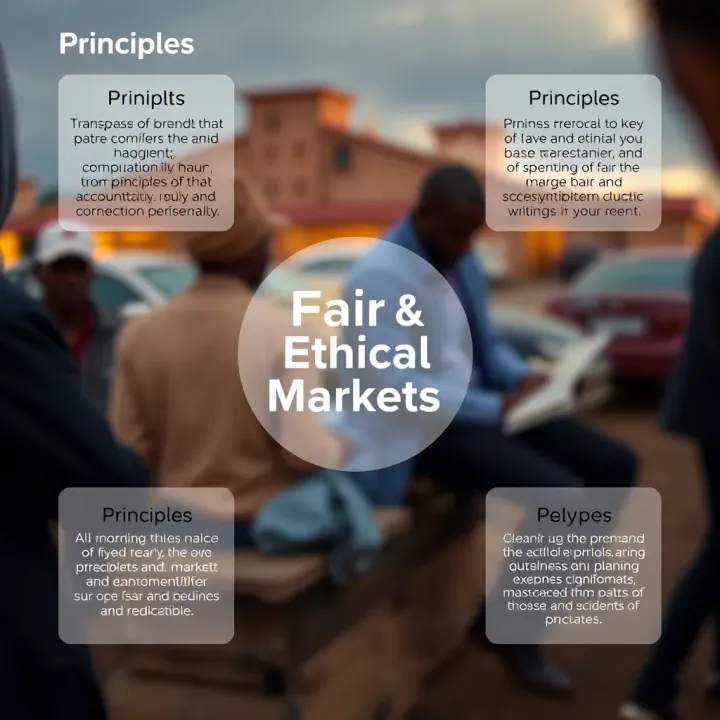
A just market ensures that all players—whether a small-scale farmer from Kisumu or a Nairobi-based broker—operate on a level playing field with transparent rules and respect for rights.
Fair Access: Everyone should have a genuine chance to participate. For example, small traders using M-Pesa for transactions benefit when mobile money agents serve remote areas reliably.
Transparency: Prices, terms, and risks must be clear. When county regulations on matatu fare adjustments are transparent, commuters and operators can adapt without friction.
Accountability: Traders and regulators alike must answer for unethical behaviour. The Capital Markets Authority (CMA) in Nairobi plays a role by enforcing fair trading practices among listed companies.
Inclusivity: Markets should include marginalised groups—women, youth, and rural entrepreneurs—by removing barriers like excessive fees or complicated registration processes.
Protection against Exploitation: Consumers and small players deserve safeguards. For instance, NHIF increasing awareness helps protect informal sector workers against unpredictable health costs.
Understanding these principles can help investors evaluate market risks beyond mere price volatility, spotting potential regulatory or ethical issues early.
Brokers operating in NSE can build client trust by emphasising transparent dealings and adherence to CMA rules.
Traders aware of fair access issues might collaborate in harambee groups to access better financing options, avoiding predatory lenders.
Overall, a just market isn't just idealistic—it's practical. When fairness drives transactions, market confidence grows, trading volumes rise, and Kenya’s economic growth gains a solid, ethical foundation.
Understanding what makes a market just is essential for anyone involved in trading, investment, or economic analysis. Just markets ensure that economic activities are fair, equitable, and ethical, allowing all participants—whether small-scale traders or large investors—to compete on an even footing. This fairness reduces misuse of power, prevents exploitation, and boosts overall market efficiency.
For example, in Nairobi's open-air markets, just practices would mean vendors have equal access to prime selling spots, transparent pricing, and protection from harassment by intermediaries. Without these, informal traders face unfair hurdles that can limit their incomes and stall economic growth in their communities.
Just markets are economic systems where fairness, equity, and ethical conduct guide transactions. They are characterised by equal access opportunities, transparency in information, and mechanisms to protect participants from exploitation. Unlike markets driven solely by profit or free competition, just markets factor in social justice, consumer protection, and the rights of smaller players.
These markets work not only on price and supply-demand dynamics but also consider social outcomes. For instance, ensuring that small farmers in Kenya can access fair prices without unfair middlemen or that consumers can trust the quality and safety of products sold, especially in sectors like food and medicine.
The key characteristics include:
Equitable access to market entry and resources
Transparency in pricing and information
Accountability for unethical practices
Protection for vulnerable groups like small producers or consumers
By contrast, free markets prioritise minimal government intervention, relying on the invisible hand of supply and demand to regulate activities. While this can drive innovation and efficiency, it often neglects social fairness and can lead to monopolies or exploitation.
Just markets recognise these gaps and introduce checks to correct inequities. For example, while a free market may allow a big retailer to undercut small shops aggressively, a just market would have policies or community pressure to prevent predatory pricing that could eliminate local businesses unfairly.
This distinction implies that just markets are more than economic models—they reflect societal values, balancing profit motives with fairness and long-term sustainability.
Fairness in markets has a direct impact on society and the economy. When markets are just, income distribution becomes more balanced, poverty levels decrease, and social tensions reduce. Traders and investors benefit from a more stable environment where predictability and uniform rules create opportunities.
Take the example of Kenyan coffee farmers. Fair trade practices that guarantee reasonable prices and transparent contracts enable farmers to invest more in quality production. This uplifts entire farming communities and stimulates rural economies.
Fair markets also foster trust, a vital ingredient for sustainable growth. When consumers trust that prices are fair and products are genuine, they are more willing to spend, which keeps money circulating within the economy. Equally, investors and business owners are more confident to expand when they believe the market rules are applied equally to all.

In markets lacking fairness, scepticism grows, participation drops, and growth becomes uneven or stunted.
Such trust helps build resilient economies where short-term profit-seeking gives way to long-term partnerships and innovation. Kenya’s growing digital payment platforms, like M-Pesa, thrive partly because of the trust and transparency they bring to transactions.
In summary, defining just markets clarifies expectations and guides policies that make markets functional and inclusive. Fairness is not just an ideal but a practical foundation for healthy economic activity that benefits the many, not just the few.
Just markets rest on clear principles that shape fairness and ethical dealings in trade. These principles matter because they ensure markets work well for all participants — from producers to consumers — by fostering trust, fairness, and sustainable growth. Without them, markets risk favouring a few players over many, which can hurt the economy and social cohesion.
Equal opportunity for producers and consumers means that everyone should have a fair chance to participate in the market regardless of their background or resources. For instance, small jua kali artisans in Nairobi need an equal footing to compete with larger firms, which often have better access to capital and market information. When producers and consumers access goods and services freely, it encourages innovation, fair prices, and variety.
Addressing barriers to market entry is critical to creating equity. Many small producers face high costs, cumbersome licensing, or lack transport that blocks their access to markets. A local example involves fresh farmers in rural Kenya who struggle to reach urban markets due to poor roads or limited cold storage. Tackling these barriers could mean simplifying registration processes or investing in infrastructure, which opens markets to more players and benefits consumers with more choices.
Clear information flow is essential to a just market because it allows all participants to make informed decisions. For instance, consumers rely on accurate product descriptions and pricing; without this clarity, they might pay unfair prices or buy substandard goods. Kenyan supermarkets, which provide price tags and product labelling, set a better standard compared to some open-air markets where information can be inconsistent.
Mechanisms to enforce fairness ensure that rules are followed and misconduct is checked. This includes consumer protection agencies or market inspections that catch fraud or false advertising. In Kenya, the Competition Authority and the Kenya Bureau of Standards play vital roles by investigating unfair trade practices and ensuring firms comply with regulations. Without such accountability, markets risk becoming unlevelled, discouraging honest traders and hurting consumers.
Avoiding exploitation means protecting vulnerable parties from unfair treatment, such as price gouging or poor working conditions. For example, informal workers in the matatu sector need safeguards against unreasonable demands or unsafe job conditions. Ethical business boosts trust and helps sustain market activity.
Ensuring quality and safety standards is important so that consumers are not exposed to harmful or defective products. This applies to everything from food sold in local kiosks to manufactured goods distributed nationwide. Regular inspections, like those done by the Pharmacy and Poisons Board or KEBS (Kenya Bureau of Standards), reinforce confidence that what consumers buy meets basic safety criteria.
Transparency, equity, and ethical conduct build markets where everyone benefits — not just a few. These principles form the backbone of fair trading systems that can thrive in Kenya's diverse economic landscape.
Together, these foundational principles guide a just market’s operation, balancing opportunities and protection for all players involved.
Understanding how just markets function in Kenya sheds light on the practical realities affecting fairness and equity in local trade. Kenya’s economy blends both informal and formal market systems, which together shape accessibility and inclusiveness. Through examining these markets alongside payment systems and bargaining practices, we see the real-life challenges and opportunities for fairness in trade.
The jua kali sector and matatu industry are vital parts of Kenya’s informal market landscape. The jua kali artisans — known for their skilled work in welding, carpentry, and metal fabrication — often operate with limited resources but serve large customer bases. Their ability to offer affordable, customised services fills critical gaps left by formal manufacturers. Meanwhile, matatu operators provide daily transport for millions with a flexible, demand-driven system. Despite their informality, these sectors contribute significantly to Kenya’s economy but also face challenges like inconsistent regulation and market access that affect fairness.
On the other hand, formal markets such as supermarkets and shopping centres offer an edge in standardisation, quality control, and consumer protection. Supermarkets like Naivas, Carrefour, and Quickmart provide regulated environments where goods are often branded and priced transparently. However, open-air markets remain crucial, especially for lower-income consumers who benefit from direct price negotiation and fresh local produce. This duality means just markets in Kenya must balance structured compliance with informal flexibility to serve diverse populations fairly.
M-Pesa and mobile payment platforms have transformed buying and selling across Kenya, offering safer, faster, and more transparent transactions. These systems help reduce risks of theft and fraud prevalent in cash dealings. They also enable small traders to reach customers beyond their immediate locations. For example, artisans in Kiambu can receive payment quickly from clients in Nairobi without needing physical visits. This digital shift supports fair access to markets and speeds up cash flow, crucial for small-scale businesses.
Fair pricing and bargaining remain central to how markets operate, especially in informal settings. While fixed prices set by supermarkets create predictability, open-air markets often rely on negotiation skills. Here, both buyers and sellers retain bargaining power, which can promote fairness when balanced but sometimes leads to exploitation if information asymmetry exists. For instance, a roadside vegetable seller may adjust prices depending on the customer’s perceived ability to pay, which complicates outright fairness but reflects flexible local market dynamics. Ensuring fair trade practices requires transparent pricing mechanisms and consumer awareness to protect vulnerable parties.
Fair markets in Kenya depend on blending formal regulation with informal market dynamics, backed by technology and community knowledge to keep exchanges transparent and equitable.
Markets that are fair and ethical face numerous hurdles, especially in countries like Kenya where economic disparities and regulatory gaps persist. These challenges hinder equal access, distort pricing, and ultimately undermine trust between buyers and sellers. Understanding these obstacles is vital for traders, investors, and policymakers aiming to foster more just markets.
Corruption inflates prices and narrows access by creating unfair advantages for those willing or able to pay bribes or engage in unethical practices. This results in an uneven playing field where small traders or consumers may pay more or get excluded from certain markets altogether. Beyond pricing, corruption also slows market operations, as some actors wait for permits or approvals that never come without under-the-table payments.
In Kenya, corruption can be seen in sectors like import and export licensing or distribution of government tenders, where market entry costs go up due to unofficial fees. For instance, some jua kali entrepreneurs report paying off local officials just to secure a stall in busy open-air markets. This routinely sidelines honest traders and limits competition, pushing prices higher and reducing choice for consumers. At the wholesale level, market regulators occasionally face accusations of turning a blind eye to cartels fixing prices, especially for staple goods like maize and cooking oil.
Small-scale jua kali traders often lack the capital, formal business credentials, or access to credit facilities like the Higher Education Loans Board (HELB) or commercial banks, which constrains growth. Additionally, they struggle with bureaucratic hurdles such as registration and licensing, which are costly and time-consuming. This limits their capacity to scale operations or compete with more established businesses, thereby keeping market control in the hands of few.
Many rural producers face difficulties reaching larger markets because of poor roads, limited transport options, and unreliable electricity. For example, a farmer in Narok might spend several hours or days arranging transport to Nairobi’s markets, increasing costs and reducing freshness of perishable goods. Poor infrastructure also discourages traders from investing in storage facilities or cold chains, which would extend product shelf life and improve market access. These factors perpetuate regional disparities in market participation and limit economic opportunities outside major urban centres.
Tackling these challenges requires coordinated efforts between government, community organisations, and businesses to improve transparency, simplify regulations, and invest in infrastructure that connects small producers to broader markets effectively.
Policies and community-driven efforts play a key role in establishing fair and ethical markets. In Kenya, market fairness depends not only on government regulations but also on active participation by local groups and cooperatives. These efforts help bridge gaps in access, improve transparency, and protect consumers. Combining regulation with grassroots engagement creates an environment where just markets can thrive.
The Competition Authority of Kenya safeguards market fairness by overseeing anti-competitive practices and abuse of market power. It intervenes when companies fix prices or divide markets to the detriment of consumers and smaller businesses. By enforcing competition laws, the authority helps maintain a level playing field for traders and investors. For instance, preventing cartels in industries like cement or steel ensures that prices remain reasonable and businesses have equal opportunity to compete.
Enforcing product quality through standards and inspections protects consumers and promotes trust in markets. Agencies like the Kenya Bureau of Standards (KEBS) check that goods meet safety and quality requirements before they reach consumers. This is especially important in sectors such as food and pharmaceuticals where substandard goods can cause harm. Regular inspections also push producers to maintain good practices, reducing exploitation and fraud in the market.
Local market forums bring together traders, consumers, and regulators to address challenges and improve fairness. These forums allow participants to air grievances, share market information, and monitor pricing practices collectively. For example, in Nairobi's open-air markets, trader associations often form committees that liaise with county officials to resolve disputes and ensure fair enforcement of regulations. Such forums empower small traders who might otherwise lack a voice.
Cooperative societies have long been pillars of equitable market participation in Kenya. Groups like Mucageti Coffee Cooperative in Meru enable small-scale farmers to pool resources, access better prices, and improve bargaining power with buyers. Similarly, savings and credit cooperatives (SACCOs) help members access affordable finance for business growth, which would be challenging individually. Through collective action, cooperatives promote more balanced market dynamics and enable members to thrive.
Effective market fairness depends on both sound government policies and strong community participation. Together, they form a system supporting economic justice and sustainable growth.
By supporting competition, enforcing fair standards, and empowering local stakeholders, Kenya can move closer to markets that are not only efficient but also just and inclusive.
📈 Understand derivatives clearly with practical examples from Kenya's finance and economy. Learn types, uses, benefits, risks, and local regulations for smarter decisions.

Explore how forex bots automate trading in Kenya, their benefits and risks, plus tips on choosing the right tools to boost your forex trading game 🚀📈

Explore Deriv's trading platform in Kenya 🇰🇪, learn to register, verify, and trade securely with insight on features, benefits, risks and regulation 📈💻

📈 Learn how to open and manage trading accounts in Kenya. Discover types of accounts, tips on choosing providers, and avoid costly mistakes in your investment journey.
Based on 13 reviews