
Understanding Derivatives for Kenyan Readers
📈 Understand derivatives clearly with practical examples from Kenya's finance and economy. Learn types, uses, benefits, risks, and local regulations for smarter decisions.
Edited By
Charlotte Morgan
Derivatives are financial contracts whose value depends on an underlying asset such as stocks, currencies, commodities, or interest rates. In Kenya, understanding derivatives is increasingly important as local markets grow and investors seek ways to manage risks or enhance returns.
At the core, derivatives help traders and investors to hedge against price fluctuations or to speculate on market movements without owning the actual asset. For example, a tea exporter in Kericho might use a derivatives contract to lock in a future selling price for tea, shielding against sudden price drops due to global market shifts.
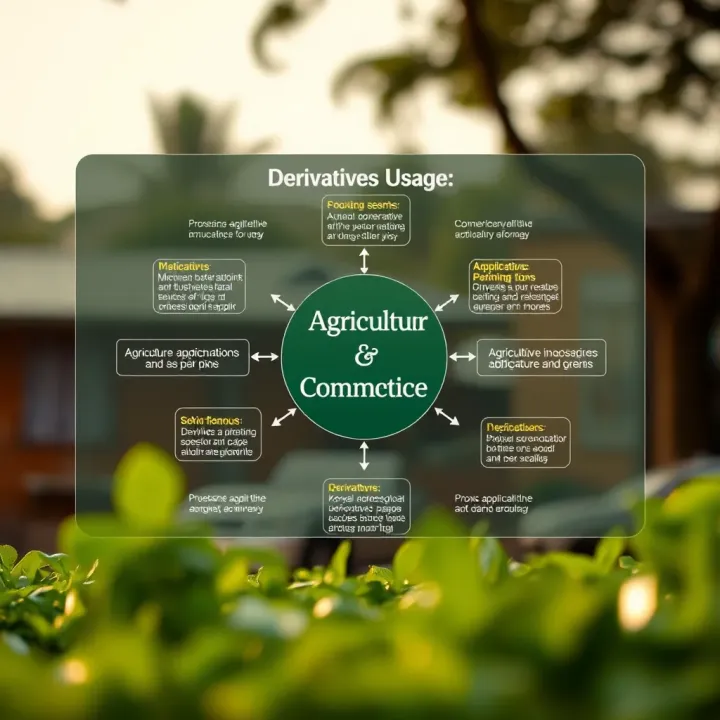
Derivatives come in various forms, including futures, options, forwards, and swaps, each with unique features. A futures contract obliges the buyer and seller to transact an asset at a predetermined price and date. In contrast, options give the holder the right but not the obligation to buy or sell.
For Kenyan traders and investors, derivatives serve as tools not only to protect portfolios from volatility but also to access opportunities otherwise unavailable.
Risk management: Farmers, exporters, and manufacturers can protect themselves from currency swings or commodity price drops.
Investment diversification: Investors can gain exposure to different sectors or assets through derivative products.
Market efficiency: Derivatives help improve price discovery, allowing informed decisions based on market expectations.
A coffee farmer using a forward contract to fix the sale price before harvest.
Currency swaps between Kenyan shilling and US dollars to manage exchange rate risks in import-export businesses.
Investors using options on NSE-listed stocks to hedge against adverse stock price moves.
In essence, derivatives are not just high-finance tools for big players; they are becoming increasingly relevant across Kenya’s diverse economic activities. Grasping how these contracts work will help investors, traders, and businesses to make smarter, more informed decisions, whether on the NSE, in commodity trading, or even in international dealings.
Understanding derivatives is essential for anyone involved in finance, investment, or risk management. This section lays the groundwork by explaining what derivatives are, their main purposes, and the common types you’ll encounter. These fundamentals help you grasp how derivatives influence markets and why they’re relevant in Kenyan business contexts.
Derivatives are financial instruments whose value depends on an underlying asset, such as stocks, commodities, currencies, or interest rates. Rather than owning the actual asset, you hold a contract that derives its worth from that asset’s price movement. In practical terms, think of a farmer entering a contract to sell maize in future at a set price rather than holding the maize itself.
This setup allows businesses and investors to plan ahead despite fluctuating prices. For instance, a Nairobi coffee exporter can lock in a price for coffee beans today, shielding themselves against adverse price drops by the time the actual sale happens.
Derivatives mainly help in managing risks tied to price changes. Kenyan traders, farmers, or importers can use derivatives to reduce uncertainties from volatile currency exchange rates, commodity costs, or interest rates. For example, a Kenyan importer relying on the US dollar can enter into a derivative contract to fix the exchange rate in advance, avoiding losses if the shilling weakens.
Effectively, derivatives act like financial hedges—similar to how buying insurance protects your home. They don’t aim to make profits directly but to limit possible losses while allowing business to continue smoothly.
Options give the buyer the right, but not the obligation, to buy or sell an asset at a predetermined price within a specific time. In Kenya’s context, a stockbroker might buy an option to purchase shares in Safaricom at a certain price if they believe the market will rise, while limiting losses if the share price falls.
Options offer flexibility since you can choose to exercise the option or let it expire. They’re particularly useful for investors who want to speculate with controlled risk or safeguard stock holdings.
Futures are contracts obligating parties to buy or sell an asset at a set price on a future date. Unlike options, both buyer and seller must honour the contract. A Kenyan tea farmer might use futures to lock in prices months before harvest, protecting income against market slumps.
These contracts are standardised and traded on exchanges, providing liquidity and transparency. Futures serve both producers and consumers by stabilising prices.
Swaps involve exchanging cash flows or debt obligations between two parties. The most common are interest rate swaps where fixed and variable interest payments are swapped. For example, a Kenyan firm with a variable loan may swap its payments to fixed interest rates to avoid rising borrowing costs.
Swaps are widely used behind the scenes in banking and corporate finance to manage exposure to interest rates or currencies without transferring the actual loans.
Forwards are customised contracts similar to futures but traded over the counter (OTC) without an exchange. They allow parties to agree on terms tailored to their needs, such as volume, price, and delivery date.
Kenyan businesses, like exporters or importers, often use forwards to hedge foreign exchange risks specifically suited to their transaction schedule. However, forwards carry higher counterparty risk since there’s no centralised clearinghouse.
Derivatives play a key role in modern finance, providing tools to manage uncertainties and stabilise business activities. Knowing their basics helps you engage smarter in markets and protect your financial interests effectively.
The mathematical foundation of derivatives is central to understanding how changes in variables influence each other, especially in finance and risk management. At its core, derivative mathematics helps traders, analysts, and investors quantify how one factor shifts relative to another — a skill vital for making informed decisions in rapidly changing markets.
A derivative measures how much a value changes when its input changes by a small amount. Think of it as the speedometer of a car — it tells you how fast you’re moving at any given moment rather than just how far you've gone overall. For example, in stock prices, a derivative can indicate how fast a share price is rising or falling, which informs decisions on when to buy or sell.
In practical terms, this rate of change is crucial for assessing risks and returns. If you’re a commodities trader dealing with coffee prices in Nairobi, knowing how the price reacts to market factors (like weather reports or currency shifts) helps you hedge properly.
Derivatives are often visualised as the slope of a line tangent to a curve on a graph. This slope represents the instantaneous rate of change at a specific point. Imagine plotting your business profits against time; the steeper the slope at any moment, the quicker your profits are increasing (or decreasing).
In financial analysis, these slopes help predict trends. A rising curve may indicate growing demand while a flattening one could signal market saturation. Traders in Kenya’s NSE (Nairobi Securities Exchange) might use this concept to evaluate stock momentum before investing.
Calculus provides straightforward rules to find derivatives of common functions. For instance, the derivative of a constant is zero, and the derivative of x squared is 2x. These rules simplify analysis and avoid tedious computations, enabling quick decisions in fast-paced trading environments.
This simplicity is handy when modelling how interest rates or inflation rates affect bond prices, allowing investors to react swiftly to economic shifts.
In real life, derivatives help us understand changing conditions — for example, calculating how quickly water fills a tank or how caffeine concentration drops in the blood over time. In finance, they model how an option’s price changes with the underlying asset’s price.
Consider a Kenyan farmer monitoring rainfall during planting season. The rate at which rains fall daily (a derivative) can decide planting schedules. Similar logic applies to traders monitoring price changes where derivatives underpin algorithmic trading systems.
Understanding these mathematical basics is not just about numbers; it equips you to anticipate market shifts, manage risks better, and maximise returns in Kenya’s vibrant financial markets.
Derivatives quantify instantaneous change, crucial for timing trades
Graph slopes visualise momentum and trend strength
Basic calculus rules expedite complex calculations
Practical examples ease understanding of abstract concepts
Mastering the math behind derivatives sharpens analytical skills, enhancing your grasp on market dynamics and investment strategies.
Derivatives play a significant role in finance by offering tools to manage risk and optimise investment returns. They are essential for traders, investors, and financial institutions to protect their portfolios and take advantage of market opportunities. Understanding these applications is key to making informed decisions in both local and international markets.
Hedging allows investors and businesses to shield themselves from potential losses caused by market fluctuations. For instance, a Kenyan farmer expecting to sell maize in three months can use futures contracts to lock in a selling price today. This reduces exposure to price drops during the storage period. Such strategies help smooth out uncertainties and keep businesses stable.
Moreover, companies with fixed cash flows in foreign currencies often hedge to avoid unexpected swings. By entering into derivative contracts, they fix exchange rates, so their profits are not eaten up by sudden currency shifts. This practice is vital, especially with the frequent changes in the shilling against major currencies like the US dollar or euro.
Kenyan importers and exporters face currency risks daily. Derivatives like forwards and options let them manage these risks effectively. For example, an importer buying electronics from abroad can use a forward contract to fix the exchange rate now, avoiding surprises when paying months later. This ensures budgeting remains accurate without relying on guesswork.
Similarly, commodity traders dealing in coffee or tea use derivatives to manage price volatility. Given global supply shocks or demand changes, derivatives allow locking in prices, ensuring that both farmers and buyers avoid sudden losses. This mechanism supports stable incomes in the agriculture sector, a backbone of Kenya's economy.
Some investors use derivatives to amplify their exposure to price movements without committing large capital upfront. This speculation can increase potential profits but also risks. A trader expecting the NSE 20 index to rise might buy index futures to gain from the anticipated increase. This approach allows participating in bigger trades than the initial investment capital would permit.
However, leveraging requires careful risk management, as losses can also magnify quickly. It suits sophisticated investors who understand the dynamics and have strategies to limit downside risks.
Kenya's financial market is evolving, with derivatives gaining traction mainly on the Nairobi Securities Exchange (NSE) and over-the-counter (OTC) platforms. While the market size is growing, liquidity remains a challenge compared to global hubs. Nevertheless, derivatives help Kenyan banks, pension funds, and corporate investors manage exposures—from interest rates to foreign exchange.
Local brokers and analysts advise investors to stay aware of regulatory changes and product specifics. For example, Safaricom's mobile money platform has simplified payments but derivatives still require formal contracts and good legal frameworks. As awareness and access improve, derivatives will likely play a larger role in Kenya’s financial scene, helping manage risks and boost investment opportunities.
Understanding how derivatives work in real-world scenarios is essential for anyone involved in Kenyan finance, whether protecting investments or seeking market gains. They offer practical tools but demand respect for the risks involved.
This knowledge equips traders, analysts, and investors to navigate markets more confidently while making the most of available financial instruments.
Derivatives play a significant part in modern finance, especially for those in trading, investing, and risk management. While they offer valuable tools for controlling uncertainty and discovering prices, they also come with challenges that can affect both businesses and individual investors. Understanding these benefits and risks helps to use derivatives more wisely and avoid common pitfalls.
One of the main reasons businesses and investors turn to derivatives is to manage risks better. For example, a Kenyan tea exporter might face fluctuating currency rates between the Kenyan shilling and the US dollar. By using currency futures or options, the exporter can lock in a favourable exchange rate ahead of the payment date, protecting profits from sudden currency swings. This kind of risk control is crucial for firms involved in international trade or those exposed to commodity price volatility.
Derivatives let users shift some of their risks to other market participants willing to take them on, which means they can focus on running their core business without worrying excessively about unpredictable price changes. For investors, this may involve using options strategies to limit losses while still participating in market gains.
Derivatives markets also help improve price discovery—the process through which market prices reflect all available information. When more participants engage in trading futures or options, the prices become a useful signal for what the market expects. For example, on the Nairobi Securities Exchange, futures contracts on certain stocks or commodities provide insights into future price trends, helping farmers, traders, and investors make informed decisions.
This transparency benefits everyone involved by aligning expectations and reducing uncertainty. In Kenya’s agriculture sector, accurate price signals for maize or coffee enable better planning and financial forecasting, which supports both producers and buyers.
While derivatives can help manage risk, they can also increase market volatility if misused. Since derivatives allow for leverage—controlling large positions with relatively little capital—small price moves can lead to big gains or losses. For instance, a trader speculating on currency options without proper risk checks might face significant losses if the market moves unexpectedly.
This volatility can spill over to the underlying assets and create wider swings in prices. In Kenya’s financial markets, sudden large trades in derivative contracts might unsettle prices, impacting other investors who may not use derivatives themselves.
Derivatives are not always straightforward products; their complexity can lead to misuse or misunderstanding. Investors or firms unfamiliar with these instruments might underestimate the risks involved or use derivatives in unsuitable ways. For example, a small investor might buy uncovered options hoping for quick profits but end up with losses larger than their initial investment.
Moreover, without proper regulation or oversight, some players might use derivatives for speculative purposes that increase systemic risks, as seen in some global financial crises. It is therefore vital that users educate themselves, use derivatives responsibly, and ensure transparency and regulation are in place to limit misuse.
Derivatives offer valuable tools, but they demand careful handling. Knowing the benefits alongside the risks helps you make smarter, safer decisions in Kenya’s financial ecosystem.
📈 Understand derivatives clearly with practical examples from Kenya's finance and economy. Learn types, uses, benefits, risks, and local regulations for smarter decisions.
Explore how 'derive' explains language meanings, solves maths problems, and aids daily choices in Kenya 🇰🇪. Understand its real use in school, work, and life.
📊 Explore binary charts—how they're made, read, and used in tech, finance & more. Perfect for data fans in Kenya seeking clear, practical insights.

Explore how binary accounts work, their structure, and practical uses in finance and tech 📊🔍. Learn setup tips for managing your binary system effectively.
Based on 15 reviews