

Effective Derivative Trading Strategies for Kenyan Traders
📈 Discover practical derivative trading strategies tailored for Kenya. Learn key concepts, risk management, and access helpful PDF guides to boost your trading skills.
Edited By
Charlotte Greene
Kenya’s markets offer rich opportunities, but success calls for more than just luck. Whether you're trading stocks on the Nairobi Securities Exchange (NSE), dealing in forex, or venturing into commodity trading, understanding the local dynamics is vital.
A smart trader adapts strategies to Kenya's unique market environment. This means being mindful of factors like currency fluctuations influenced by Central Bank of Kenya (CBK) policies, the impact of harvest seasons on commodity prices, or the regulatory shifts by bodies such as the Capital Markets Authority (CMA). For instance, a trader focusing on agricultural produce should track the long rains and short rains not just for crop yields but also for pricing trends.
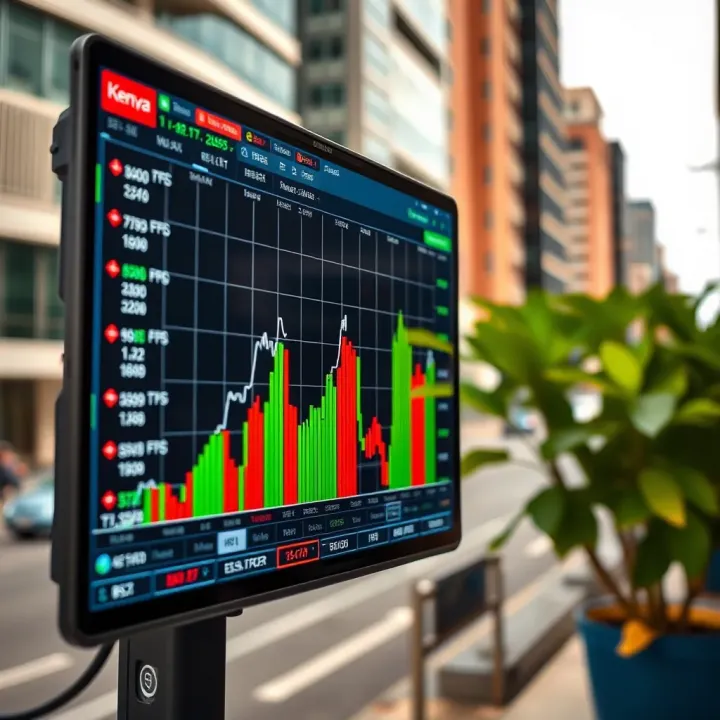
Being successful also depends on using the right tools. Platforms that integrate with M-Pesa allow for quick and secure payments, vital for fast-moving deals. Mobile applications that provide real-time NSE updates or economic news can help traders make timely decisions. Tools like eCitizen or iTax dashboards give access to government services and financial records that support compliance and informed trading.
Avoiding common pitfalls is equally important. Many new traders fall into traps such as over-leveraging, chasing quick profits without proper research, or ignoring local market conditions. Discipline, risk management, and continuous market education help steer clear of these mistakes.
Successful trading in Kenya is a blend of understanding local market forces, deploying adequate tools, and consistent application of smart strategies.
In summary, a smart trader in Kenya combines awareness of local trends, effective use of technology, and prudent risk management to build profitability and sustainability in this vibrant but challenging market environment.
Knowing the right mindset is the first step to becoming a successful trader in Kenya's fast-moving markets. A smart trader doesn’t just react to price changes; they think carefully, plan, and stick to their strategies even when the market feels shaky. This approach helps reduce emotional errors and keeps trading on a solid footing.
Discipline and patience are vital. In Kenya's markets, tempting opportunities pop up, but not every trade deserves attention. A disciplined trader sticks to their plan, only entering trades that fit their strategy. For example, if you set a stop-loss to limit losses, you commit to it rather than moving it based on fear or hope. Patience means waiting for the right setups instead of chasing quick wins. Many traders lose money trying to be too fast or jump into prices moving on rumours, but the patient ones tend to do better over time.
Adaptability to market changes means you can respond when conditions shift. Take the Kenyan stock market during election periods or after key government announcements—prices can move sharply. A smart trader watches these developments and adjusts their strategies rather than sticking rigidly to old tactics. For instance, if inflation rises sharply, sectors like banking or energy might react differently, so adapting your approach can protect profits or reveal new opportunities.
Risk management skills keep losses manageable. Successful traders always know how much they can afford to lose on each trade and diversify accordingly. Using tools like stop-loss orders or position sizing makes sure a single bad trade won't wipe out the whole portfolio. For example, if a trader risks only 2% of their capital per trade, they have room to recover from losses without panic. This is especially important in Kenya, where market volatility and external shocks can be sudden.
Emotional control and bias directly affect choices. It’s easy to get caught up in fear or greed. For example, after a sudden price jump, it's tempting to buy without proper analysis, fueled by fear of missing out (FOMO). Smart traders recognise this and pause to check facts. They also understand cognitive biases, like overconfidence after a winning streak, and work to stay level-headed.
Avoiding impulsive actions means not jumping into trades just because of hearsay or a quick tip from a matatu conductor or a friend. Impulsive trades often come with little research and lead to losses. Real success comes from calmly analysing the available information and sticking to clearly defined entry and exit points. Smart traders create and follow checklists before acting, helping reduce guesswork.
Building resilience under pressure helps traders keep going when the market tests them. In Kenya's market, unexpected news, like shifts in government policy or currency fluctuations, can be stressful. Traders who learn from setbacks without letting frustration take over tend to perform better. Resilience means accepting losses as part of the game, learning lessons, and staying focused on long-term success rather than short-term disappointments.
A disciplined and emotionally aware mindset is often the difference between traders who break even and those who build wealth steadily.
By understanding these mental aspects, you prepare yourself for the challenges unique to Kenya’s trading landscape and improve the chances of turning smart strategies into consistent profits.
Successful trading in Kenya’s markets depends greatly on adopting the right strategies. Strategic approaches help traders make informed decisions, reduce unnecessary risks, and spot opportunities early. In this context, combining both fundamental and technical analysis equips traders with a fuller picture of market dynamics. Each approach offers unique insights—fundamental analysis helps evaluate the intrinsic value, while technical analysis focuses on price behaviour and timing.
Evaluating company performance is crucial for investors looking beyond short-term price movements. This involves studying financial statements like profit and loss accounts, balance sheets, and cash flow reports. For example, an investor tracking Safaricom might look at its quarterly earnings, subscriber growth, and dividend history to judge if the stock is undervalued or overvalued. Such analysis helps traders decide whether to hold, buy, or sell based on a company’s health.
Assessing economic indicators helps traders understand the broader economic environment that affects all businesses. Key indicators like inflation rates, GDP growth, and unemployment figures shape market sentiment. For instance, rising inflation in Kenya might push the Central Bank of Kenya (CBK) to raise interest rates, which can influence borrowing costs and consumer spending. Traders who follow such trends can anticipate sector movements, especially in interest-sensitive industries like banking and manufacturing.
Understanding sector trends is about spotting shifts and growth areas within specific industries. In Kenya, sectors such as agriculture, technology, and energy often show distinct cycles. A trader observing rising demand for renewable energy solutions might then invest in companies like KenGen or Mobisol, anticipating policy support for green ventures. Following sector news, government policies, and export trends provide a sharper edge when choosing stocks aligned with national growth priorities.
Reading charts and patterns lets traders identify potential market movements by analysing price action over time. Charts reveal trends such as head and shoulders, double bottoms, or support and resistance levels. For example, a trader noticing a breakout above a resistance line on an NSE stock chart might expect a price surge. This visual perspective guides decisions without relying solely on financial reports.

Using moving averages and volumes helps smooth out price data and gauge the strength of price trends. Moving averages (e.g., 50-day, 200-day) show whether a stock is in an upward or downward trend. Volume confirms how strong that move is—high volume on an upward move suggests genuine buying interest. For example, if KCB Bank’s stock price crosses above its 50-day average on heavy volume, it signals potential for further gains.
Identifying entry and exit points is key to maximising profits and limiting losses. Combining indicators like Relative Strength Index (RSI) with candlestick patterns, traders determine optimal moments to buy or sell. For instance, if a stock becomes oversold according to RSI, it might be a good entry point, while an overbought signal could prompt a sell. Practically, this approach helps traders avoid mistimed moves, especially in Kenya’s volatile market environment.
Strategic trading is about blending solid company fundamentals with smart technical signals. This combination enhances your ability to time the market well and protect your capital.
Technology shapes how traders in Kenya access markets and execute trades. Modern trading platforms and payment solutions provide faster, more efficient ways to handle investments compared to traditional methods. Leveraging these tools helps traders react quickly to market changes and manage portfolios with greater precision.
Mobile and desktop applications play a significant role in Kenyan trading. Platforms like the Nairobi Securities Exchange (NSE) app, Plus500, and local brokers’ software allow traders to buy and sell shares directly from their smartphones or laptops. This accessibility means traders can monitor the market wherever they are, whether in Nairobi’s CBD or upcountry towns, without missing crucial opportunities.
Desktop applications often provide advanced charting tools and functionalities for experienced traders, while mobile apps focus on ease of use and quick orders. For instance, the NSE offers a mobile app for checking market prices and performing trades, which suits retail traders who may not want to be glued to a computer all day.
User interface features directly affect how traders engage with platforms. A clean, intuitive design reduces errors and helps spot trends quickly. Platforms with clear navigation and customizable dashboards—where traders can place watchlists and alerts—support faster decision-making. Some platforms also offer live price feeds and news integration, ensuring traders stay informed without switching applications.
For example, the KCB Securities trading platform includes alerts for price changes and allows easy toggling between different securities. This simplifies the process for busy traders juggling other responsibilities.
Security considerations remain top priority when using trading platforms. Kenyan regulators like the Capital Markets Authority (CMA) enforce strict compliance to protect traders’ funds and data. Features such as two-factor authentication, encryption of sensitive information, and secure login protocols are standard.
Traders should stick to CMA-licensed platforms and avoid sharing login credentials. In practical terms, a trader using a platform like Britam or Faida should enable all available security settings to prevent breaches, especially with mobile platforms that may be more vulnerable to theft or loss.
M-Pesa integration has transformed the way Kenyan traders fund their accounts and withdraw profits. Most trading platforms now support deposits and withdrawals directly through M-Pesa, reducing delays common in bank transfers. This instant liquidity means traders can quickly react to market opportunities or access their funds without unnecessary waits.
Since M-Pesa is widely used across Kenya, including informal settlements and rural areas, it opens up trading accessibility to a broader group beyond those with bank accounts. For example, a trader in Kisumu can fund their account instantly via M-Pesa without visiting a bank branch.
Fast and secure transactions via mobile money platforms minimise risks of fraud and errors. The system's PIN protection and transaction confirmation messages give traders confidence their money moves safely. Besides, integrating payment with trusted platforms limits counterparty risks and reduces paperwork.
Quick deposits and withdrawals make it easier for traders to manage cash flow, especially those engaging in short-term trades or handling multiple investments at once.
Impact on day trading has been significant. The ability to fund accounts within minutes and execute trades in real-time supports active trading strategies common among Kenyan day traders. Platforms linking directly to M-Pesa remove delays that might otherwise make day trading unfeasible.
Moreover, instant access to profits encourages frequent re-investment, allowing day traders to seize multiple profit-making opportunities throughout the day. This has helped develop a more vibrant local trading culture that adapts quickly to market movements.
Technology and mobile money together have democratised trading in Kenya. With affordable smartphones and integrations like M-Pesa, more Kenyans can participate confidently in markets, breaking barriers once set by geography and banking limitations.
Managing risks effectively shapes the success of any trader in Kenya's markets. Without a clear risk management plan, it's easy to lose substantial amounts, especially given the market's volatility influenced by local factors like economic shifts or regulatory changes. Traders who set realistic limits and recognise common mistakes tend to preserve capital and grow steadily.
Defining stop-loss and take-profit helps traders control exposure to losses and lock in profits without letting emotions dictate decisions. A stop-loss order limits the loss on a trade by automatically closing the position when the price hits a certain level, protecting your capital from steep declines. Conversely, a take-profit order closes a trade once the price reaches a set profitable point, ensuring you don’t miss the chance to bank gains as markets fluctuate. For example, if you buy shares at KSh 100, you might set a stop-loss at KSh 90 and a take-profit at KSh 120 to manage trade exit points automatically.
Managing leverage wisely is essential since leverage amplifies both gains and losses. In Kenya, some brokers offer high leverage ratios, but without caution, it can wipe out your trading account quickly. Wise use means applying leverage levels fitting your risk tolerance and understanding the market well before increasing exposure. Consider using modest leverage, like 2:1 or 3:1, especially when trading volatile assets such as certain NSE shares or currencies influenced by political news.
Diversifying portfolios reduces risks by spreading investments across various assets, sectors, or instruments. Instead of concentrating all funds in one company or commodity, mixing shares in agriculture, banking, and manufacturing sectors helps cushion against market swings in a single area. For Kenyan markets, combining stocks with bonds or even foreign exchange can balance returns and reduce shocks from sudden sector-specific downturns.
Overtrading and chasing losses happen when traders make too many trades or increase bet sizes trying to recover quickly from losses. This behaviour often leads to bigger losses and emotional trading. Instead, maintain discipline by following your trading plan and sticking to your set stop-loss and take-profit levels, regardless of short-term setbacks.
Ignoring market news leaves traders blind to events that can swiftly shift market direction. Kenyan markets react to policy announcements from the Central Bank of Kenya (CBK), political developments, or global commodity price changes. Staying updated helps anticipate market moves and take timely actions instead of reacting late when losses have already mounted.
Lack of proper research undermines trading success. Relying on tips without analysing company fundamentals, technical charts, or economic indicators increases chances of poor decisions. For instance, before investing in a Nairobi Securities Exchange (NSE) stock, check earnings reports, sector performance, and broader economic trends to make informed choices.
Good risk management is not about avoiding risks but controlling them wisely to protect your capital and ensure longevity in trading markets.
By combining realistic expectations, solid limits, and avoiding common mistakes, Kenyan traders can better navigate their markets and increase chances for consistent success.
Adapting your trading strategies to Kenya's unique market conditions can significantly improve your chances of success. The local economic landscape, government policies, and sector-specific dynamics all affect how markets move here. Understanding these factors helps traders avoid strategies that work well elsewhere but fail in Kenya’s context.
Kenya has experienced variable inflation rates and interest rate shifts over recent years. For example, during times when inflation rises sharply, the purchasing power of shilling weakens, directly affecting companies' input costs and consumer demand. Traders who monitor inflation trends adjust their investments accordingly—perhaps favouring sectors with pricing power or export-oriented businesses that benefit from a weaker local currency.
Interest rates set by the Central Bank of Kenya (CBK) also influence borrowing costs and, by extension, corporate profits and consumer spending. When CBK raises the base rate to tackle inflation, stocks in high-debt sectors like real estate may underperform. A smart trader in Kenya watches CBK announcements closely and adapts by reallocating funds towards less sensitive sectors, like telecommunications or agriculture.
Policies from ministries and institutions can lead to rapid market changes. For instance, the recent move by the Kenyan government to tighten rules on sugar importation affected share prices of local sugar producers and distributors. Trading strategies that ignore such policy updates may lead to losses.
Additionally, trade agreements within the East African Community and the African Continental Free Trade Area may boost sectors like manufacturing and agro-processing, signalling opportunities for traders. Keeping an eye on government budget speeches, policy statements, and regulatory changes helps adjust portfolio holdings to benefit from or shield against emerging risks.
Kenya’s economy has several sectors offering distinct trading chances. For example, agriculture remains a staple, with companies involved in fertilisers and farm inputs seeing seasonal demand shifts. Similarly, the mobile money sector led by Safaricom illustrates enormous growth potential tied to Kenya’s high mobile penetration.
In real estate, urban expansion in Nairobi and Mombasa creates opportunities for investors looking at construction firms or building materials suppliers. Tailoring strategies to the rhythms and trends of these sectors—not just broad market movements—gives traders an edge.
The Capital Markets Authority (CMA) oversees Kenya’s securities markets, ensuring transparency and investor protection. Traders must understand CMA rules on trading conduct, disclosures, and listings to avoid penalties and operate smoothly.
For instance, CMA’s rules on insider trading and market manipulation carry stiff fines and legal implications. Traders using online platforms must confirm those platforms are CMA-approved. Familiarity with these regulations helps maintain compliance and reduces risks linked to uncertain legal environments.
Profits from trading activities in Kenya are subject to tax. Capital gains tax (CGT) currently stands at 5%, affecting the net returns from shares or other assets. Knowing the timing of tax obligations, such as when to pay CGT or how to handle withholding tax on dividends, allows traders to plan exits or diversification more effectively.
Recording transactions properly is key to smooth tax filing. Some traders overlook these details and face challenges later during Kenya Revenue Authority (KRA) audits. Hence, understanding tax structures benefits both personal trading and professional investment enterprises.
Whether trading as an individual or through a business, formal registration with CMA and KRA is essential. It legitimises your activities and enables access to certain platforms and products.
Formal registration often requires issuing a KRA PIN number and registering for taxes, which safeguards your operations from legal complications. It also facilitates credit access if you need capital from banks like Equity Bank or KCB. Traders without proper registration face barriers in scaling their activities and numerous risks if questioned by regulators.
In Kenya's fast-evolving market, staying informed and compliant with local economic factors and regulations is not just prudent—it’s necessary for long-term trading success.
📈 Discover practical derivative trading strategies tailored for Kenya. Learn key concepts, risk management, and access helpful PDF guides to boost your trading skills.

Explore Scope Markets Kenya's online trading platform 📈 with insights on financial instruments, local regulations, risk management, and Kenya’s vibrant market opportunities.

Explore Kenya's top forex traders 🌍, their proven strategies 📈, challenges faced 🚧, and expert tips 🧠 to boost your trading skills locally.
🚀 Master Smart Trader Deriv with our practical guide! Learn platform features, effective trading tactics, risk control, and Kenya-relevant tips for confident trading.
Based on 8 reviews