

Guide to Using Deriv TradingView for Smarter Trades
📈 Discover how to maximize Deriv TradingView for smarter trading decisions. Tips & strategies tailored for traders in Kenya to boost market analysis skills.
Edited By
Isabelle Turner
TradingView has become a go-to platform for many traders globally, including Kenyans keen on sharpening their market analysis. When combined with Deriv—a popular platform offering access to forex, commodities, and synthetic indices—traders gain a powerful setup to make more informed decisions.
Kenyan traders often face challenges like limited access to real-time data or reliable charting tools. TradingView addresses this gap by providing clear, detailed charts with a wide range of technical indicators. Linking TradingView with Deriv allows traders to analyse market trends visually and execute trades swiftly, bridging the gap between insight and action.
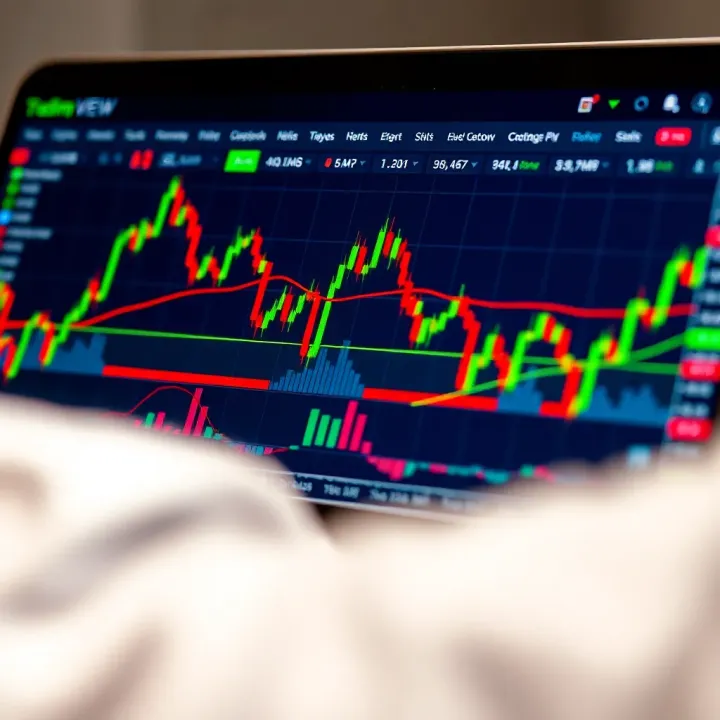
This guide focuses on practical steps to set up TradingView, connect it effectively with Deriv, and harness technical tools that suit Kenya’s market conditions. Whether you trade forex pairs like USD/KES or global commodities, combining these platforms can help you spot entry and exit points more clearly.
Tip: Always ensure you have a stable internet connection and understand Deriv’s trading interface before linking accounts. This avoids missed trades due to technical hiccups.
Key benefits of using TradingView with Deriv include:
Enhanced charting: Customise charts with indicators such as moving averages, RSI, and MACD to better analyse price action.
Real-time alerts: Set price alerts on TradingView to stay updated on key movements without staring at screens all day.
Strategy testing: Backtest your trading ideas on TradingView before risking real money on Deriv.
Seamless workflow: Copy price levels and technical insights between platforms to reduce manual errors.
For Kenyan traders navigating markets from Nairobi to Eldoret, this practical setup can improve trading confidence and decision-making precision. The sections ahead will detail how to get started without fuss, ensuring you focus on trading, not technical headaches.
TradingView and Deriv have become key tools for many Kenyan traders seeking an edge in the dynamic trading environment. By combining TradingView’s powerful charting and analysis capabilities with Deriv’s user-friendly trading platform, traders in Kenya can make more informed decisions and execute trades efficiently. This introduction sets the foundation for understanding why these tools matter locally and what benefits they offer.
TradingView is essentially a web-based charting platform that lets traders visualize market data across various financial instruments. It offers a clear, customisable interface where you can watch live price movements, analyse historical data, and test trading ideas all in one place. For instance, Kenyan traders tracking forex pairs tied to the Kenyan shilling can watch real-time price changes with ease.
A standout feature of TradingView is its combination of real-time data feeds, a vast array of technical indicators, and user-generated scripts shared by a global trading community. Traders can apply indicators like RSI or MACD directly to their charts to gauge momentum, or they can add unique strategies developed by other users. This rich toolbox helps users spot trading opportunities early and tailor their strategy to suit market behaviour.
Kenyan traders often use TradingView alongside Deriv because TradingView provides deeper market analysis than Deriv’s native charts alone. With TradingView, you can do thorough chart studies and then easily execute trades on Deriv, which offers a reliable local gateway for placing orders. This pairing suits traders who want more precision in their entries and exits without giving up convenience.
Deriv offers various trading instruments accessible to Kenyan traders, including forex, commodities, synthetic indices, and digital options. Its platform targets both beginners and experienced traders by providing a straightforward interface with enough flexibility to customise trading styles. For shrewd Kenyan traders, this variety means there’s something suitable whether you prefer short-term digital options or more traditional forex trading.
The trading interface at Deriv is easy to navigate. On one screen, you can view live prices, set your stake and trade duration, and monitor open positions. It supports functions like stop-loss and limit orders, which help manage risk actively. This simplicity allows traders in Kenya to respond swiftly, an important edge when dealing with volatile markets.
Deriv complies with Kenyan trading regulations, offering a regulated and secure environment for local traders. This compliance ensures that Kenyan traders can confidently trade without worrying about legal risks or unreliable brokers. It also means funds and personal data are protected to local standards, which is particularly reassuring for new or cautious traders.
Combining TradingView’s advanced charting tools with Deriv’s versatile and regulated trading platform enables Kenyan traders to navigate markets with better insight and security, enhancing their chances of success.
Setting up TradingView properly is a key step for any Kenyan trader looking to enhance their experience on Deriv. When configured correctly, TradingView acts as a powerful charting and analysis tool that complements Deriv’s trading platform. Getting the right account, customising charts, and aligning TradingView with Deriv’s specific assets can save you time and improve your decision-making on live trades.
Signing up for a TradingView account is straightforward, but picking the right subscription matters for your trading style. The free plan offers basic charting and a limited number of indicators, which might be enough when you're starting out. However, Kenyan traders who want more smoothness in trade analysis—especially those working with multiple charts or advanced indicators—will benefit from the Pro or Pro+ plans. These subscriptions allow for real-time data updates and more alerts, which are essential when trading volatile markets or quick instruments on Deriv.
Once you have an account, it’s important to tailor the charts with indicators useful for Deriv’s products. For instance, installing RSI (Relative Strength Index), MACD (Moving Average Convergence Divergence), and moving averages can help you spot trends and momentum. You can also use the drawing tools to mark support and resistance levels directly on the chart. Customising your workspace this way means you don’t waste time searching for signals and can react faster during market movements.
Saving your chart layouts is a small step that brings big convenience. After setting up indicators and timeframes that match your preferred trading style, save this arrangement so you can retrieve it instantly every time you log in. For example, if you trade both forex and synthetic indices, you can save layouts specific to each asset class, allowing seamless switching without losing your setups. This helps maintain consistency and focus, especially in the fast-paced Kenyan trading environment.
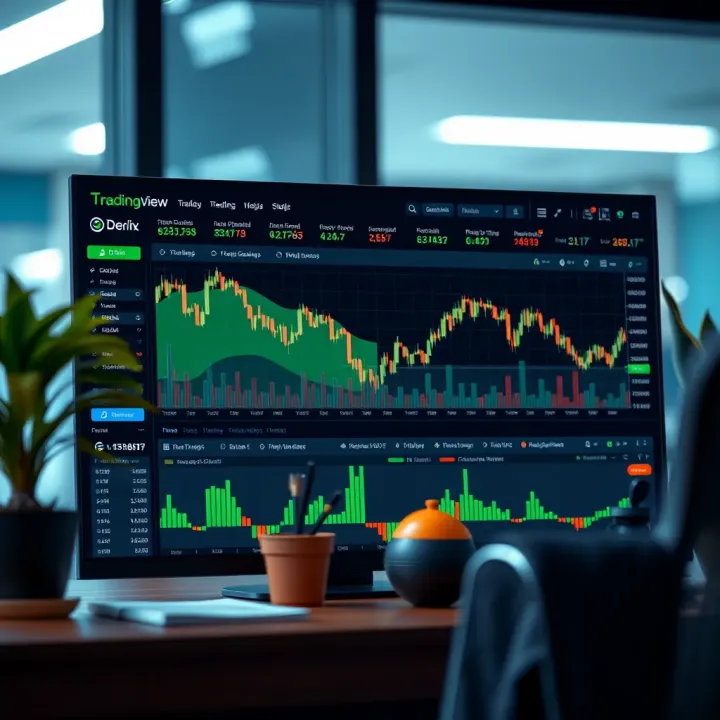
TradingView covers thousands of markets, but not all are offered on Deriv. It’s wise to create watchlists that include only the assets Deriv supports. For Kenyans trading Deriv, these typically include forex pairs, synthetic indices, and commodities. By narrowing down your focus on assets that you can directly trade on Deriv, you avoid confusion and keep your analysis targeted for better execution.
Different trades require different timeframes on TradingView. For example, short-term binary options on Deriv may need 1-minute or 5-minute charts to catch quick price movements. Meanwhile, longer-term CFDs might be better analysed on the hourly or daily charts. Setting the right timeframe improves the accuracy of your signals and matches your trading horizon, so you’re not fighting the clock when market volatility kicks in.
Using watchlists helps keep your frequently traded assets within easy reach. You can create multiple watchlists—for example, one for forex pairs like USD/KES and EUR/USD, another for synthetic indices like Volatility 75 Index. This organisation makes switching between markets seamless while keeping you focused on opportunities relevant to the Kenyan market context.
A well-set TradingView account, customised for Deriv’s assets and your trading style, lets you trade smarter. It reduces clutter, keeps top signals ready, and syncs your analysis with real-time trade execution on Deriv.
For Kenyan traders using Deriv, applying TradingView analysis can really boost trade quality. TradingView offers detailed charting and a wide range of technical indicators, helping traders spot signals that Deriv’s basic platform might not clearly show. This extra layer of insight is important when managing short-term trades or more complex strategies.
Popular indicators for Deriv trading (RSI, MACD, Moving Averages): Indicators like the Relative Strength Index (RSI) help you gauge if an asset is overbought or oversold. For example, an RSI above 70 might suggest it's time to consider a sell trade, while below 30 signals a potential buy. The Moving Average Convergence Divergence (MACD) highlights trend direction and momentum changes, useful for deciding when to enter or exit a trade on Deriv’s CFDs or binaries.
Simple moving averages smooth price data to reveal trends. A common approach is watching the crossover between short-term and long-term averages (such as 20-day vs 50-day). When the short-term average crosses above, it can indicate an upward trend — a cue to consider buying.
Trendlines and support/resistance analysis: Drawing trendlines on TradingView lets you visually track where prices tend to bounce or break down. These lines act as informal barriers traders watch closely. For example, if the price tests a support level multiple times without breaking, it might be safe to place a buy trade expecting a bounce. Conversely, hitting resistance repeatedly could warn against buying.
Support and resistance levels are especially handy during volatile periods, common in US dollar-Kenyan shilling (USD/KSh) pairs. Using these tools can help prevent entering trades where the price may quickly reverse, saving you from unnecessary losses.
Setting up alerts to catch trade opportunities: TradingView allows you to set alerts based on your indicators or price action. For instance, you can get notified when RSI crosses a key level or when the price breaks a trendline. These alerts help traders avoid sitting in front of the computer all day and miss crucial moments, especially when balancing trading alongside other daily activities.
Alerts can be set to notify via email, mobile app, or browser pop-ups, giving you flexibility to stay updated wherever you are. This quick reaction time can make the difference in nailing profitable trades on Deriv.
Identifying market trends and reversals: Spotting whether a market is in an uptrend, downtrend, or sideways range is fundamental. TradingView’s tools help map this out clearly. For example, a series of higher highs and higher lows signals a bullish trend; traders might lean towards buy positions on Deriv.
Reversals, where trends change direction, often come with key chart patterns and indicator signals. Once you learn to recognise these early, you avoid chasing losses when the market direction flips unexpectedly.
Using candlestick patterns for entry and exit points: Candlestick charts on TradingView show price action more vividly than plain line charts. Patterns like the hammer, shooting star, or engulfing candles can hint at strong buying or selling pressure.
Kenyan traders can use these patterns to time entries or exits in Deriv trades. For instance, a bullish engulfing candle forming at a support level might suggest a good moment to open a call option or buy a CFD.
Combining multiple indicators for confirmation: No single indicator gives a perfect signal. Combining tools like RSI, MACD, and candlestick patterns reduces false signals and improves decision accuracy. For example, if RSI shows oversold, MACD confirms momentum shift, and a bullish candle appears, the chance of a successful trade rises.
In practice, Kenyan traders who combine these tools carefully are better equipped to manage risks and improve their trading results on Deriv.
A thoughtful blend of TradingView’s analysis with Deriv’s trading options can help traders stay a step ahead in the fast-moving markets.
Combining TradingView's powerful chart analysis with Deriv’s trading interface gives Kenyan traders a practical edge. TradingView provides detailed market insights, but Deriv is where trades actually happen. This integration means you can base your trades on well-analysed signals while using Deriv’s tools for execution and risk management. For instance, spotting a bullish divergence on TradingView’s RSI indicator can guide when to enter a call option on Deriv with better confidence.
Translating analysis into trade entries on Deriv involves taking the patterns, indicators, and signals from TradingView charts and using them to decide your exact trade timing and parameters on Deriv. You might see a spot where the MACD crosses its signal line on TradingView; on Deriv, you then select the corresponding asset and initiate a trade to align with that signal. This manual approach keeps you in full control and requires quick reflexes and discipline, especially when market conditions shift.
Managing risk with stop losses and limits is vital when acting on TradingView signals via Deriv. Even if a chart suggests a strong move, markets can be unpredictable, so set stop losses to minimise potential losses if the trade moves against you. Deriv allows you to place limits and stops easily, helping protect your capital. For example, if you enter a trade expecting a breakout on the EUR/USD, placing a stop loss just below the support level identified on TradingView can prevent heavy losses from sudden reversals.
Tracking trades and performance means constantly reviewing what worked and what didn’t, based on your TradingView-driven entries on Deriv. Kenyan traders should regularly check their trade history and notice patterns—maybe your entries after RSI dips below 30 lead to better wins. Deriv’s platform records trade data, which you can analyse weekly to refine your strategy and avoid repeating mistakes.
TradingView alerts can be used with trading bots to automate certain responses to chart signals, but this requires external tools or software as Deriv doesn’t offer built-in bot integration. Kenyan traders can use webhook services or third-party platforms to link TradingView alerts with automated orders on Deriv’s API. However, this tech setup demands some coding knowledge or assistance from a fundi familiar with trading bots.
Currently, direct integration between TradingView and Deriv is limited. There’s no native feature that sends TradingView signals straight to Deriv as automatic trades. Traders watch charts on TradingView, receive alerts, then manually enter trades on Deriv. This separation means traders must stay attentive when trading and cannot fully rely on push-button execution based on TradingView alone.
Best practices for semi-automated trading setups include combining alert notifications with manual confirmations on Deriv. For example, set alerts on TradingView for certain indicator triggers and get notified on your phone. When an alert fires, you review market conditions quickly, then place the trade manually. This approach balances automation convenience with control, helping manage risks associated with fully automated bots that may misinterpret signals.
Kenyan traders should see TradingView and Deriv as complementary tools: TradingView for detailed analysis and alerts, and Deriv for reliable trade execution with inbuilt risk controls. Using both wisely can sharpen trading performance, even if full automation isn’t yet seamless.
In practice, prioritise setting up smart alerts on TradingView while familiarising yourself with Deriv’s trade management features like stop losses. This way, you use the best of both worlds, enhancing your decision-making and protecting your capital in Kenya’s fast-moving forex and CFDs markets.
Trading in Kenya comes with unique hurdles that can affect even the most experienced traders. Understanding these challenges and having practical tips helps Kenyan traders make better decisions when using platforms like TradingView alongside Deriv. From connectivity hiccups to adapting strategies around the local economic environment, being prepared can save you time and avoid losses.
Stable internet is the backbone of successful trading. In Kenya, fluctuating internet speeds, especially outside urban centres, can cause delays in receiving live market data on TradingView or executing trades promptly on Deriv. For example, a slow connection might delay an important price alert, causing missed opportunities or entering a trade late at less favourable prices.
To cope, many Kenyan traders prefer fixed broadband where possible or use M-Pesa data bundles that offer better speed during peak trading hours. Also, setting lower chart time frames during volatile sessions can reduce the strain of heavy data load.
Kenya's trading markets can be volatile, partly due to currency swings and global news affecting asset prices. Traders need to adopt risk management strategies like setting tight stop losses or trading smaller volumes to avoid big losses. For instance, during major US economic announcements, currency pairs involving USD and KSh could fluctuate sharply, so adjusting trade sizes protects the account.
Using TradingView’s alerts helps Kenyan traders spot trend reversals early and avoid riding highly volatile moves without confirmation. Diversifying trades by including indices or commodities on Deriv can also balance volatility that affects certain sectors.
Internet or power outages happen and can disrupt trading activities. Having backup plans such as a secondary internet source (like switching from fibre to mobile data) or a UPS (Uninterruptible Power Supply) ensures the trading session can continue without interruption. Some traders keep a mobile device ready to execute trades manually if their main PC goes offline.
Setting pre-planned stop losses or limits on Deriv can also protect against unforeseen disconnections. These automatic safeguards reduce the need for constant monitoring, which is handy when connectivity is unreliable.
Kenyan traders face the reality of trading markets that operate mostly outside local time zones. For example, major forex sessions like London or New York may be active during late night or early morning. Aligning your trading schedule around these hours while balancing daily responsibilities is key.
Tracking local economic events such as Central Bank of Kenya policy announcements or inflation reports can also help. These events cause local currency volatility, affecting forex trades on Deriv.
Many Deriv assets are priced in USD, yet Kenyan traders largely earn or save in KSh. Understanding the KSh/USD exchange rate trends is crucial when trading forex or CFDs to avoid being caught off-guard by currency movements.
For instance, a weakening shilling against the dollar means your USD deposits on Deriv could translate into fewer Kenyan shillings when withdrawing profits. Monitoring CBK’s exchange rate updates on TradingView can help you plan entries and exits more strategically.
Growing your skills is essential in trading. Kenyan traders can tap into resources like CMA (Capital Markets Authority) guidelines, local trading forums, or online webinars hosted by Kenyan brokers. Joining communities allows sharing experiences and staying updated on regulations and market behaviour.
TradingView itself offers community scripts and ideas where local traders exchange tips and chart patterns. Combining this with Deriv’s demo accounts helps you test strategies risk-free before going live.
Successful trading in Kenya depends on balancing market understanding with practical preparations. Being ready for volatility, poor connectivity, and local market nuances turns challenges into opportunities for consistent gains.
Use reliable internet sources and have backups
Manage risk using stop losses and appropriate trade sizes
Trade during active market hours relevant to your strategy
Monitor KSh/USD fluctuations to protect your capital
Engage with local trading communities and educational tools
With these practices, you’ll position yourself better to navigate the Kenyan trading scene efficiently and confidently.
📈 Discover how to maximize Deriv TradingView for smarter trading decisions. Tips & strategies tailored for traders in Kenya to boost market analysis skills.
Explore practical tips on using Deriv & TradingView for smarter trading in Kenya 🇰🇪. Learn to combine tools, analyze markets, and manage risks effectively.
Discover how Kenyan traders can navigate Deriv Trader’s features, strategies, and risk tips to trade smartly on this popular platform 📈🇰🇪
🔒 Master the Deriv login process for Kenyan traders with our detailed guide! Get tips on account setup, security, fixing issues, and platform use.
Based on 13 reviews