

Understanding Binary Options Brokers in Kenya
🔍 Explore how binary options brokers work, what Kenyan traders must know about regulations, risks, and smart broker choices for safer trading. 🇰🇪
Edited By
Isabelle Turner
Interactive Brokers (IBKR) has become a popular choice for Kenyan investors aiming to tap into international stock markets. Offering access to over 135 markets worldwide, IBKR enables traders and investors to diversify portfolios beyond local equities and bonds. This guide focuses on how Kenyans can use this platform effectively, highlighting important features, requirements, and practical steps.
IBKR is a brokerage firm that facilitates buying and selling of securities such as shares, ETFs, options, futures, and forex on global exchanges. Unlike local brokers limited to NSE or Bourse, IBKR connects you directly with foreign markets including the New York Stock Exchange (NYSE), London Stock Exchange (LSE), Tokyo Stock Exchange, and more.
Global Market Access: Get direct exposure to stocks, commodities, currencies, and funds listed across North America, Europe, and Asia.
Competitive Fees: While fees vary by market and asset type, IBKR is known for low commissions and transparent pricing, helping you keep transaction costs manageable.
Advanced Trading Tools: The platform provides professional tools like real-time data, risk management features, and charting software useful for active traders.
Multiple Account Types: IBKR allows individual, joint, and retirement accounts, offering flexibility depending on your investment goals.
Regulatory Compliance: You will need to provide identification, proof of residence, and complete KYC (Know Your Customer) steps to comply with international and Kenyan financial regulations.
Currency Conversion: Deposits and withdrawals often require currency exchange to USD or other major currencies, so understanding forex fees is important.
Tax Implications: Gains from international investments may attract Kenyan capital gains tax, plus withholding taxes abroad. Consulting a tax professional or the Kenya Revenue Authority (KRA) guidelines is advisable.
Funding Your Account: Unlike local platforms accepting M-Pesa directly, IBKR generally requires bank transfers. Linking a bank with international transfer capability simplifies funding.
Accessing global markets through Interactive Brokers can diversify your investment but demands awareness of forex risks, tax duties, and regulatory compliance.
By using IBKR, Kenyan investors can break free from the constraints of local markets, exploring opportunities in multinational corporations and global industries. The following sections cover set-up, fee structures, and regulatory considerations to help you start investing abroad confidently.
Knowing what Interactive Brokers (IB) offers and how it works is essential for Kenyan investors aiming to access international markets. By understanding IB’s role, you can better gauge how it fits your investment goals, the costs involved, and the tools you’ll have at your disposal.
This section breaks down the company, its global scope, features, and practical relevance for investors in Kenya.
Interactive Brokers is a US-based brokerage firm founded in 1978. It has grown into one of the largest electronic trading platforms globally, serving individual traders, institutions, and professional investors. IB provides direct access to more than 135 markets worldwide, making it a key player in international investing.
Its longevity and experience guarantee a level of trust and stability that many investors seek. For a Kenyan looking to tap global exchanges like the NYSE, LSE, or Tokyo Stock Exchange, IB is a credible gateway.
IB covers stocks, bonds, options, futures, forex, and even cryptocurrencies across multiple countries. What stands out is their coverage of numerous asset classes on a single platform. For example, a user in Nairobi can trade US tech stocks, European ETFs, or Indian government bonds all within one account.
Such diversity is particularly useful when you want to spread risk or target emerging markets alongside developed ones. IB’s ability to handle different currencies and comply with various regulations globally helps smooth international investing.
Local investors often want exposure beyond the Nairobi Securities Exchange (NSE) but face barriers like high minimum investments or lack of access to foreign markets. Interactive Brokers removes many of these obstacles by offering relatively low account minimums and flexible funding options.
Moreover, with Kenya's growing middle class and increasing interest in overseas assets, IB’s platform fits into the expanding demand for diversified portfolios. It provides a practical avenue to invest in global blue chips or tap into sectors not available locally.
Interactive Brokers offers robust trading platforms: its flagship Trader Workstation (TWS) for professionals and a simpler mobile app for casual investors. TWS has advanced charting tools, algorithmic trading, and real-time data.
For example, if you follow Safaricom shares but want to hedge risk using US options, TWS lets you manage all these trades seamlessly on one screen. The platform also supports innovative features like paper trading, which lets you practice strategies without real money.
IB covers a wide portfolio of assets:
Stocks and ETFs in over 30 countries
Options and futures for hedging or speculation
Forex pairs covering major and minor currencies
Bonds including government and corporate
Access to some cryptocurrencies
This range means a Kenyan investor can create a diversified global portfolio without juggling multiple brokers.
Managing your account with IB is straightforward. You get detailed statements, tax documents, and performance summaries. Their client portal and app provide control over fund transfers, order history, and regulatory compliance.
Plus, IB allows you to fund accounts in different currencies and holds balances accordingly, which can help reduce frequent currency exchange costs for Kenyans dealing in shillings and US dollars.
Interactive Brokers brings a broad, professional-level toolkit to Kenyan investors but remains accessible enough for those starting international investing. Knowing what it offers helps you decide if it fits your ambitions and trading style.
For Kenyan investors looking to tap into international markets, knowing how to access Interactive Brokers is a key step. Interactive Brokers provides a platform to trade assets from across the globe, but opening and funding an account from Kenya requires understanding the process and local considerations. This section covers practical steps relevant to Kenyan users, ensuring a smooth start to international investing.

Registration process
The registration with Interactive Brokers begins online and is straightforward if you have all your documents ready. You’ll start by filling in personal details, selecting account types (individual or joint), and agreeing to terms. The platform may ask about your investment experience and financial background to comply with international regulations. For Kenyans, the process is mostly digital but requires precise documentation to avoid delays.
Document requirements specific to Kenya
Kenyan investors must provide identification like a valid passport or national ID, proof of residence (such as a utility bill or bank statement), and tax details. The address proof should be recent, typically within the past three months. These documents confirm identity and location as part of KYC (Know Your Customer) rules. Since Interactive Brokers is a global firm, they take these compliances seriously for all regions including Kenya.
Using eCitizen and KRA PIN
The Kenya Revenue Authority (KRA) Personal Identification Number (PIN) is essential when opening an account, as it establishes your tax identity. Interactive Brokers asks for the KRA PIN since earnings might be subject to tax reporting. eCitizen serves as the go-to Kenyan government portal where you can download your KRA PIN certificate and other documents needed for registration. Having these ready online helps speed up the process and ensures compliance with both Kenyan and international tax regulations.
Payment methods available
Funding an Interactive Brokers account from Kenya can be done through several channels but mainly via bank wire transfers. While the platform supports various currencies, direct mobile money payments like M-Pesa aren't directly accepted. Investors typically transfer funds from Kenyan bank accounts, preferably in USD or other major currencies, to avoid multiple conversions.
Role of M-Pesa and bank transfers
M-Pesa does not connect directly with Interactive Brokers. However, you can first transfer money from M-Pesa to a Kenyan bank account, then wire it to Interactive Brokers. Banks like Equity, KCB, and Cooperative offer swift international wire services, but you should check fees and timelines. This two-step process may add slight delays, but it’s the most practical method for Kenyans to fund international investment accounts.
Foreign exchange considerations
Currency conversion is a crucial factor. Since Interactive Brokers operates primarily in USD or other global currencies, Kenyan investors must convert KSh to those currencies. Exchange rates offered by banks or Forex bureaus can vary, impacting your invested amount. Additionally, Interactive Brokers charges currency conversion fees on trades involving foreign currency. To minimise costs, consider transferring larger sums less frequently rather than small amounts multiple times.
Opening and funding an Interactive Brokers account from Kenya is entirely feasible, but planning around document requirements and payment methods makes the process smoother and more cost-effective for local investors.
When considering Interactive Brokers (IB) for international investing, Kenyan investors must weigh the benefits alongside the challenges. This helps ensure their money works effectively while avoiding surprises from fees, regulations, or service gaps. By carefully looking at pros and cons specific to the Kenyan context, investors can make better choices and plan their investment strategy accordingly.
Interactive Brokers offers Kenyan investors access to over 135 markets across 33 countries. This means you can buy shares, ETFs, bonds, and options from major exchanges like the NYSE, Nasdaq, London Stock Exchange, and Hong Kong Stock Exchange without needing separate local brokerage accounts. For example, a Nairobi-based trader interested in Amazon shares or European stocks can execute trades directly via IB's platforms. This kind of direct market access allows for diversification beyond NSE and other local venues.
IB is known for low-cost trading fees compared to many local intermediaries offering limited foreign market access. The platform charges commissions starting from as low as USD 0.005 per share, with volume discounts for active traders. For Kenyan users, this translates into more efficient use of capital, especially when trading higher volumes or seeking exposure to US markets. However, one should also consider other charges like currency conversion fees which can affect overall costs.
Interactive Brokers equips investors with sophisticated trading tools suitable for serious traders and analysts. Its Trader Workstation (TWS) provides advanced charting, real-time market data, algorithmic trading, and risk management features. This level of detail supports Kenyans who wish to implement complex strategies or closely monitor global market movements from Nairobi or Mombasa. Users can also customise alerts and use portfolio analysis tools to make informed decisions.
Since Interactive Brokers operates primarily in USD and other major currencies, Kenyan investors will need to convert their KSh deposits to foreign currency. This can lead to significant currency conversion costs, especially if using banks with high forex fees or multiple conversions. For example, funding your IB account through local banks might involve charges besides CBK's official forex rates, eating into potential investment returns. Careful planning can minimise these costs by batching deposits or using efficient forex channels.
Kenyan investors dealing with international brokers need to be mindful of tax obligations on foreign investments. Capital gains tax and withholding tax on dividends can apply, and proper reporting to the Kenya Revenue Authority (KRA) is essential to comply with local laws. Additionally, the Capital Markets Authority (CMA) has rules governing cross-border investing that users should understand to avoid inadvertent breaches. Consulting tax professionals with knowledge of international investments often pays off.
Interactive Brokers does not have a physical office or dedicated local support in Kenya. This can be a challenge if you encounter issues needing urgent resolution or assistance in your time zone. While IB provides global customer service via phone, email, and chat, the lack of local human contact might frustrate investors used to hands-on brokers. It’s useful to have a good understanding of the platform beforehand, and consider complementing IB with local brokers for guidance when necessary.
Taking time to evaluate both the gains and limitations of Interactive Brokers will help Kenyan investors approach international investing with a clearer picture—balancing opportunities against practical hurdles to make informed decisions.
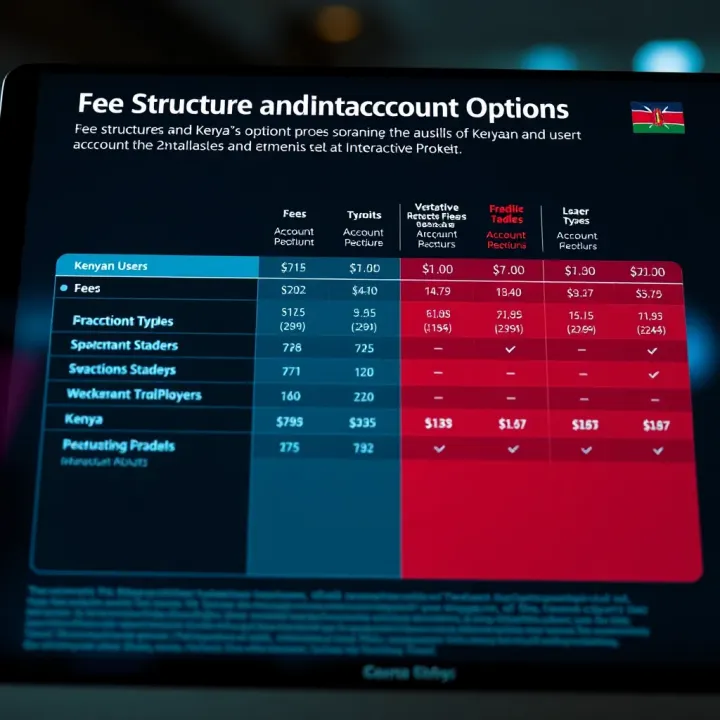
Understanding fees, charges, and account types is key for Kenyan investors using Interactive Brokers. These factors affect your overall returns and help you choose an account that fits your investment needs and habits. Knowing the cost structure helps avoid surprises and lets you plan investments with clearer expectations.
Commission structures vary depending on the assets you trade and your monthly volume. Interactive Brokers offers several models including fixed and tiered commissions. For example, trading shares on the US market may cost as low as USD 0.005 per share with a minimum commission of USD 1. This means if you buy 200 shares, your fee might be USD 1 since it's the minimum. Higher volumes attract lower per-share fees, which can benefit frequent traders.
For Kenyan investors, comparing these fees with local brokerage costs is important since some local brokers offering international access charge higher flat rates. Interactive Brokers is typically more cost-effective for those trading larger volumes or multiple asset types.
Currency conversion fees come into play when funding your account or trading assets in foreign currencies. Interactive Brokers charges a low spread plus a small commission on currency conversions, often better than standard bank rates. For instance, converting KSh to US dollars for trading will incur these fees. Since Kenyan shilling is not freely convertible internationally, understanding this cost helps manage your investments better. You might save by transferring larger sums at once rather than multiple small conversions.
Withdrawal and inactivity fees may apply if you don't trade frequently or withdraw funds often. Interactive Brokers charges a $10 monthly inactivity fee if your balance is below $100,000 and you don’t generate sufficient commissions that month. Withdrawal fees are minimal but should be considered if you plan to move funds regularly. For Kenyan investors, keeping active trading to cover inactivity fees or moving large sums less frequently can reduce these costs.
Individual versus joint accounts cater to different investment setups. An individual account suits most Kenyan investors investing personally. Joint accounts, which allow two or more people to hold and manage funds together, can be useful for spouses or business partners. However, joint accounts require careful planning about authority and tax implications in Kenya.
Retirement and margin accounts offer specialised options. A retirement account in Interactive Brokers, like an IRA in the US, isn't typically applicable to Kenyan residents but margin accounts allowing trading with borrowed funds can be. Margin accounts offer leverage but carry higher risk if the market moves against you. Kenyan investors must be cautious and understand margin calls and interest charged on borrowed amounts.
Suitability for Kenyan investors depends on investment goals, trading experience, and funds. Individual accounts with regular trading activity suit most. Margin accounts appeal mainly to experienced traders comfortable with risk. Since Interactive Brokers supports sophisticated tools, it fits active investors wanting low fees and diverse markets. New investors might start with simple accounts, gradually exploring more complex ones.
Choosing fees and account types wisely helps Kenyan investors avoid hidden costs and align their investments with financial goals, maximising potential returns over time.
In summary, being clear on fee structures and account options with Interactive Brokers lets Kenyan traders navigate international investments confidently and with better control over costs.
Exploring alternatives and complementary platforms is vital for Kenyan investors wanting broader access to international markets. While Interactive Brokers offers extensive options, local and other international brokers can provide convenient ways to tap into global stocks, sometimes with more region-specific support or easier deposit methods. Understanding these options helps investors choose services that match their trading goals and local preferences.
The Nairobi Securities Exchange (NSE) has developed partnerships with various international markets and brokers to allow Kenyan investors to benefit from overseas equities and securities without fully opening global accounts. For example, some NSE-listed firms offer structured products or exchange-traded funds (ETFs) that track foreign markets, enabling investors to participate indirectly. This approach reduces the complexities of currency conversions and foreign regulations.
Also, the NSE occasionally collaborates with regional exchanges under the East African Community umbrella, providing integrated access to wider market opportunities. These partnerships matter practically by giving Kenyan traders a safer, regulated environment to engage with foreign assets, often using Kenyan brokerage accounts.
Several Kenyan brokerage firms have stepped up by creating direct links or correspondent arrangements with international brokers. Firms like SBG Securities or AIB-AXYS now offer their clients access to US and European markets through combined platforms. These services simplify the investment process by allowing Kenyans to manage global holdings alongside local ones.
This integration means investors can fund accounts via local bank transfers or M-Pesa, avoid double documentation, and receive customer support tailored to the Kenyan context. Although fees may be slightly higher than Interactive Brokers, these brokerage channels often come with better local guidance and fewer barriers for first-time international investors.
Apart from Interactive Brokers, other global platforms like TD Ameritrade, Charles Schwab, and eToro have attracted Kenyan investors. While Interactive Brokers is known for low trading costs and robust tools, these alternatives typically offer more user-friendly interfaces and lower minimum balances, which appeal to beginners.
However, these brokers may charge higher fees for currency exchange and international funds transfers. Unlike Interactive Brokers’ multi-currency accounts, some have limited currency support, which can affect overall profitability due to FX spreads. Therefore, Kenyan investors weigh the ease of use against cost efficiency when choosing.
User feedback often highlights that brokers like eToro excel in social trading features, enabling investors to copy strategies from experienced traders, which is useful for those still learning. On the other hand, TD Ameritrade’s research tools and educational resources are praised for helping users make informed decisions.
Still, customer service experiences vary, with Interactive Brokers receiving mixed reviews over slow local support, while others maintain dedicated contact points for African clients. Carefully assessing these factors alongside trading goals and budget forms a strong basis for selecting the right international broker.
Kenyan investors benefit from combining Interactive Brokers’ advanced offerings with local and international platforms that better suit different needs and comfort levels. Balancing cost, convenience, and support helps build a well-rounded global investment strategy.
Kenyan investors venturing into international markets through platforms like Interactive Brokers must understand the legal and regulatory landscape to avoid pitfalls. Knowing relevant guidelines protects your investments and ensures compliance with local laws, which can save you from hefty fines or even legal trouble.
The Capital Markets Authority (CMA) governs all securities and investment activities inside Kenya. For Kenyan investors dealing with international brokers, CMA rules ensure that transactions are transparent and fair. Although Interactive Brokers operates globally, Kenyan clients must ensure their activities comply with the CMA's framework to avoid illegal or unregulated dealings. For instance, CMA approval may be necessary for some cross-border transactions or for reporting significant investments abroad.
Income from international investments—including dividends, interest, or capital gains—generally falls under Kenyan tax laws. The Kenya Revenue Authority (KRA) expects investors to declare such income and pay the appropriate tax. For example, if you earn dividends from US stocks held through Interactive Brokers, you might face withholding taxes in the US but still need to report those earnings on your Kenyan tax returns. Understanding double taxation agreements between Kenya and investment countries can help reduce tax burdens.
Kenyan investors must report foreign asset holdings and income to KRA, usually during annual tax filings or as requested for compliance. Failure to disclose foreign investments can lead to penalties or audit risks. Keeping detailed records from Interactive Brokers statements helps in accurate reporting. In some cases, reporting may extend to Anti-Money Laundering (AML) compliance to ensure funds are legitimate.
Before opening an account with any international broker, including Interactive Brokers, it’s vital to verify their licences and regulatory status. Interactive Brokers is a recognised global player regulated by top-tier bodies like the US Securities and Exchange Commission (SEC) and the Financial Conduct Authority (FCA) in the UK. Checking such credentials ensures you deal with legitimate firms and not fraudulent operations targeting Kenyan investors.
One major risk is falling for schemes promising guaranteed returns or unrealistic profits. Some scammers use fake broker websites mimicking real ones, luring investors to deposit money only to disappear. Another pitfall is misunderstanding currency risks or failing to consider tax implications, which can erode returns drastically. Always be cautious about unsolicited offers and never rush investments without thorough research.
Kenya has solid resources to protect investors, such as the CMA’s investor education unit, which offers guidance on legitimate platforms. KRA also provides clear guidelines on tax compliance for foreign earnings. Besides, you can consult licensed financial advisors or join investor groups that share experiences on reputable brokers. These resources add layers of security and minimize chances of falling victim to fraud.
Staying informed about regulations and protecting yourself from scams is key to successful international investing. Taking these steps makes your journey with Interactive Brokers safer and more rewarding.
🔍 Explore how binary options brokers work, what Kenyan traders must know about regulations, risks, and smart broker choices for safer trading. 🇰🇪
Explore Deriv's trading platform in Kenya 🇰🇪, learn to register, verify, and trade securely with insight on features, benefits, risks and regulation 📈💻

📈 Learn how to log into Quotex easily with step-by-step tips for Kenyan traders. Secure your account, fix login issues, and boost your trading using local insights.

📈 Discover how deriv trading works, its risks & benefits, platforms, strategies, and Kenyan regulations to trade smart and secure your investments wisely.
Based on 7 reviews