
Deriv Login Guide for Kenyan Traders
🔒 Master the Deriv login process for Kenyan traders with our detailed guide! Get tips on account setup, security, fixing issues, and platform use.
Edited By
Charlotte Morgan
For Kenyan traders diving into online trading, understanding how to effectively use platforms like Deriv combined with TradingView charts can make a big difference. Deriv offers a user-friendly trading environment that covers options, forex, and CFDs, while TradingView provides powerful charting tools and technical indicators to guide your decisions.
Both platforms have their strengths, but when connected, they give traders a more complete picture. Instead of relying solely on Deriv’s inbuilt charts, which can sometimes be basic, you can use TradingView’s advanced charting to spot trends, draw support and resistance lines, or apply indicators like Moving Averages and RSI for momentum analysis.

Using TradingView alongside Deriv lets you place trades based on better technical insights, potentially improving your chances of success.
Most Kenyan traders can start by opening free accounts on both platforms. On TradingView, focus on learning how to read candles, set alerts, and use drawing tools — skills that translate directly into smarter execution on Deriv. For instance, spotting a breakout on TradingView can encourage you to act quickly on Deriv before the market moves.
Managing risks is part of making trading sustainable. Deriv allows you to set stop-loss and take-profit orders easily. The added confidence from TradingView’s detailed analysis means you can better decide where to place these levels, reducing the risk of unnecessary losses.
Here’s a practical way to combine them:
Step 1: Use TradingView for chart analysis, applying your preferred indicators.
Step 2: Identify key entry and exit points based on your analysis.
Step 3: Execute trades on Deriv, using the platform’s order tools.
Step 4: Adjust stop-loss/take-profit according to your trading plan.
For Kenyan traders dealing with local market hours, currency fluctuations, or regional news, this approach helps keep decisions grounded in clear data. It’s not just about guessing the next move, but using the tools available to shape smarter trades.
In the following sections, we will break down the features of Deriv and TradingView in more detail, explore setup tips, and share best practices tailored for Kenya's trading environment.
Trading successfully requires good tools and understanding the platforms you use. Deriv and TradingView are two powerful services that Kenyan traders can combine to improve their trading results. This section explains what each platform offers and why they matter.
Deriv is an online trading platform popular with many traders in Kenya due to its diverse markets and user-friendly interface. It gives access to markets such as forex, commodities (like oil and gold), synthetic indices, and stock indices. For example, synthetic indices allow 24/7 trading on artificially generated price movements, making Deriv useful even when global markets are closed.
Accessibility is a key point for Kenyan traders. Deriv offers multiple account types including demo accounts for beginners and real accounts with various minimum deposits. Payments can be done via local methods like M-Pesa, which makes deposits and withdrawals simpler compared to some foreign platforms. This helps reduce friction for traders wanting to start with smaller capitals and scale up.
Regarding trading instruments, Deriv provides several basic options like step indices, synthetic indices, and forex pairs. New traders can focus on the most common pairs such as EUR/USD or GBP/USD while still testing advanced instruments as they gain experience. The platform also supports options and multipliers which offer different risk/reward profiles, giving more ways to tailor strategies.
TradingView supports traders by offering one of the most advanced charting tools available online. It comes packed with technical indicators like Moving Averages, RSI (Relative Strength Index), and MACD, which help traders spot entry and exit points. For instance, Kenyan traders following tea futures might use TradingView charts to identify trends and decide when to open or close positions on Deriv.
One unique feature of TradingView is its social community. Traders from Nairobi to Mombasa share ideas, charts, and trading strategies openly on the platform. This peer interaction offers practical insight and real-time market views that can’t be found in traditional financial media.
Integrating TradingView data with Deriv means using detailed charts and signals to make informed trades. For example, a trader might set alerts for key price levels on TradingView, then execute trades on Deriv based on those signals. This connection strengthens decision-making by combining robust analysis tools with accessible trading execution.
Using Deriv alongside TradingView charts gives Kenyan traders a clear edge by linking strong analysis with practical trade execution.
This introduction sets the stage for exploring how to connect these platforms and use their features for better trading outcomes within the Kenyan market.
Connecting Deriv and TradingView boosts your trading efficiency by merging Deriv’s trading capabilities with TradingView’s advanced charting and analysis. For a Kenyan trader, this combination means you can spot opportunities faster, execute trades without switching platforms, and monitor market moves with more precision. Imagine following the Nairobi Securities Exchange (NSE) index on TradingView while executing trades on Deriv based on real-time signals; this saves time and avoids costly delays.
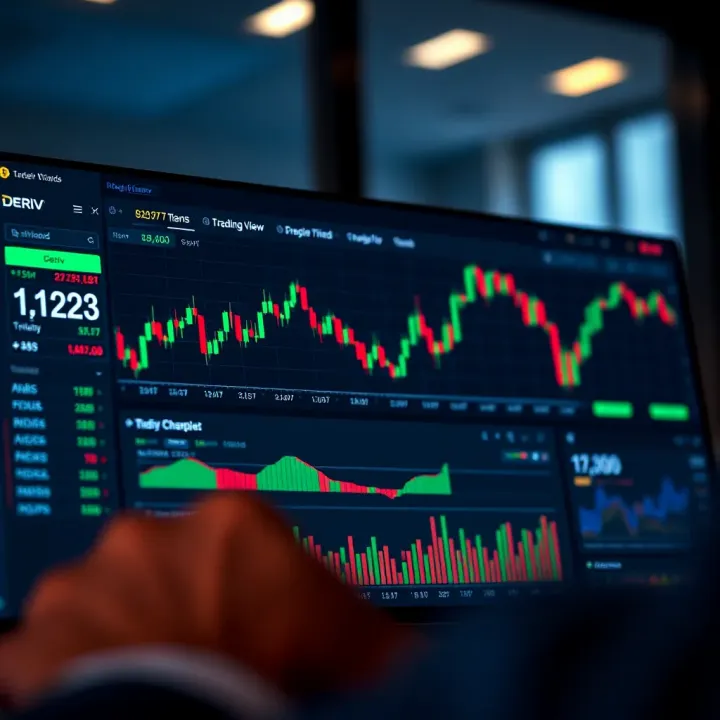
Step-by-step setup process: To link your Deriv account with TradingView, start by logging into both platforms. On TradingView, go to the ‘Trading Panel’ at the chart's bottom and select Deriv from the brokers list. You then enter your Deriv account login credentials to authorise the connection. Once done, you can control your Deriv trades straight from TradingView's charts, making it easier to analyse and act on market changes instantly.
This setup is handy especially when you want to react quickly during volatile sessions or Kenyan market openings. Once connected, each trade placed via TradingView reflects immediately in your Deriv account.
Requirements and technical considerations: You need a verified Deriv account with sufficient balance and a stable internet connection. TradingView supports mainly web browsers and desktop apps, so ensure your device meets minimum system requirements. Also, consider that some Deriv instruments may not be fully tradable via TradingView, so double-check your market options.
Security-wise, keep your login details safe and log out after sessions, especially when trading from shared or public computers. This integration depends on the Deriv and TradingView APIs, so occasional downtime or maintenance may affect connectivity.
Reading and interpreting price action: Price action analysis helps you understand market sentiment by examining candlestick patterns, support and resistance zones, and trendlines directly on TradingView. For instance, if the price of a forex pair you trade on Deriv forms a 'pin bar' or a strong rejection candle near a key support level, it might be a good entry point. This insight is easier to catch visually on TradingView and then acted on via Deriv.
Understanding these patterns avoids blind trades and improves timing, crucial for Kenyan traders facing unpredictable market moves.
Applying indicators to Deriv trading strategies: TradingView offers numerous technical indicators, from Moving Averages to RSI and MACD, that you can overlay on your charts. These help confirm trend directions or potential reversals, and when you find signals aligning, you can place a corresponding trade on Deriv. For example, if the RSI shows an oversold condition and price touches a historical support, a buy trade might be justified.
Kenyan traders often combine local news impact with these technical signals to refine decision-making.
Setting alerts and notifications: To stay ahead, set price alerts on TradingView for key levels or indicator signals. For example, if you want to buy when coffee prices hit a certain level on Deriv, setting an alert prevents you from watching the screen all day. TradingView can notify you via email, SMS, or pop-ups, making it easier to seize trade chances in busy environments like Nairobi’s hustle.
This feature enables disciplined trading and helps avoid emotional or rushed decisions.
Integrating Deriv and TradingView means you work smarter, not harder. Kenyan traders can better manage their time, spot opportunities, and act decisively to stay competitive in markets that move fast.
By understanding how to connect the platforms and use TradingView’s analysis tools, you improve your chances of profitable trades on Deriv.
Combining Deriv with TradingView allows Kenyan traders to adopt well-tested strategies with clearer insights from technical tools. These strategies benefit from TradingView’s rich charting features and Deriv’s fast execution. Kenyan traders can fine-tune their approach based on real-time data, improving chances of success in fast-moving markets. Focusing on popular strategies like scalping, swing trading, and trend following offers practical ways to understand how both platforms work well together.
Scalping involves making quick trades for small profits over short timeframes, often minutes. TradingView’s live price action charts and indicators — such as the Relative Strength Index (RSI) or Moving Average Convergence Divergence (MACD) — help spot entry and exit points rapidly. For instance, when RSI dips below 30, indicating oversold conditions, a scalper on Deriv might open a quick buy position expecting a price bounce. Kenyan traders using scalping must also consider Deriv’s leverage options and spreads to control costs. Scalping works best during high liquidity periods, like when Nairobi’s stock market opens or the global forex markets are active.
Swing trading targets price moves lasting days to weeks, capturing moderate gains without constant monitoring. TradingView’s range of candle patterns and trendlines helps swing traders on Deriv identify when trends are reversing or continuing. For example, spotting a ‘hammer’ candle pattern after a downtrend can signal a potential upward reversal. Kenyan traders often use swing trading to balance market time with other commitments, like work or studies, since it requires less frequent trade adjustments. Integrating volume indicators and support-resistance levels on TradingView also gives swing traders a solid foundation to time Deriv trades with greater confidence.
Trend following involves riding long-lasting market directions, while breakout strategies focus on price moving beyond established ranges. TradingView’s clear trendlines, moving averages, and Bollinger Bands are ideal for spotting these setups. For instance, if the price breaks above a resistance level with strong volume on TradingView, a Deriv trader might open a buy position anticipating continued momentum. Such strategies suit Kenyan traders who prefer structured plans supported by technical signals with manageable risk. However, it's crucial to confirm breakout strength to avoid false signals, which TradingView’s multifaceted tools help detect.
Effective use of TradingView’s charting and indicator features enhances Deriv trading by providing timely signals, helping Kenyan traders manage risks and seize opportunities with more confidence.
Integrating these strategies allows traders to address various market scenarios — from rapid-fire scalping to patient swing trades and trend pursuits. Each method benefits from the complementary strengths of Deriv and TradingView, making them practical tools for Kenyan markets and beyond.
Risk management is a cornerstone for any serious trader, especially for those using platforms like Deriv in Kenya. The volatile nature of markets means you can quickly lose more than you anticipate, so applying strict risk controls is not just smart—it’s necessary. Successfully blending TradingView’s technical insights with solid risk strategies helps you avoid unnecessary losses and keeps your trading sustainable.
Leverage amplifies your potential profits but also increases losses, so managing it carefully on Deriv matters a lot. For Kenyan traders, starting with lower leverage—say 1:10 or even 1:5—is advisable, especially if you’re still getting a feel of the platform and market. For example, if you have KSh 10,000 in your trading account, avoid taking positions worth KSh 100,000 straight away. Smaller positions let you handle market swings without wiping out your capital.
Adjusting position size according to your risk tolerance is key. A common rule is to risk no more than 1-2% of your total capital on any single trade. If the market moves against you, this contains losses and keeps you in the game longer.
Using stop losses and take profit orders protects your trades from sudden market reversals. On Deriv, you can set these limits easily before entering a trade. For instance, if you’re trading forex and buy USD/KES at 110, setting a stop loss at 109 and a take profit at 112 locks in potential gains while limiting your downside.
Kenyan traders sometimes skip stop losses hoping the market will reverse, but this exposes you to high risk especially during unexpected news events or market gaps. Consistently applying these orders creates discipline and helps lock in profits efficiently.
While TradingView provides valuable charting tools and technical indicators, overlooking market news can be risky. Kenyan traders should keep an eye on both local economic developments (like Central Bank Kenya announcements) and global events impacting assets on Deriv.
For example, if technical analysis signals a buying opportunity in commodities but the latest news shows worsening drought conditions affecting supply, it might be wise to hold off. Combining technical setups with news helps avoid traps and ensures your positions reflect broader market realities.
Effective risk management on Deriv means pairing smart use of leverage and position sizing with active stop loss and take profit planning, plus staying informed on relevant news. This mix builds resilience in your trading strategies under Kenya’s dynamic market conditions.
In summary, adopting these best practices minimises unnecessary losses and makes your trading journey smoother. Remember, managing risk isn’t about avoiding losses altogether but controlling them so that you can trade another day.
For Kenyan traders venturing into financial markets, practical tips on using Deriv alongside TradingView can make a big difference. Combining the two platforms optimally helps you respond faster to price movements, avoid common pitfalls, and manage trades under local market conditions. This section shares actionable advice tailored for Kenyan traders who rely on these tools to improve decision-making and maximise success.
Adjusting platform settings to fit Kenyan internet speeds and market hours can prevent frustrations during trading. For instance, Deriv’s chart refresh rate can be set to a slightly longer interval if your connection fluctuates, ensuring charts load without delays. Also, since Kenyan traders mainly participate during local daytime, customise TradingView’s timeframe settings to focus on 1-hour or 4-hour charts rather than very short intervals that may not offer clear signals in your timezone.
Volume indicators and price alerts should reflect markets relevant to Kenya. Setting alerts for major currency pairs like USD/KES or commodities such as coffee and tea futures can provide timely signals. Keep your Deriv account details updated with correct time zone information to align all timers and alert notifications properly.
Effective trading depends on timely and trustworthy market information. Kenyan traders should combine TradingView’s technical data with reliable news sources covering both global markets and local economic updates. Platforms such as Business Daily and Nation Africa regularly publish market insights relevant to Kenyan shilling movements and regional economic news which impact asset prices.
Moreover, consider subscribing to financial newsletters or SMS alerts from reputable Kenyan brokers or banks. These services provide quick updates on interest rate changes by the Central Bank of Kenya or official government announcements that affect market sentiment. Also, Safaricom’s M-Pesa platform sometimes serves as a trusted channel for market updates through its notification system.
Since many Kenyan traders juggle busy schedules, leveraging both mobile and desktop platforms can enhance flexibility. Deriv and TradingView both offer mobile apps optimized for Android and iOS, making it easy to monitor trades and charts on the go. However, for deeper analysis or strategy backtesting, the desktop app or web version offers better screen real estate and multiple tool windows.
Make use of features like TradingView’s offline chart viewing to analyse historical price movements when offline – this is helpful during unstable data connections common in some parts of Kenya. On mobile, activate push notifications for price alerts to avoid missing critical trade entry or exit points during the busy Nairobi traffic hours or while away from your desk.
Efficient use of Deriv and TradingView tailored to local Kenyan conditions not only cuts down delays but also sharpens your market approach, improving the chances of consistent trading results.
By following these practical tips, Kenyan traders can fine-tune their trading setups, stay informed with relevant data, and manage trades more effectively across different devices. This balanced approach builds confidence and helps make the most of the opportunities in Deriv and TradingView platforms.
🔒 Master the Deriv login process for Kenyan traders with our detailed guide! Get tips on account setup, security, fixing issues, and platform use.

Explore Deriv.com for Kenyan traders! Learn about its features, account types, trading options, security, & support to make informed trading decisions 📊🇰🇪
📊 Discover all about Deriv minimum deposit for Kenyan traders! Learn payment options, factors influencing deposit size, and smart fund tips to start trading confidently.

📊 Explore the Deriv demo account! Learn how Kenyan traders can practice trading safely, discover key features, instruments, and expert tips to boost skills.
Based on 12 reviews